
Germany taz
Look over Schocken's Gardens in Leipzig: A company of roses and cypresses
With the exhibition "Berlin/Jerusalem. Schocken's Gardens" the Dubnow Institute in Leipzig asks what can actually be transplanted in the midst of destruction? more...
Deutsch (original) ·Auto-translated to English
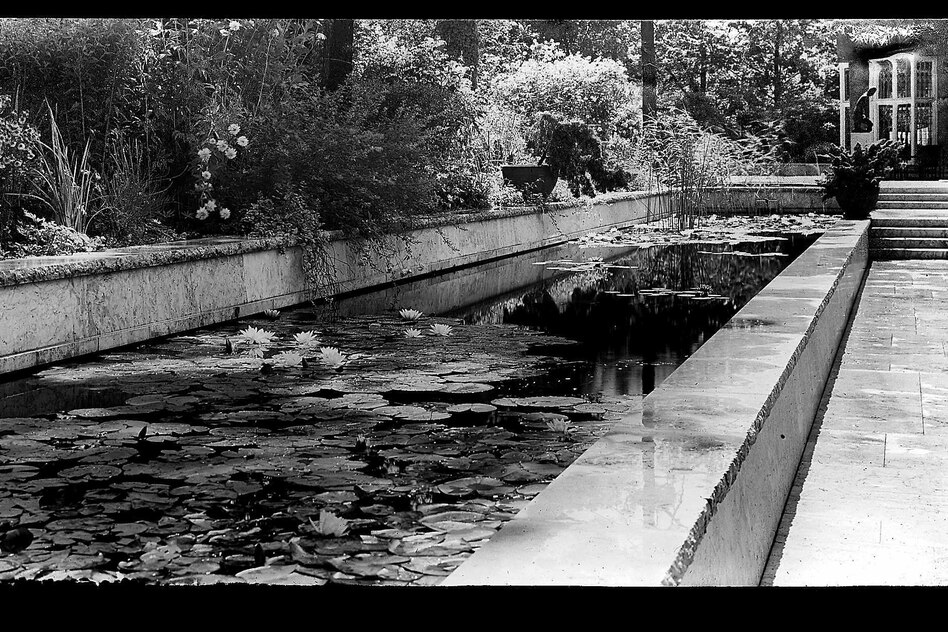
The “Rügen” strawberry is not made for the heat and dryness of Jerusalem. But there should be nothing missing in Salman Schocken's garden.
At the end of the 1920s, the Jewish entrepreneur Salman Schocken ran one of the most successful department store chains in the Weimar Republic. In 1931 he founded Schocken Verlag. In the shop windows of the Schocken department stores you could marvel at tools for the modern allotment gardener, arranged in a precise parallel arrangement. In his private garden at the villa in Berlin, trees and flowers were planted in equally precise rows. The garden was designed in the late 1920s by Heinrich Wiepking, who shared Schocken's enthusiasm for a modern fusion of form and function. A little later, Wiepking became one of the most important landscape architects of National Socialism.
Because of increasing anti-Semitic agitation against his department stores, Salman Schocken and his wife Lilli decided to leave Germany with their children in 1933. The family had to give up the villa in Berlin and the garden and emigrated to Palestine. In Jerusalem, Schocken had a new house built and once again devoted himself with great interest to planning a garden.
While he was still in Germany, Schocken collected documents about his company and his family - from anti-Semitic newspaper articles to correspondence and order forms. He managed to save his archive to Jerusalem and continue it there. The Leibniz Institute for Jewish History and Culture – Simon Dubnow in Leipzig conducts research at the Schocken Archive and is now showing the exhibition “Berlin/Jerusalem. Schocken’s Gardens”.
The documents displayed on the walls of the event rooms show the pressure that weighed on the family. They prove the company's decline - Salman Schocken had to sell it far below its value in 1938. But they also report on the attempt at a new beginning in Palestine.
The depiction of Schocken's meticulous planning of his new garden also subtly negotiates how Jewish flight and emigration are dealt with. Schocken's gardener had to report to him regularly and was supposed to create a data sheet for every plant in the garden. Everything was documented in the archive. Schocken even went so far as to have his garden architect assure him that every plant used would be taken care of - which of course exceeds human control over other living beings.
As Schocken had less and less influence over the course of his own life, the 5,000 square meters in Jerusalem on which he built his house and planted his large garden became a place where he had control. A place where he could realize his ideal, a good, orderly society - even if only with roses, tulips and cypresses.
The many plants imported from Germany and forced to adapt in the subtropical climate can be linked in a figurative sense to questions that arise during emigration: What can grow back after being uprooted? What is lost forever?
The small exhibition in the Dubnow Institute in Leipzig does not answer these questions, but simply allows the documents from the Schocken archive to work for themselves. The Schockens' story, which is extraordinary in many respects, cannot be generalized as a Jewish experience of expulsion. Nevertheless, it tells of the attempt to bring order to chaos and to create something beautiful in the midst of destruction.