
Germany taz
Red-red-green in Mecklenburg-Western Pomerania: No letter battles for a change
Unlike in Berlin, the SPD, Left and Greens in Mecklenburg-Western Pomerania are harmoniously moving towards a coalition. Sticking points are sunk silently. more...
Deutsch (original) ·Auto-translated to English
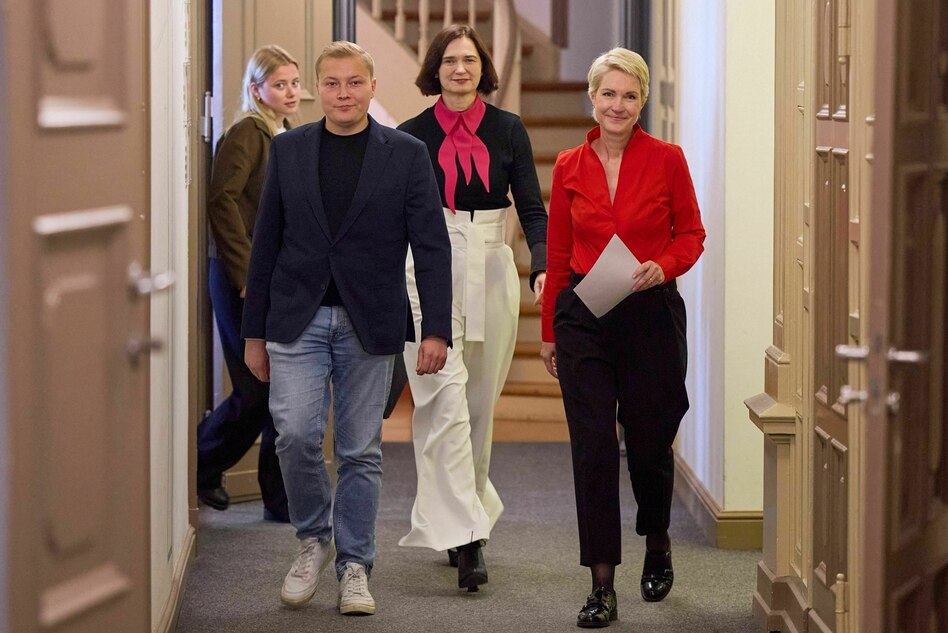
No open letter battles about anti-Semitism and the Middle East, no Union politicians threatening to be ostracized, no insults to future second-tier partners: Mecklenburg-Western Pomerania is currently proving that the SPD, the Left Party and the Greens can agree on a government without much fanfare.
While the Red-Red-Green Party is making life difficult in Berlin and the Left has not even conclusively clarified whether the explorations will also lead to coalition negotiations, the three parties in Schwerin want to reach agreement in the first half of November. Discussions about the details of the coalition agreement have been ongoing since the beginning of last week.
There will be tough negotiations, but no one will tear themselves apart, say Green Party circles. Above all, however, it is difficult for information to reach the outside world in a measured manner. Last Friday, SPD Prime Minister Manuela Schwesig, Left Party regional leader Hennis Herbst and Green Party parliamentary group leader Claudia Müller reported their results for the area of finance.
It is therefore clear that the future coalition partners' scope for maneuver will be limited. Falling tax revenue, an aging population, increasing personnel expenses: from 2028, according to the State Audit Office, Mecklenburg-Western Pomerania is threatened with a financing gap of an average of over one billion euros per year.
So savings are made. The principle of the coalition is: “Saving starts with the state itself and not first with the people,” says Manuela Schwesig. Specifically, the SPD, the Left and the Greens agreed, among other things, to cut jobs in the administration: In the next five years, around 7,000 of the 38,000 state employees will retire, and 1,000 of these positions will no longer be filled.
According to Schwesig, that brings in 125 million euros a year. How the remaining holes will be plugged remains unclear for the time being. No new debts should be incurred. Instead, the three partners – like their colleagues in the notoriously cash-strapped capital – want to campaign for a higher inheritance tax and the reintroduction of the wealth tax.
“In these times, it is urgently necessary that the few who have a lot also contribute their fair share to the community,” says Hennis Herbst in justification. Small problem: inheritance and wealth taxes are a federal matter - and no easing measures can be expected from the CDU and CSU. Philipp Amthor, acting CDU state leader of Mecklenburg-Western Pomerania, is already happily pointing out that the “request concert” in Schwerin cannot be financed.
The lamented big wish concert is hardly recognizable so far. Compared to the multi-billion dollar socialization promises in Berlin, Mecklenburg-Western Pomerania is baking rather small bread. The daycare center should remain free of charge, a youth ticket should be introduced, and the schools should be modernized.
On Monday, during the coalition negotiations, a check was finally made on the topics of agriculture, climate and environmental protection. And here too, a lot remains vague for the time being. However, it is very likely that the mammoth department of climate protection, agriculture, rural areas and the environment, previously headed by SPD man Till Backhaus, will be broken up.
“So far we have kept these things together because they belong together,” said Schwesig on Monday when presenting the interim results. But it is “also clear that we will fundamentally talk about the structural issues, and that is exactly what we will do at the end – first the content, then the structures.”
It is an open secret that, firstly, the grumpy agricultural scientist Backhaus and the Greens have an antipathy. And secondly, the Greens will claim the area of environmental and climate protection for themselves in the future cabinet.
Backhaus, who has been in the same office for almost 30 years, made national headlines in the spring with the failed rescue of the stranded whale cow Timmy. Saving the climate, it is said, was less of his issue. He recently overturned the country's climate protection goals. Instead of - as previously agreed - by 2040 at the latest, Mecklenburg-Western Pomerania should now only become climate neutral in 2045.
It was actually expected that climate protection would be one of the sticking points in the coalition negotiations. After all, the Green Youth had pushed through the target year 2035 in the parent party's election program. There is no longer any talk of this at the moment. The Greens were able to prevail with a climate check, with which all new state laws and regulations are to be examined with regard to their impact on the climate and the environment.
It is quite possible that another conflict will be resolved just as quietly. We are talking about the issue of rearmament, part of the outstanding round of economic negotiations. Here it is the left that created the mood in advance. There is a need for a state policy that opposes rearmament, state chief Herbst explained at the beginning of the negotiations.
When asked by taz on Tuesday, Herbst asked for your understanding that he would not make any public demands “immediately in the negotiations.” But the position remains unchanged: “We firmly reject the increasing militarization of society, the high profits of arms companies and the return to compulsory military service.”
What remains of it will become apparent in a few days. Last but not least, Prime Minister Schwesig has so far praised every Bundeswehr order for a shipyard in the country as a first-class job miracle. There is also no indication that she will deviate from this line out of love for the left.