
Germany · taz · · 2h
Red-red-green in Mecklenburg-Western Pomerania: Must
Deutsch (original) · Auto-translated to English
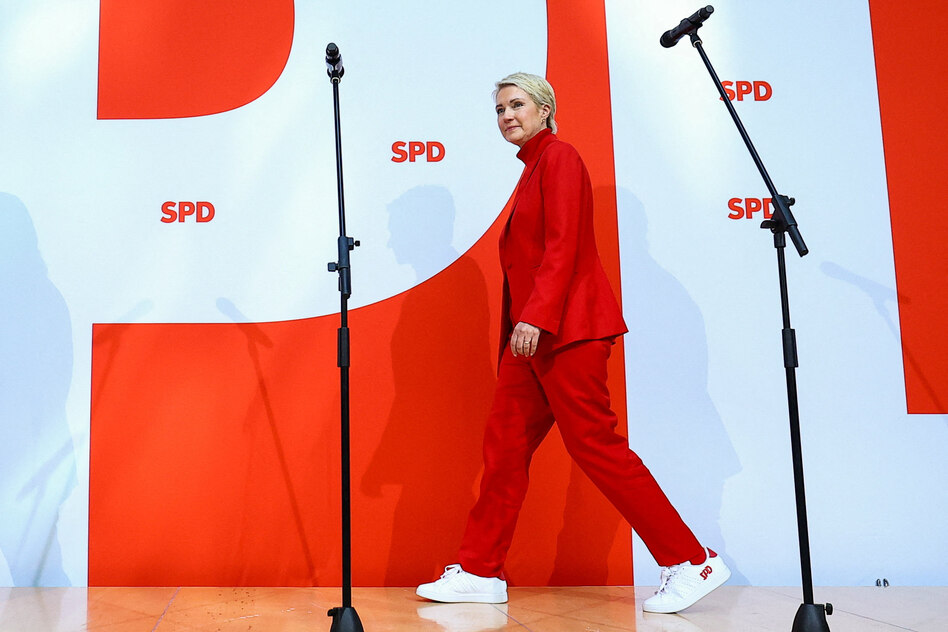
Manuela Schwesig doesn't want to let anything burn. Talks to form a red-red-green coalition are scheduled to start in Schwerin next week. She doesn’t want “government chaos like in Saxony-Anhalt,” says the current and probably future SPD Prime Minister of Mecklenburg-Western Pomerania. The invitations to the Left and the Greens have long been out.
It is about “forming a stable government and moving Mecklenburg-Western Pomerania forward,” said Schwesig immediately after the state elections on September 20th. She is also following her campaign credo: Everything is good, everything is getting better. Keep it up thanks to Schwesig. So: hop, hop.
The strongest force was the right-wing extremist AfD with 38 percent. However, the SPD follows closely behind with 35 percent. Together with the Left and the Greens, who each had just over 5 percent, Schwesig has a majority of the seats. However, it is also the only democratic majority option after the CDU was kicked out of the state parliament.
Unlike in Berlin, where the SPD, Greens and Left are looking for and finding red lines against cooperation everywhere after the election to the House of Representatives, things are much quieter in Mecklenburg-Western Pomerania. In any case, the Middle East is not an issue in the Northeast. “Peace and concentration are good and important right now,” says Left Party state chairman Hennis Herbst to taz. He is “confident” in the talks with the SPD and the Greens.
Nevertheless, it is foreseeable that governing will become less comfortable for Schwesig. While the Left, as the sole coalition partner so far, has shown itself to be rather conflict-averse over the past five years, the party, which has shrunk considerably since Sunday, is now strengthening itself even more.
In view of the AfD result, there should be no business as usual, says Hennis Herbst. “Everyone has to question themselves.” Because: “If things continue as they are, we will have a big problem in five years, then things will look bleak.”
The Left leader is primarily targeting the federal government's policies, which are literally driving voters towards the AfD. But the state government is included. Whether social cuts or rearmament: “We need a state policy that opposes this.”
It is quite possible that the Left has Schwesig at their side when it comes to social cuts. According to Table Media, she is said to have banged on the table in the executive committee of the federal SPD the day after the election: “I will no longer allow myself to be trapped by practical constraints.” During the election campaign she also vehemently opposed the federal government's unpopular reforms.
Things get trickier when it comes to the military. Anti-armament campaigner Herbst says: “We will make our positions very clear here.” Whether Schwesig is interested in this remains to be seen. So far, she has celebrated every Bundeswehr order for a shipyard in the country as the ultimate job creator. What's more: Green Party leader Claudia Müller is also behind the so-called gray shipbuilding.
Müller could prepare completely different demands for Schwesig in the negotiations as compensation. The Greens have recently been increasingly accusing the SPD and the Left of inaction and incompetence when it comes to climate protection. Rightly so: the goal of climate neutrality was casually postponed from 2040 to 2045 under the red-red coalition this year.
The Greens are likely to push for this to be reversed. The party in the cabinet will most certainly also claim the area of climate protection for itself. The positions in general: According to media reports, both the Left and the Greens are claiming two ministerial positions in the eight-member cabinet - despite their election results. The SPD then only had four left.
We don't comment on rumors, says Hennis Herbst: "For now, we're concerned with the content of the coalition, not positions." Green negotiator Claudia Müller is also keeping a low profile: “We will first seek discussions with the other democratic parties about the content and future structure of a possible state government.”
In plain language: Nothing is played through the media. But so much: “We will clearly stand up for our core concerns in the negotiations,” says Müller to the taz.
The negotiations promise to be exciting. Especially since things were quite toxic among the future coalition members in the last few meters before the election. What was heard from left-wing circles was: The best thing would be for the Greens not to enter parliament at all, then it would be enough for the red-red party. The Greens themselves, for their part, targeted the SPD in particular.
A few days before the election, Green party leader Felix Banaszak told the taz that he considered Schwesig's campaign strategy “Me or the AfD” to be “absolutely irresponsible”. “In the end it’s not about a nice election evening for Manuela Schwesig, but about five years for Mecklenburg-Western Pomerania.” He called Red-Red – the preferred alliance of the Prime Minister – a “pseudo perspective”.
SPD General Secretary Julian Barlen pushed back. The allegations are “absurd and false”. Anyone who wants to prevent the AfD must vote for the SPD. “As Democrats, the Greens should also have an interest in this,” said Barlen.
In the end, things turned out differently anyway. Although the Greens gave votes to Schwesig, they also collected former non-voters, CDU and FDP supporters in equal measure. It was the left that got hit and lost exclusively, especially to the SPD.
Given the lack of alternatives, the slogan among the SPD, the Left and the Greens is now: Must. It gets complicated enough as it is. After all, the extreme right has had a blocking minority in the state parliament since the election. The AfD can thus block all decisions that require a two-thirds majority. According to Claudia Müller, it is now all the more important “that the democratic parties work together constructively and govern reliably”.
Read the full story at the source
Source: taz