
World taz
Novel “The Lost of Santa Chionia”: Courage for the American broadband panorama
Author Juliet Grames tells of crimes and family secrets in a Calabrian mountain village. And about the many missing emigrants. more...
Deutsch (original) ·Auto-translated to English
Thou shalt… 1. Create movements and win meaningful victories. 2. Don't take over the power structures you want to fight. 3. forge effective political alliances, 4. inspire hope and inspire action.
With the four commandments of activism from her charity Child Rescue in mind and a lot of idealism in her heart, 27-year-old Francesca Loftfield sets out from Philadelphia to open a kindergarten in Calabria. Since she herself has Calabrian ancestors, the young woman also hopes for a connection to the world of her ancestors.
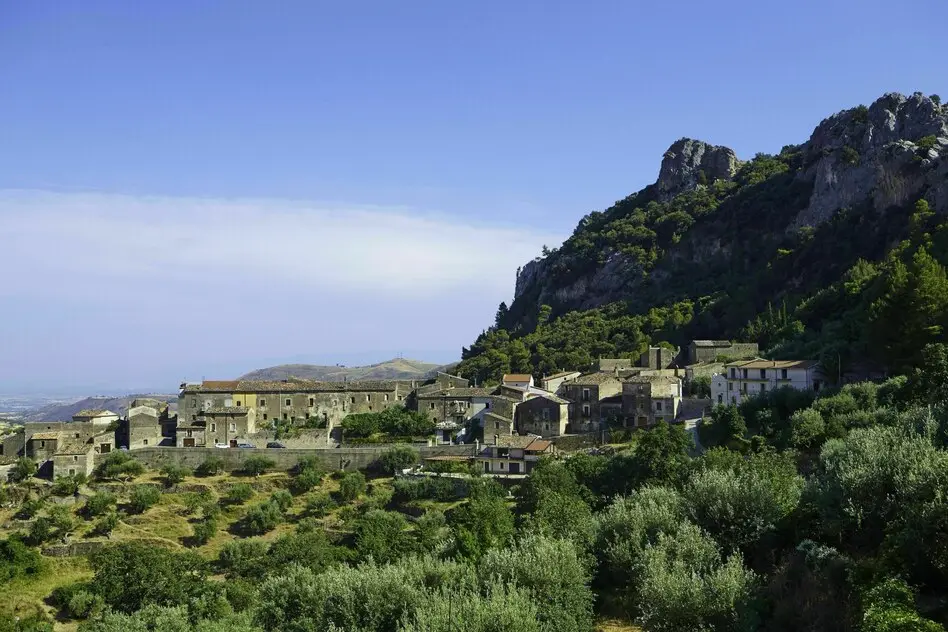
As soon as she arrives in the 800-person nest of Santa Chionia, which sits on the slopes of the Aspromonte mountain range on the edge of a deep gorge, the young activist realizes that she has landed in an archaic parallel universe: outside it is 1960, but in the village people still share a home with the cattle, there is no running water, no school, and child mortality is over 40 percent and you don't speak Italian, but a Byzantine Greek for which there are no dictionaries: the distant echo of a time when the area was part of Magna Graecia, the "Great Greece" of classical antiquity.
Juliet Grames: “The Lost of Santa Chionia”. Translated from English by Cathrine Hornung, Karin Fleischanderl. Folio Verlag, Bozen/Vienna 2026, 526 pages, 28 euros
Instead of a warm Nonna who serves hand-rolled pasta, the aspiring kindergarten teacher ends up with the grumpy landlady Cicca, who receives prophecies from her deceased sister in her sleep. When a flash flood cuts off the village from the outside world and uncovers a human skeleton under the post office, the first-person narrator, speaking in retrospect, realizes how the search for the dead man's identity also reveals a social system characterized by patriarchal violence and feudal brutality, in which the naive kindergarten teacher is chased back and forth to the point of collapse like a deer in the territory of a wolf pack.
This novel draws its tension from the narrative knowledge gap between the protagonist, who until the very end believes in opening her kindergarten in the former police barracks, and the dry, ironic comments of her disillusioned later self: This southern Italian who-done-it effortlessly carries over 500 pages - with the crime plot being just the vehicle for another story.
The longer the skeleton remains unidentified (neither the doctor nor the relevant authorities are eager to come forward), the more women appear who claim the dead as their own: Is it Leo, the son of the rectory's housekeeper Emilia Volontà, who has been missing for forty years? Or Mico Sordo, the husband of the enigmatic outsider Vannina Favasulli, who also disappeared?
When the American author Juliet Grames processed the life story of her Calabrian grandmother in the novel “The Seven or Eight Lives of Stella Fortuna” (2019), she came across a gap in her research in the Italian diaspora: almost every family was missing a husband, brother, cousin or great-uncle who had emigrated to America in search of wealth and of whom there was no trace afterwards. Smuggling crime? Accident at work? Emigration as an opportunity to leave family obligations behind? In an interview, Grames described this uncertainty as an unresolved trauma for American immigrant families.
As early as 1915, the Scottish world traveler Norman Douglas described the cracks that the mass emigration of able-bodied men left in the social fabric of Calabria in his book “Traveling in Southern Italy”. Douglas saw this as an opportunity for poor farming villages that were flourishing thanks to the money of emigrants, but he also complained about moral decline: “(…) paternal authority over the young boys is weakened, and the girls, who quickly see the advantages that money can offer everywhere, lose all attitude and reliability.”
Juliet Grames views the inhabitants of rural areas plagued by a lack of men, disease, landslides and suffocating traditions with decidedly more sympathy than the aristocratic traveler. In “The Lost of Santa Chionia” she creates a (fictitious) village panorama with sociological fascination, which she lavishly decorates with figs, sunsets and nightly processions.
It is populated by characters such as the opaque Tito Lico, called “The Wolf”, who sits in the budika every evening in front of a glass of goat's milk and is married to the fearsome Potenziana. Together with the thug Turi Laganà, the village tavern owner Ligòri Scordo, the priest and the doctor, they form something like the power elite of the village, which the popular communist Bastiano Massara is fighting, as well as the threatened relocation of the mountain village to the coast.
Here Grames refers to the ruthlessly pushed state resettlement projects in the name of hygiene and progress, with which the Italian state erased the culture of mountain villages like the (real) Africo.
One of the novel's ambivalent characters is the smart priest Don Pantaleone, who officially supports the kindergarten but also runs his own, isolated private school in the village. Who likes to pretend to be enlightening, but still supports traditions like the “Fuitina”: The “reparation marriage”, which was intended to “restore” the “honor” of a woman who had previously been kidnapped and raped, was only made a criminal offense in 1996.
Beyond folkloric kitsch, Juliet Grames approaches with cultural caution the question of how worth preserving such traditional structures are that have emerged from centuries of state absence and marginalization. And how self-help practices and patriarchal rules ultimately gave rise to the criminal structures in the 1970s that today, known as 'Ndrangheta, have large parts of Calabria under their control.
A clever crime thriller told with the courage of the American broadband panorama that makes you think about power and tradition. However, the sugar coating that is applied to the harsh events through Francesca's love back and forth between her husband Sandro and the (astonishingly under-complexly drawn) farmer's son Ugo would have been dispensable.