
Repression taz
Repression against NGOs in Italy: fine for first aid
In Trieste, Lorena Fornasir and her NGO look after refugees on the station forecourt. This is now a punishable offense – because it disrupts “recreation”. more...
Deutsch (original) ·Auto-translated to English
When Lorena Fornasir stepped out of the Trieste train station on Sunday evening, she saw several young Afghans, several of whom had injuries to their feet. The 71-year-old didn't hesitate, helped immediately and bandaged the wounds.
A gesture, one would think, that deserves praise and recognition. The police in Trieste, however, see it differently. A plainclothes police officer who was on the station forecourt recorded meticulously that Fornasir had violated "the police chief's orders": "In particular, she provided assistance to the people there using bandages, gauze bandages and plasters." Therefore, he announced a fine notice to her.
A humanitarian act as an administrative offense: This is now the legal situation in Trieste, the most important Italian arrival city for migrants arriving via the Balkan route in northeastern Italy.
The refugees keep coming to the Piazza della Libertà, right in front of the train station. And Lorena Fornasir can always be found there with her husband. In 2015 she founded the NGO Linea d’Ombra. Together with other volunteers, she distributes food to people from Afghanistan, Iraq and Pakistan and also provides medical aid.
In October, however, the local police chief ordered Fornasir to radically limit her offer of help. From Monday to Friday, Linea d'Ombra is only allowed to serve food and bandage wounds in the Piazza della Libertà between 6 p.m. and 8 p.m. On Saturday and Sunday, the NGO is completely prohibited from these activities. The police justification: In this way, the citizens of Trieste are guaranteed the right to “sociability, fun, relaxation” even on the station forecourt.
Lorena Fornasir, for her part, had written a clear reply to the plainclothes officer's report, in which she was accused of “disorderly conduct”. In brief, she wrote that she was “aware of the ban” and yet bandaged the refugees’ wounds: “Not doing so would have meant failing to provide assistance.”
The harassment against Fornasir and her NGO is representative of the Italian state's general treatment of migrants arriving in Trieste, a policy that can in fact be summarized by the term failure to provide assistance. They only receive state aid, accommodation and food once they have submitted their asylum application to police headquarters - but they usually have to wait months for an appointment to submit their application.
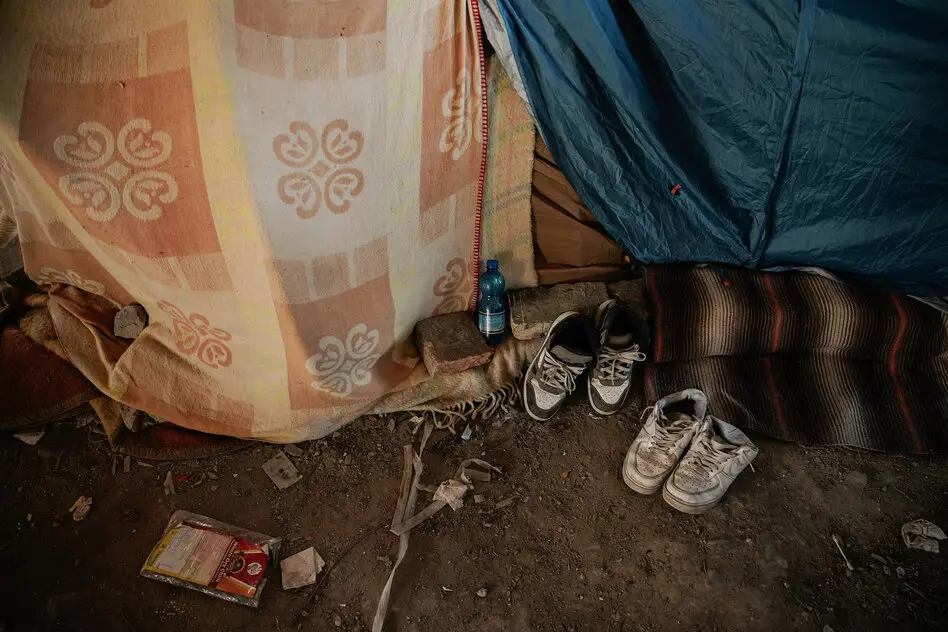
In the meantime, they are left to fend for themselves, have to spend the night in emergency shelters or on the streets, and have to rely on charitable organizations like Linea d'Ombra for food. The Italian Ministry of the Interior does not provide exact figures for those arriving across the border with Slovenia. The International Rescue Committee and the Diakonie der Waldensians recorded almost 10,000 people who had arrived in Trieste in 2025 and who had turned to the two aid organizations.
Many of them spent the night in the old warehouses of Porto Vecchio, the Old Port, until the beginning of November. The wind whistles through the broken windows of the halls, and people keep lighting fires to combat the cold. A young couple died in a fire caused by such a fire on November 1st. The police then cleared the Porto Vecchio; the entrances were walled up.
However, the authorities are still not providing accommodation. Instead, they harass aid organizations like Linea d’Ombra. They have good advice for migrants: you could contact the local Caritas.