
Germany taz
Race for SPD chairmanship: Heil throws his hat
...first into the ring. The former Labor Minister Hubertus Heil announced that he wanted to run for the SPD chairmanship. Who else could? more...
Deutsch (original) ·Auto-translated to English
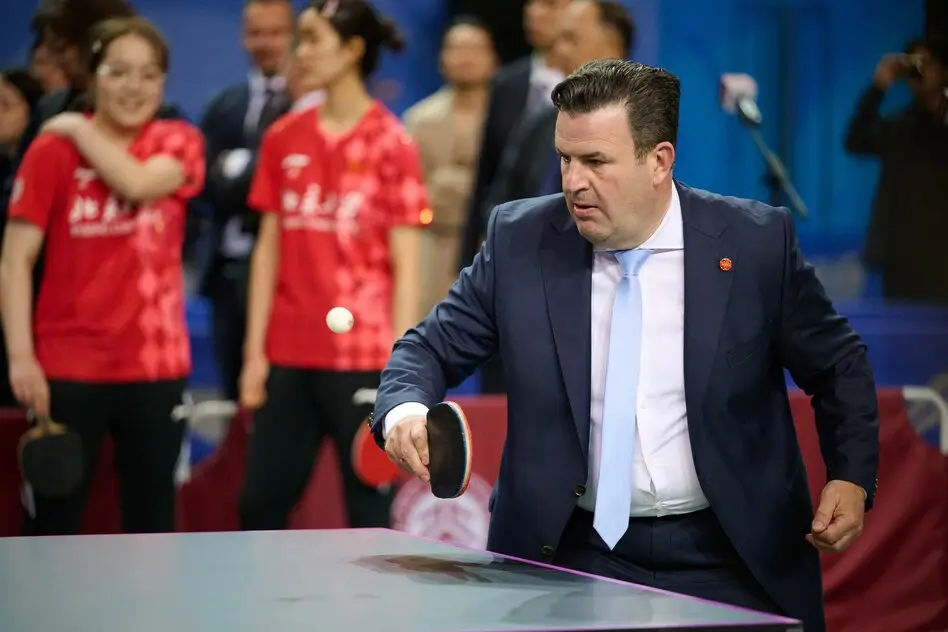
dpa | Around two months before the SPD party conference, former Labor Minister Hubertus Heil was the first to officially throw his hat into the ring. He has decided “to run as one of the chairmen of the Social Democratic Party of Germany at the federal party conference in Bremen in January,” writes the 54-year-old in a three-page letter to the regional associations and the party executive committee, which is available to the German Press Agency. The ARD and “Bild” first reported on it.
The SPD is usually led by a dual leadership – Heil leaves it open in his letter which woman he could imagine working with. The ex-minister advertises that he wants to “dedicate all his strength to becoming a party chairman.” “This is my offer to you and I ask for your support.”
There was recently criticism in the party that chairman Lars Klingbeil, as vice chancellor and finance minister, could not sufficiently advocate for “pure SPD”. “We will only become stronger as the SPD if we are more visible as a party,” writes Heil. “Clear concepts and new ideas” are needed.
After the resignation of SPD leader and Labor Minister Bärbel Bas in mid-October, the SPD wants to re-elect the entire party leadership. Heil is considered a kind of permanent rival of Klingbeil, at least since he was not given a position in the SPD part of the cabinet in 2025 and ended up as a simple member of the Foreign Affairs Committee.
Previously, Heil was responsible for the central SPD issues of work and social affairs in the cabinet for seven years. One of his most important reforms was the conversion of the Hartz IV system, hated by many Social Democrats, into citizens' money - but the increasing criticism of the benefit as being too generous also cast a shadow over the responsible minister.
Heil can give rousing speeches at party conferences. He is likely to need this ability given the unclear majority at the party conference. Heil's opponents argue that he has had many opportunities to shape the path of the SPD in recent years - and is not in favor of a change of course.
The only name that is still being traded apart from Heil is that of Lars Klingbeil: The 48-year-old still leaves it open whether he wants to compete again. He believed that he could help the party in the difficult phase, he said, and at the same time emphasized: “I am not attached to my office.” The SPD leadership wants to present its personnel proposal by December at the latest.
Before he makes a decision, the man from Lower Saxony wants to explore within the party whether he can expect a decent result. If he had to tremble, the Vice Chancellor would probably give up the party chairmanship.
Klingbeil receives support from well-known SPD members such as Defense Minister Boris Pistorius and the new Labor Minister Alexander Schweitzer, both of whom do not want to run, but there is a lot of headwind from the grassroots: several SPD working groups have submitted a motion for the party conference to separate office and mandate. Juso boss Philip Türmer also supports this.
Manuela Schwesig: If you ask around the SPD, her name is always the first to come up. Both officials and the rank and file trust the Prime Minister from Mecklenburg-Western Pomerania to lead the party. The 52-year-old herself has been very hesitant so far. Many Social Democrats hope that this will change as soon as she is re-elected Prime Minister at the beginning of the week.
Schwesig will ask herself what she can gain at the top of the party. As Prime Minister, she emphasized that she had the opportunity to shape federal policy anyway. Until now, Schwesig has often been a thorn in the side of the black-red government. As party leader, she would have to make compromises with the Union in the coalition committee. In a dual leadership with Klingbeil, she could be seen as the candidate of the hearts - and blame everything negative on Klingbeil. Then she could also have a chance of running as a candidate for chancellor in the 2029 federal election.
Anke Rehlinger: The head of government of Saarland is mentioned in the same breath as Schwesig. But she doesn't want to. And Rehlinger has – as the SPD sees it – better arguments than Schwesig. After all, there will be elections in Saarland in April, and Rehlinger needs her strength in the election campaign. The 50-year-old also argued that Saarland was too far away from Berlin.
Minister or parliamentary group vice-president: If none of the SPD prime ministers want to put their hat in the ring, female ministers or high-profile members of parliament would come into question. One could be the construction minister and Klingbeil confidante Verena Hubertz. Also in discussion are the parliamentary group vice-presidents Wiebke Esdar and Siemtje Möller. Esdar, the financial expert, like Bas, who resigned, comes from North Rhine-Westphalia - a plus point in a party in which regional proportional representation plays a major role. Möller was spokesperson for the pragmatic-conservative Seeheimer Circle.
If there are no candidates for a dual leadership, the SPD cannot rule out a sole party leader. They would “expressly welcome” a female individual leadership, the Jusos write in their party conference proposal. They don't mention the name Schwesig - but the Prime Minister from the north is the only one who is believed to be able to lead the SPD alone.