
Germany · taz · · 2h
Religion in Montenegro: Prayers for Ratko Mladić
Deutsch (original) · Auto-translated to English
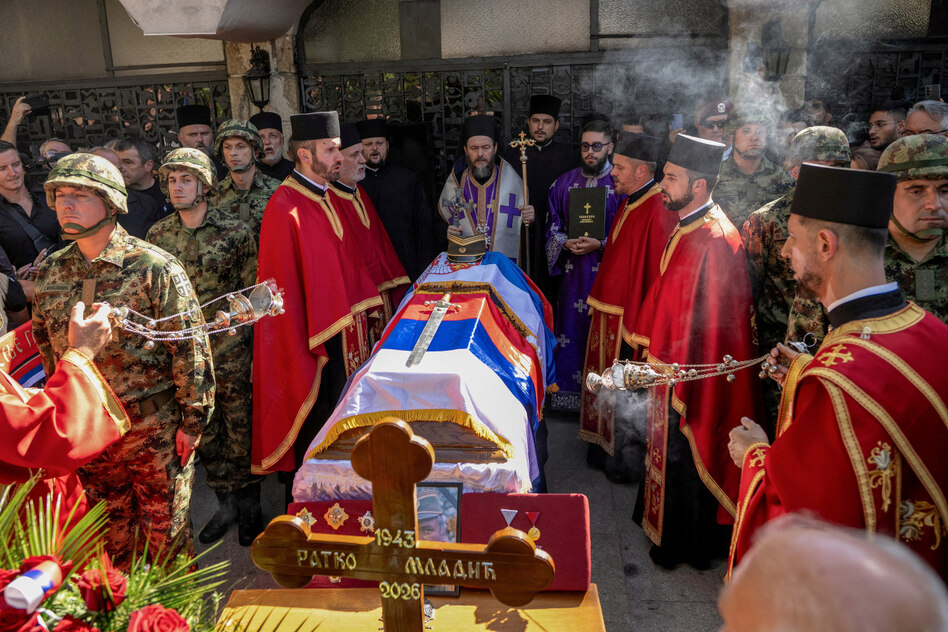
The death of the former Bosnian Serb general and legally convicted war criminal Ratko Mladić, along with the funeral ceremonies in the Serbian capital Belgrade, are drawing wider political circles internationally. After Brussels, now also in Montenegro.
Last Tuesday, the Chief Public Prosecutor's Office in the Montenegrin capital Podgorica opened a criminal investigation against the Metropolitan of the Serbian Orthodox Church, Bishop Metodije. The pastor of the diocese of Budimlja and Nikšić is accused of inciting national, racist and religious hatred.
The occasion was Metodije's remarks in the Piva Monastery on August 28th, one day after Mladić's death. The people recognized in Mladić "all those wonderful and holy qualities of Serbian warriors and knights. May the Most Holy Mother of God (...) also raise the soul of the famous General Ratko to the ranks of the holy Serbian knights," said Metodije. After the liturgy, the website of the Diocese of Budimlja and Nikšić reported that a memorial service was held for “the recently deceased Servant of God, General Ratko Mladić.”
Mladić was commander of the Bosnian Serb armed forces during the Bosnian War (1992–1995) and was responsible, among other things, for the Srebrenica massacre in July 1995. More than 8,000 Muslim boys and men were murdered. In 2017, the International Criminal Tribunal for the Former Yugoslavia (ICTY) sentenced Mladić to life in prison for genocide, crimes against humanity and war crimes. In 2021, the verdict was confirmed by an appeals court.
Five non-governmental organizations in the small town of Rožaje filed a criminal complaint against Metodije. The justification was that Srebrenica was not a question of political or national interpretation. The genocide is a judicially established fact. The public prosecutor's office is obliged to (…) examine whether the public statements in question meet the elements of a criminal offense under Article 370 of the Penal Code of Montenegro. Said article regulates liability for public approval or gross trivialization of genocide and other international crimes.
This is not the first time that Metodije has praised “deserving” military personnel. Last year he prayed for Pavle Đurišić, commander of monarchist national Serb Chetnik units in World War II. However, the public prosecutor's office in Bijelo Polje recently dismissed two related criminal complaints.
In Montenegro, a country with almost 630,000 inhabitants, 72 percent of the population is of the Orthodox faith. Of these, 90 percent belong to the Serbian Orthodox Church, which traditionally has close ties to the Russian Orthodox Church. Their Moscow leader, Patriarch Kirill, strongly supports Russia's war of aggression against Ukraine.
The President of Parliament, Andrija Mandić, is also feeling the aftermath of the Mladić case. Mandić, leader of the Nova srpska demokratija (New Serbian Democracy, NSD) party, publicly expressed condolences for Mladić. The main opposition party, the Democratic Party of Socialists of Montenegro (DPS), has now called for Mandić's removal.
For understandable reasons: Montenegro's government is aiming to join the EU as early as 2028 if possible. Such controversies are extremely inconvenient. Even if it is still unclear what conclusion the public prosecutor's office in Podgorica will come to, one thing is certain: the decision should be included in the next EU progress report.
Read the full story at the source →
Source: taz