
Germany taz
Director Lee Chang-dong in conversation: “Capital and technology are throwing us under the wheels”
Korean filmmaker Lee Chang-dong on strikes and mass layoffs, work as the only elixir of life and affection for his characters. more...
Deutsch (original) ·Auto-translated to English
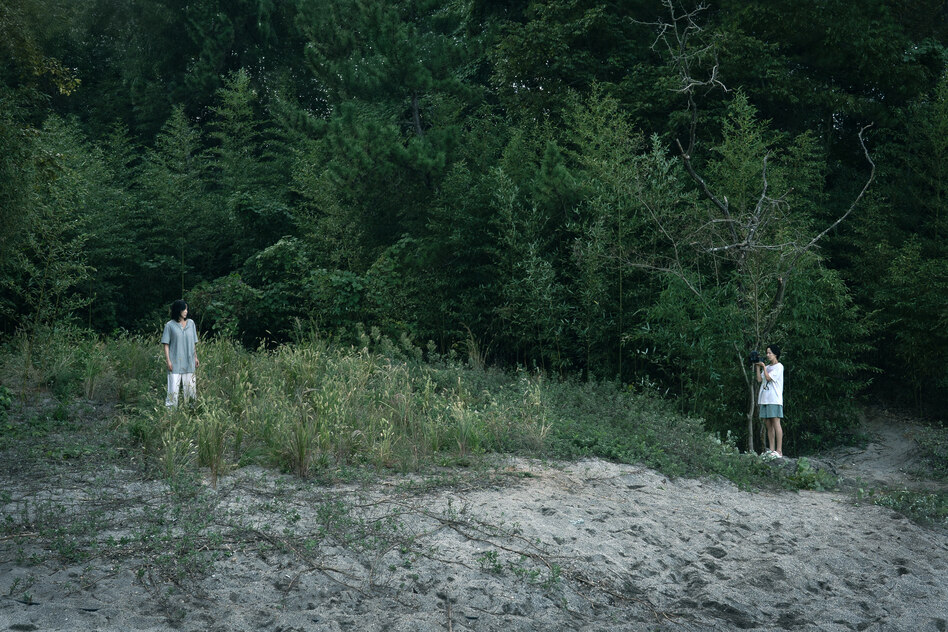
He hasn't yet won an Oscar like Bong Joon-ho or made any US series like Park Chan-wook, but Lee Chang-dong has still been one of the most internationally acclaimed directors for a long time. "Possible Love", the 72-year-old's seventh feature film, was recently awarded the Grand Jury Prize in Venice and is also entering the Oscar race as Korea's candidate. After its theatrical release, the quiet, subtle and complex social and marriage drama can be seen on the streaming service Netflix from November 6th.
taz: Lee Chang-dong, your new work, “Possible Love,” is dedicated to the film cycle “Dekalog” by your Polish colleague Krzysztof Kieślowski. Why?
Lee Chang-dong: I've always liked Kieślowski, and without particularly realizing it, he certainly influenced me as a filmmaker. Seeing his films at a young age was an aesthetic shock for me that left invisible traces. That's why, when I got the request, I immediately agreed to take part in a project that ultimately didn't come to fruition, in which each episode of the "Dekalog" series was supposed to become a separate feature film by a different director. I already had the idea for the story of “Possible Love” in my head, but I thought it could be connected to the last commandment: Thou shalt not covet. Because in a capitalist age in which one's own life and the value of one's own work are taken away so easily, one cannot avoid one question: Can one do anything other than covet what belongs to others?
was born in Daegu in 1954. He studied Korean and literature and then initially worked as a teacher. From 1983 he became known as a writer and then started making films. His feature film “Burning” was shown at the Cannes Film Festival in 2018.
taz: The original inspiration for “Possible Love” was a real mass layoff in Korea over ten years ago, which resulted in a major strike and its violent suppression. Did you know back then that this could be the material for a film? And do the events from back then still have an impact in your home country today?
Lee: It was already clear to me back then that the events and their consequences were worth making a film. Because it wasn't just a problem for a single company, but was a real turning point. There was an upheaval not only in the labor movement, but the entire Korean society changed permanently. At first I wasn't convinced that a feature film was the right way to tackle the topic. But now the world of work has continued to change rapidly around the world. We live in a time where work itself seems to be disappearing. It's not just about people losing their jobs. Because so many people's entire self-identification depends on their work, they also lose themselves. Now more than ever.
taz: When exactly did the idea come about that it would become a film within a film?
Lee: The realization as a film only became clear to me when my co-author Oh Jung-mi suggested that I combine this material with the story of a female director. Because that way I could really make the topic my own.
taz: Do you actually see this director, who comes from a privileged background and is making a documentary about laid-off workers and trying to gain the trust of an affected couple, as a kind of alter ego of yourself?
Lee: In her identity as a filmmaker, her attitude towards cinema and in general her camera-trained view of the world, she is certainly the one to whom I feel closest of the four main characters in my film. How do I talk about the world that surrounds me? How do I approach the people who are at the center of my film? How much restraint or frankness can or must I exercise? These are all questions that Yeji asks himself and that I also know myself. Her husband is cynical and accuses her that her supposed friendship with the other couple is method acting because she has nothing in common with them and can never have anything in common. Perhaps I can be accused of the same thing: that I appropriate stories that are not my own. But even if the characters that populate my films are often far away from me, I always have the impression that I feel real love for them.
“Possible Love.” Director: Lee Chang-dong. With Jeon Do-yeon, Sul Kyung-gu and others South Korea/USA 2026, 164 min.
taz: You also make feature films whose protagonists you come up with yourself...
Lee: Still, I keep asking myself how I should deal with their lives and their pain. How honest is that? How much distance do I have to keep and how close can I get to her? To this day, that is the central figure for me as a director. Anyone who makes commercial films may have to tell people's stories, above all, with skillful craftsmanship. But I always ask myself how big the distance must or should be between me and what is being told. How close the characters’ lives can be to mine. I think that shapes the character of my films.
taz: The actual center of the film is the relationship between two very different married couples. Do you still see “Possible Love” as a political film?
Lee: That depends on how you conceptualize the concept of the political. Insofar as the film shows how easily economic problems and economic inequality can take a person's life away, it can certainly be called political. And of course the film is about violence, and not just about state violence, which we show in the flashbacks, for example, with the suppression of workers' protests. The invisible violence of capital, which has long been all-powerful, can be much more brutal, not least when – as in the case of Sang-woo in the film – it has a very friendly, human face. I hope that the audience perceives this in exactly the same way, that is, that it recognizes the political in interpersonal relationships.
taz: Do you have the impression that the conflicts and the gap between social classes in Korean society are getting worse?
Lee: The development of the past few years has been as rapid as it is unstoppable. The gap has now become so large that terms such as class struggle and division in society no longer have any meaning. It is as if the power of capital no longer exists in the same atmosphere as us, but has long since existed in the stratosphere. The gap between rich and poor has widened so much. In addition, this overwhelming force that determines the lives of ordinary people has been linked to the technological revolution.
taz: Can you please give a concrete example?
Lee: Just as Mi-ok is attracted to the wealthy Sang-woo, who reminds her of Apple co-founder Steve Jobs, whom she admires, people are excited about this alliance of capital and technology. They hope that he can solve our problems and free us. Unfortunately, it is much more likely that we, as individuals, will be completely undermined in our existence and will no longer play a role at all.
taz: Speaking of capital: It probably wasn't easy to get the “Possible Love” project off the ground. Korean cinema has been booming worldwide for several years, right?
Lee: Measured by various metrics, Korean cinema is very successful, and films like “Parasite” have created works that have generated worldwide attention and been internationally celebrated. But cinemas suffered heavily during the corona pandemic and productions from Korea have long been celebrating their greatest successes on streaming services. As a result, the Korean film industry is paradoxically finding itself in a new kind of crisis, the likes of which it has never experienced before. In the first half of 2025, when I wanted to raise financing for this film, the industry was economically weaker than ever before. I wasn't able to get financing like I did with my previous productions; I couldn't find enough backers. So I finally decided to accept the offer from Netflix, which showed great interest in the project from the start. And fortunately I can report that my independence and freedom as a filmmaker have always been guaranteed and respected there too.