
Germany taz
Government crisis in the Netherlands: Millionaire tax puts the “emergency solution” under pressure
The Dutch minority government is fighting in secret for its continued existence. Coalition partner VVD is driving up the price. more...
Deutsch (original) ·Auto-translated to English
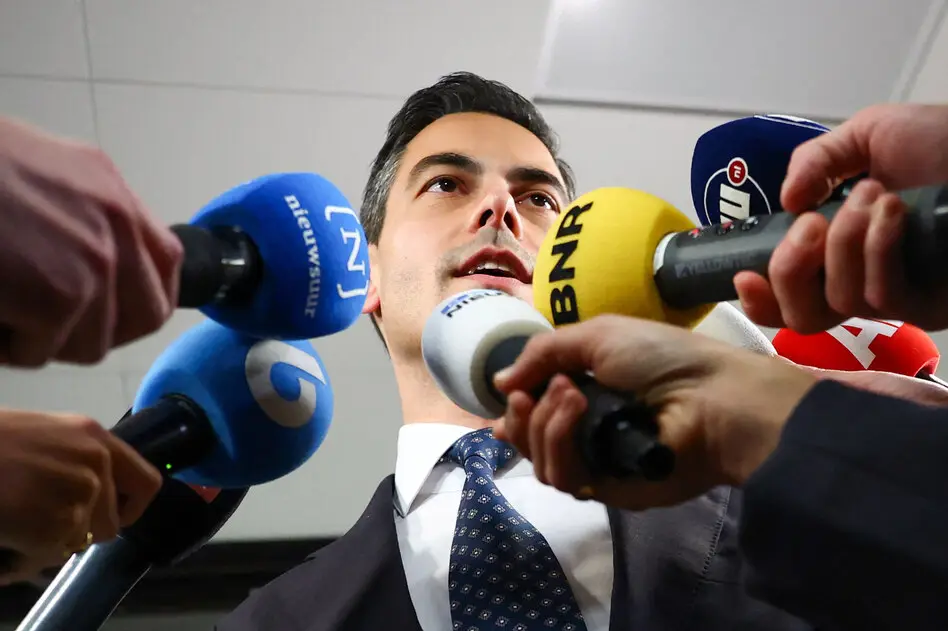
The crisis facing the Dutch government is far from averted. At the weekend, Prime Minister Rob Jetten continued negotiations behind closed doors at a country estate near Hilversum with his deputies and the parliamentary group leaders of the coalition parties. As of Sunday evening, no agreement could be reached as to whether and under what conditions the divided minority government would remain in place. Nothing was made public about the content of the “fundamental talks,” as Jetten described the negotiations beforehand.
However, it is clear that the coalition between the prime minister's centrist Democrats66 (D66), the Christian Democrats (CDA) and the liberal-right Volkspartij voor Vrijheid en Democratie (VVD) is under pressure: Deputy Prime Minister Dilan Yeşilgöz is calling for "a party to come in" to keep the balance between right-wing and left-wing forces in the government balanced, since D66 and CDA had previously looked “too much to the left”.
Yeşilgöz is alluding to the central conflict of the minority government, which only came into power at the end of February: Since it only has 66 of the 150 seats in parliament, it is dependent on support from the opposition. Even during the coalition negotiations last winter, those involved were unable to agree on a fourth force that would have secured them a permanent majority. While the election winner D66 would have liked to bring a progressive party on board, the VVD relied on a right-wing one.
The remaining three-way alliance of D66, VVD and CDA is therefore nothing more than an emergency solution, which repeatedly falls victim to its position of weakness, especially in the dispute over tax reform that has been going on for months. For the draft presented in September, the coalition sought support for its proposal and then negotiated unsuccessfully with various opposition parties for weeks.
Shortly before the deadline on Friday last week, D66 and CDA reached an agreement with Pro, the social democratic-green fusion party and Volt. This is intended to shift a tax volume of one billion euros from income to assets. “The strongest shoulders carry the heaviest burdens,” explained CDA parliamentary group leader Henri Bontenbal in parliament. The VVD, however, defended itself against this “millionaires’ tax” and voted against its own coalition’s draft, which parliament adopted by the narrowest of margins.
The immediate failure of the coalition was initially averted on Friday evening, but those involved apparently have different messages. While D66 and CDA underlined their willingness to continue and emphasized that they “did not want to let go” of the market-liberal VVD, VVD leader Yeşilgöz called the minority government a “failed experiment”. Laurens Dassen, the parliamentary group leader of Volt, called on D66 and CDA at the weekend not to allow themselves to be “blackmailed” by the VVD.
In this precarious situation, the government is now attempting a final rescue attempt in the seclusion of the same estate where it decided to cooperate in the winter. Meanwhile, prominent political voices are speaking out and calling for the coalition to be preserved. Sharon Dijksma, the mayor of Utrecht, finds the failure after less than a year “completely irresponsible,” “also in an international context.” The former D66 leader and former chairman of the State Council, Thom de Graaf, emphasized to the Dutch media: “We have such a great need for stability.”