
Climate taz
Legal opinion: Germany must take in climate displaced people
Because the federal government does not protect the climate enough, it can be held liable by those injured. And even stronger than previously thought. more...
Deutsch (original) ·Auto-translated to English
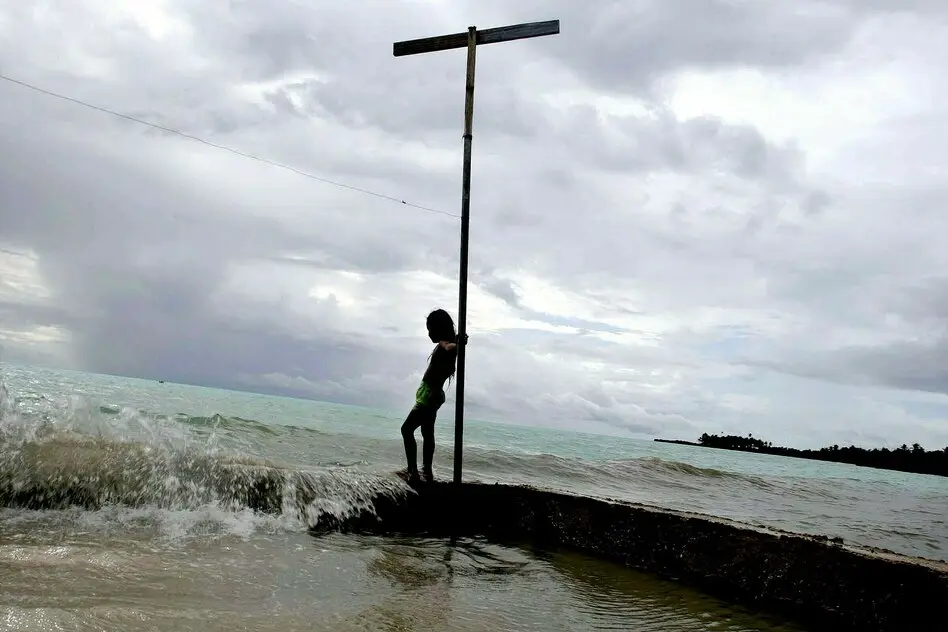
Because Germany is not fulfilling its obligations under international law to protect the climate, it could be held more liable by victims of the climate crisis than before. A legal opinion commissioned by Greenpeace and published on Tuesday concludes that there is a “comprehensive obligation to make reparations”.
This includes compensation for monetizable damages and the so-called “satisfaction” for immaterial damages. According to the authors, this also includes the creation of a national legal framework to accommodate those displaced by climate change. A corresponding obligation could, for example, be required of a flooded island state in Germany, write the lawyers Ammar Bustami and Roda Verheyen. What such a legal framework would look like would be left to Germany. International law does not provide any requirements for this.
Specifically, the two refer to a finding by the International Court of Justice (ICJ) from July 2025. In it, the ICJ clarified for the first time comprehensively the obligations of states under international law in the area of climate protection.
It says that states are obliged to pursue the 1.5 degree target of the Paris Agreement with full vigor. “Inaction or inadequate action”, for example through the continued subsidization of fossil fuels, could therefore constitute an injustice that is attributable under international law and triggers state responsibility.
A number of lawsuits have so far primarily attempted to hold corporations liable for the consequences of climate damage. There were individual judgments regarding the liability of the governments of foreign countries, but they mostly related to financial liability.
The Greenpeace report sees the basis for liability now expanded by the legal opinion of the ICJ - and goes beyond the claims of individual individuals.
The Climate Action Tracker, a project by climate think tanks, rates Germany's climate policy as “inadequate”. Measured against the global CO₂ budget available for global warming of 1.5 degrees Celsius, Germany has already used up its “emissions space” in the atmosphere, according to the Advisory Council on Environmental Issues, which advises the federal government. According to the report, the extended liability is based on such climate policy failures.
To date, there is no official recognition of the climate crisis as a reason for flight that would give rise to a legal right to protection or acceptance by other countries. The UN refugee agency always emphasizes the need to help those displaced by climate change. However, it has so far avoided the demand that they be legally treated in the same way as those displaced by war or persecution. The industrialized countries in particular are strictly against such a formal right to protection, which could affect hundreds of millions of people in the future.
45.8 million new displacements due to natural disasters were documented worldwide in 2024, according to Greenpeace. The vast majority of people displaced by climate change remain in their own country or region.
In 2015, a citizen of the Pacific island state of Kiribati sued against his deportation from New Zealand, citing the threat to the existence of Kiribati posed by the climate crisis. New Zealand courts rejected this. The UN Human Rights Committee had confirmed this, but at the same time stated that deportations can violate the right to life if the consequences of climate change acutely threaten the lives of those affected in the country of origin.