
Politics taz
Return of Nazi victim documents: A law against reprehensible commercialism is needed
After their auction was prevented, private war diaries and letters from concentration camps have now returned to the places of origin of German crimes in Poland. more...
Deutsch (original) ·Auto-translated to English
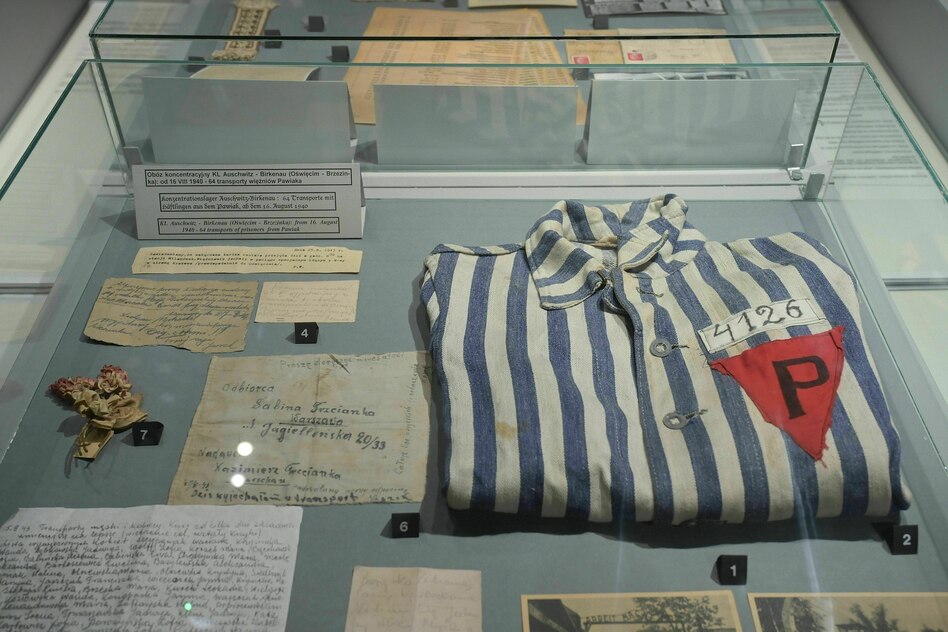
The letter from Polish prisoner Jan Perkowski to his mother, written in pencil in 1940, almost went under the hammer at an auction in Neuss near Düsseldorf at the end of 2025. And then it might have disappeared into a private stamp or curios collection. “I am thinking above all of his mother, who waited anxiously for news of her boy in 1940,” said Polish Minister of Culture and National Heritage Marta Cienkowska as she handed over hundreds of war and Holocaust documents saved from auction to representatives of memorial sites in Poland and Europe in a solemn ceremony. “But even the young man could hardly have imagined that 80 years after the end of the war, his letter from the Pawiak Nazi prison in Warsaw would be sold at a German auction to the highest bidder,” says Cienkowska.
After international protests, an online campaign of contemporary victim and perpetrator testimonies, including a bloodstained “Jewish star with signs of wear”, was just stopped at the end of 2025. With the help of private donors and in close cooperation between the North Rhine-Westphalian Ministry for European Affairs and the Polish Auschwitz-Birkenau Foundation, not only were all the documents from the planned auction able to be purchased and saved. Rather, it was also possible to use the donations to purchase additional documents that were offered by collectors on the open market and - often due to material need - also by the descendants of victims
“It is difficult to bear when diaries from those persecuted, letters from concentration camps or so-called Jewish stars are traded as devotional items,” agreed North Rhine-Westphalia Europe Minister Nathanael Liminski with the Polish Culture Minister. Because these relics with a direct connection to the Nazi tyranny are not curiosities for catalogs, but silent witnesses to a state-organized crime. “We must not allow,” said Liminski, “that the victims of the National Socialists become numbers again through the commercial exploitation of their estate.”
For this reason, the North Rhine-Westphalia state government has introduced a legislative project to the Federal Council that aims to ban commercial trade if the items “have a direct connection to victims of the National Socialist tyranny and their fate of persecution.” Nevertheless, it should remain possible to sell these objects, but only to memorial sites, archives and research institutes. After the approval of all 16 states, the legislative project is now before the Bundestag. Liminski hopes “that in the next step we will talk to our European partners about a Europe-wide ban on the trade in such items.”
Both Poland's Minister of Culture Marta Cienkowska and Wojciech Soczewica, the General Director of the Auschwitz-Birkenau Foundation, can imagine taking part in this German-Polish initiative at the European level.