
Germany · taz · · 55m
Looking back at the election year 2026: Young people shit on the middle!
Deutsch (original) · Auto-translated to English
The middle is losing its youth. And she shouldn't convince herself that it's just because of a bad social media presence during the election campaign. The 2026 election year was not a year of indifference. On the contrary: voter turnout increased in all five countries. In Saxony-Anhalt by 17.5 points to 77.8 percent, in Berlin by 11.3 points, in Mecklenburg-Western Pomerania by 7.3 points. People are not tired of politics. They just make different decisions than the center had hoped.
Where should young people's attention to the center come from? The trend study “Youth in Germany” found that a third of 14 to 29 year olds need psychological treatment. A fifth are thinking about emigrating in order to find better future prospects abroad that they apparently no longer see here. Phil also observes this, who classifies politics and political communication on his social media channels and is still studying himself: "Young people need a perspective. [...] If I can't finance my studies even though I work two to three jobs, then I get frustrated. [...] If I can't move out of my parents' house on my training salary because it's not enough, then we have a problem."
This is particularly clear among young voters in Mecklenburg-Western Pomerania: Here the CDU achieved 2 percent of those under 30. In Saxony-Anhalt, the SPD achieved 9 percent in the group of 18 to 29 year olds. The AfD was 44 percent there and 37 percent in MV. At the same time, 47 percent of young people in Berlin voted for the Left.
Donations to the taz panter foundation provide financial support to independent and critical journalists on site and in exile as part of the projects “War and Peace Diary” and “Our Window to Russia, Belarus and other post-Soviet countries”. On the last day of every month our podcast “Free Speech” appears, in which voices from the foundation’s projects have their say.
But young people are not just missing from the centrist election results. They are often missing from lists, in decision-making rooms and as recipients of political offers. That's why our guest Karoline Herrmann was asked how well the young generation is represented in the structures of the CDU Mecklenburg-Western Pomerania: "If that were the case, then lists would perhaps be made differently. I think we now have a great opportunity to position ourselves structurally a little differently - between young and experienced colleagues, men, women and also other diversity characteristics."
Anyone who tries to reach young people with a hastily produced social media video six weeks before the election does not seem approachable, but rather fake. And the AfD? She doesn't win simply because she understood Tiktok. It is there where others are missing: with fan accounts, events, local groups and the feeling of belonging.
"There are these graphics that show that the AfD does not upload disproportionately more videos than the other parties. The AfD's success factor is simply that they are played out much better. [...] The AfD has so many fan accounts, so many supposedly neutral accounts, which are somehow still attached to it and can simply push their points much better, into the vastness of the Internet. That doesn't exist with established parties," said Phil.
It offers connection. That's exactly what makes them so dangerous. The question is therefore not just how parties communicate better. But rather: Who do they allow to have a say - and who do they actually make politics for?
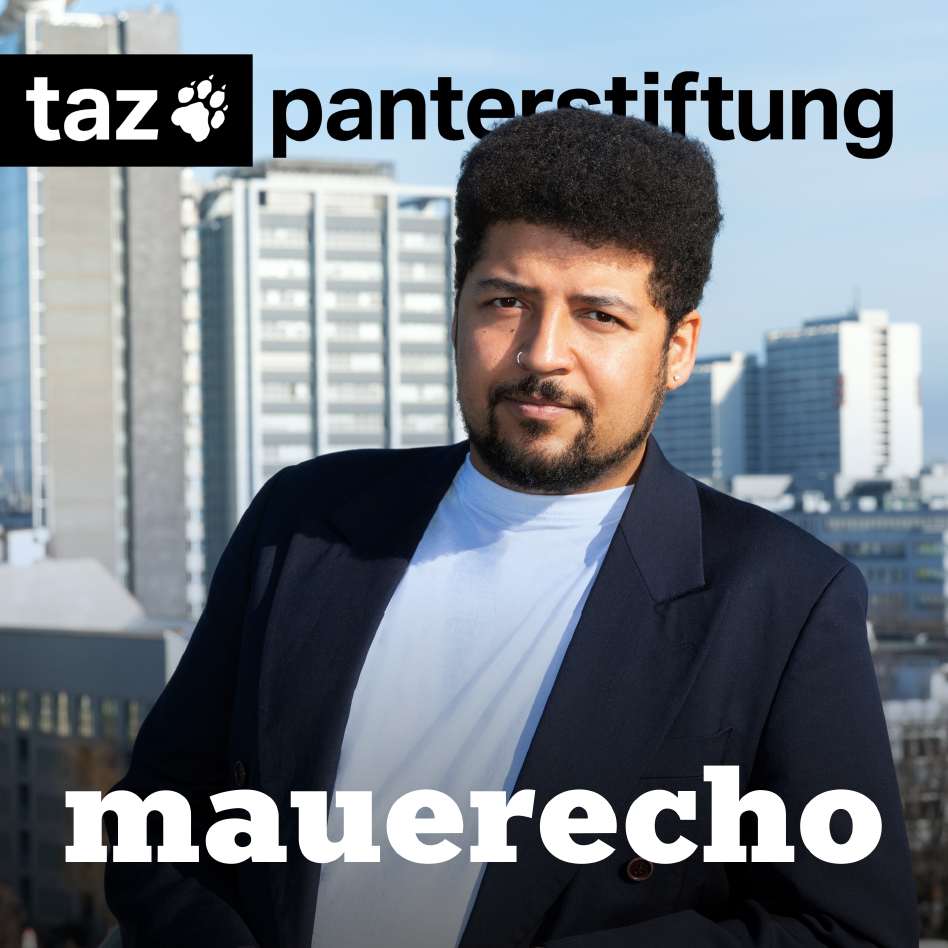
“Wall echo – East meets West” is a podcast from the taz panter foundation. It currently appears every week on taz.de/mauerecho and wherever podcasts are available. Special thanks go to our sound designer Sebastian Jautschus and our intern Kilian Hamidi.
Read the full story at the source
Source: taz