
Germany · taz · · 1h
Ranking on nutrition and environmental protection: Tofu is the best source of protein in a new ranking
Deutsch (original) · Auto-translated to English
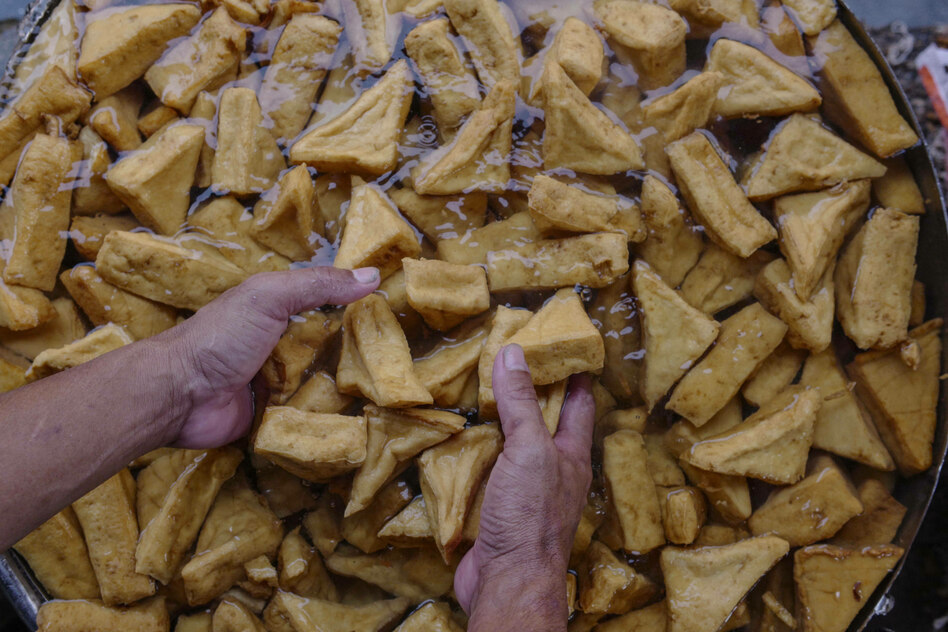
Tofu is the best source of protein, according to a new health and environmental impact ranking. The food made from soybeans comes in first with 36 out of a maximum of 40 points in the ranking presented by Chris Macdonald, a behavioral scientist at the University of Cambridge, in the journal Frontiers in Sustainable Food Systems.
Cheddar cheese performs worst (13 points). The other three top places also allocate exclusively plant-based foods, while the bottom four are all of animal origin.
Macdonald calls his rating system “BPI Score” after the Better Protein Institute, which he founded and which wants to promote the switch to what he believes are better protein sources. The scientist rated 20 protein-rich foods in two main categories: People and Planet. When it comes to the environmental part, Macdonald takes into account greenhouse gas emissions, water pollution and land and water use.
The differences are sometimes huge: For tofu, Macdonald sets the greenhouse gas emissions at 0.61 kilograms of CO₂ equivalents per 100 grams of protein. For beef it is 64.19 kilograms. When it comes to space requirements, tofu is also far ahead of beef with 2.16 square meters per 100 grams of protein with 211.38 square meters. When it comes to water consumption, the picture is less clear: nuts require a particularly large amount, while beans, sunflower seeds and tofu use comparatively little so-called blue water. Water is considered “blue” if it is actively taken from groundwater or surface water, i.e. used for artificial irrigation.
Health aspects are also included in the “People” part. Macdonald looks primarily at salt, saturated fat and cholesterol. According to the data used, beans only contain around 11 milligrams of sodium per 100 grams of protein, while mozzarella contains around 2,550 milligrams.
When it comes to saturated fatty acids, however, there is no simple pattern. Cod performs particularly well with 0.47 grams per 100 grams of protein, while cheddar performs particularly poorly with 84.74 grams. Plant-based foods are not automatically ahead either: Brazil nuts also contain a lot of saturated fat at 78.32 grams.
In addition, Macdonald assesses whether a food contains all nine amino acids, which are often classified as essential. Most plant protein sources are not “complete” proteins by this definition alone. However, the author adds that a varied diet from different plant sources can also provide all the essential amino acids.
For accessibility purposes, the index also takes into account the price at the British branch of the supermarket chain Aldi. Lentils are the cheapest source of protein, quinoa is the most expensive. All 20 products examined were available in British supermarkets.
In the end, tofu, chia seeds, beans and quinoa are in the top fifth of the overall ranking - exclusively plant-based foods. In the lowest fifth, however, you can find mozzarella, lamb, beef and cheddar.
However, the BPI score does not claim to be complete. Macdonald presented the rating system in a so-called perspective article, not in an empirical study. The scientist expressly describes the score in its current form as the first version.
Because important factors are still missing. These include the ethical consequences of animal husbandry, antibiotic resistance, zoonoses and the health risks of processed meat. The impact on biodiversity is also not directly assessed. Macdonald suspects that taking such factors into account would actually widen the gap between plant and animal protein sources.
Read the full story at the source
Source: taz