
Migration taz
Radio from a migrant perspective: Making the unheard audible
Radio Migrant is dedicated to the perspective of (work) migrants in several episodes. And shows how they defend themselves against discrimination. more...
Deutsch (original) ·Auto-translated to English
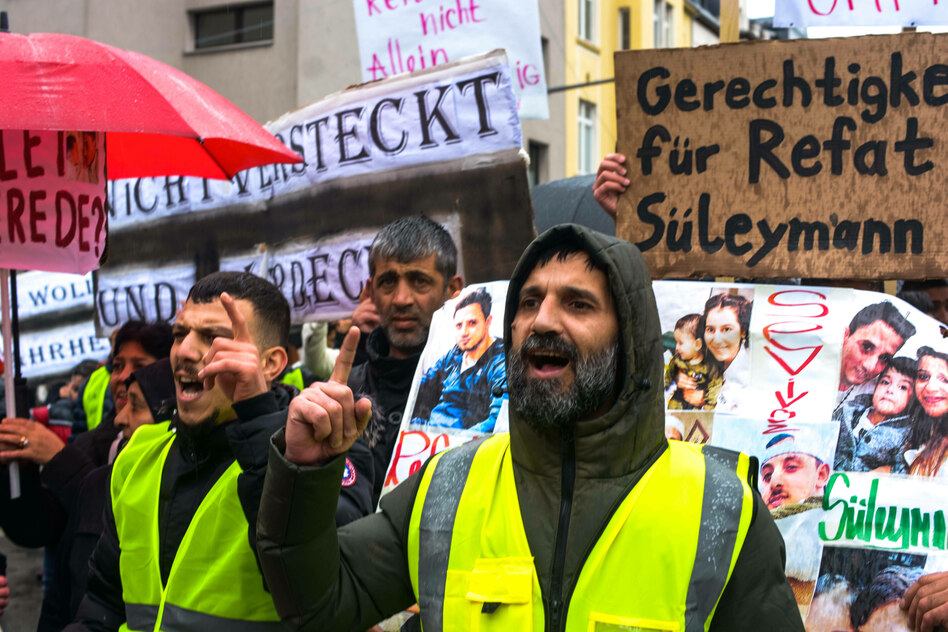
Refat Süleyman disappeared without a trace on the Thyssenkrupp-Steel company premises in Duisburg-Bruckhausen on October 14, 2022. Three days later, the body of the 26-year-old father was found in a mud pool on the factory premises. The man, who came from Bulgaria, was employed as a temporary worker for cleaning work. The fatal accident at work caused sadness and outrage among his work colleagues. They organized rallies for better workplace safety and compensation for Süleyman's relatives.
We find out more about this in the third episode of the Radio Migrant podcast. It spends almost an hour under the title “When work remains invisible” about the situation of mostly migrant workers in the cleaning industry.
The Radio Migrant project, supported by the Rosa-Luxemburg-Stiftung, is dedicated to the topic of labor migration in the Ruhr area from a special perspective. There are now three podcasts, among other things: report on the disenfranchisement of migrant workers there or on the resistance of those affected.
The people, mostly from Eastern Europe, who move to the Ruhr area in search of a better life are not defamed as potential fraudsters who want to immigrate to the German social system, as is the case in large parts of the conservative media. Nor are they treated, as is the case in some liberal circles, as defenseless victims who need to be helped. In the three episodes of Radio Migrant, the migrant workers and their supporters have their say. Examples are repeatedly given of how they defend themselves against discrimination. The rallies following the death of Refat Süleyman are just one example.
In the first episode, under the heading “Government through repression”, we learn about how migrant tenants are deprived of their rights in many cities in the Ruhr area. Even though they have valid rental contracts, they are forced to leave their apartments, often at short notice. The keyword “junk real estate” provides the public with the necessary accompaniment to this undermining of tenants’ rights. In this episode we also learn how affected tenants successfully defended themselves against the threat of eviction.
The second episode of Radio Migrant is dedicated to the construction of so-called social fraud. Those affected have their say here who have worked in the Ruhr area for many years and whose applications for social assistance have been rejected for a long time. Even the completely legal use of social benefits is defamed as fraud. It also shows how migrants are initially disenfranchised, but in the future people with a German passport will also be affected.
“With the podcast I wanted to make visible the conflicts that shape issues such as displacement from living space, segregated labor markets and a German social system that is increasingly repressive towards certain migrant groups,” says sociologist Polina Manolova, who teaches at the University of Duisburg, explaining the idea for the podcast.