
World · taz · · 2h
Q&A on the death penalty in the USA: How often do executions go wrong?
Deutsch (original) · Auto-translated to English
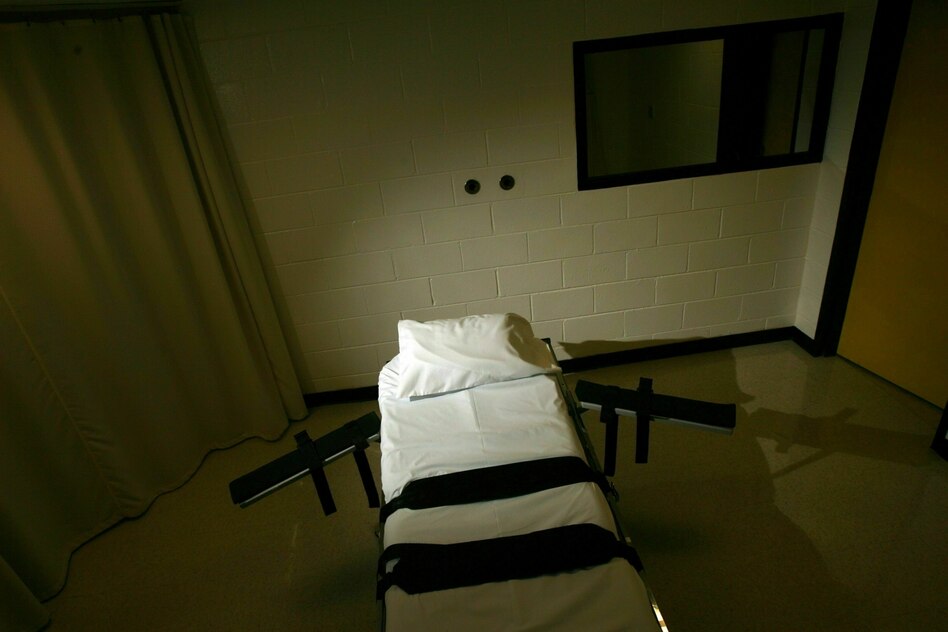
In the US state of Tennessee, Christa Pike was the first woman to be executed in 200 years. Her attempted execution by lethal injection failed on September 29, 2026. After two attempts, the execution was stopped and Pike was taken to a hospital. The US state of Tennessee announced that it would suspend further executions for the rest of 2026 and ordered an investigation. But what about the death penalty in general in the USA? The most important questions and answers.
In 27 US states it is still possible by law to impose the death penalty. In 2026, convicts were executed in six states: Alabama, Arizona, Florida, Oklahoma, Tennessee and Texas. Four states currently have the death penalty suspended by decree: California, Oregon, Pennsylvania and Ohio.
According to Amnesty International, death penalties are still carried out in 17 countries worldwide: Afghanistan, China, Egypt, Iran, Iraq, Japan, Kuwait, North Korea, Saudi Arabia, Singapore, Somalia, South Sudan, Taiwan, United Arab Emirates, USA, Vietnam and Yemen.
At the beginning of 2026, there were 2,004 people on death row in the USA. 47 of them were women, i.e. 2.3 percent of those convicted. Between 1972 and 1976, negotiations took place over whether the death penalty was compatible with the US Constitution. Since 1976, 18 women have been executed, about one percent of all executions.
At the beginning of his second term in office, the US President declared the death penalty a “necessary” instrument of American justice by decree. He described it as a fitting response to “evil.” Trump's policies have particularly influenced the death penalty at the federal level, because in the USA you can be sentenced to death at either the state or federal level, depending on the crime. The death penalty at the federal level can be imposed for, for example, terrorism, the murder of federal officials, or certain serious drug crimes. During Trump's first term in office, federal executions were carried out for the first time in 17 years. In his second term, Trump also focused on expanding the death penalty and speeding up its execution.
In 2025, abolition bills were introduced in 12 states that have the death penalty, but none of these bills have yet been passed. There is also a coordinated national network of more than 60 organizations that advocate politically and legally against the death penalty. At the same time, there were unsuccessful attempts to reintroduce this penalty in ten states without the death penalty.
According to an October 2025 poll, 52 percent of Americans supported the death penalty and 44 percent opposed it. This puts approval at its lowest level since 1972. In 1994, 80 percent supported the death penalty.
Lethal injection is at least one execution option in 28 states, making the method the most commonly used. Since 1976, 1,492 people have been executed, followed by 163 executions with the electric chair. Individual states also allow gas or a firing squad. Some states allow convicts to choose between methods, while others only use alternative methods when lethal injection is not available or legally permissible.
The state of Texas adopted lethal injection as a method of execution in 1977 and carried out the first execution using this method on December 7, 1982.
States use different protocols, sometimes using a single drug, sometimes using a combination of three drugs. Obtaining the active ingredients for lethal injections is difficult because many pharmaceutical companies refuse to allow their products to be used as means of execution.
In Tennessee, where Pike was to be executed, pentobarbital, a single drug, is used. It was not explicitly developed as an active ingredient for lethal injections in executions. As a medicine it is used as a sedative and sleeping aid, in preparation for anesthesia and as an antispasmodic.
In the botched execution of Christa Pike, executioners administered two doses of the drug. The British newspaper Independent wrote that the Biden administration had previously removed pentobarbital from the federal protocol for lethal single-agent injections due to concerns about possible unnecessary pain and suffering.
Other states have a three-drug protocol. An anesthetic or sedative is first administered. This is followed by a muscle relaxant that paralyzes the muscles, including the respiratory muscles. The third agent is potassium chloride, which causes cardiac arrest.
It is estimated that errors occurred in three percent of executions in the United States between 1890 and 2010. Austin Sarat, a law and political science professor, wrote a book about the history of flawed executions. In it he reports that 8,776 people were executed during the period and that something went wrong in 276 executions. The error rate was highest for lethal injection.
For example, in May 2026, a case was reported, also in Tennessee, in which enforcers were unable to find a vein to inject the deadly drugs. After several failed attempts, the convict was transported back to prison and the execution of his death sentence was postponed for a year.
This depends on each state’s execution protocol. According to ABC News, the state of Tennessee's execution protocol calls for a second set of lethal injections to be administered "if the inmate has not died after the first set." It is not explained in detail what happens if the prisoner is still alive after the second sentence. For this reason, Christa Pike's execution was stopped and the condemned woman was taken to the hospital.
Things work differently in the state of Kentucky: If the second attempt fails, the execution is suspended and medical staff initiate stabilizing measures. Ambulances, medical staff and a defibrillator must be ready there before the execution begins. In the past, botched executions by lethal injection have resulted in injuries and significant physical suffering. A further attempted execution can therefore be challenged in court.
Proponents describe lethal injection as a controlled and comparatively humane method of execution. Critics raise reasonable doubts that the procedure is reliably painless and reliably causes death. They point to botched executions, problems in administering the lethal drugs and the lack of involvement of doctors who oppose executions for professional ethical reasons.
The effects of the drugs used in executions have not been specifically researched in the context of the death penalty. Because studies with lethal drug doses are not compatible with medical research.
However, there are medical studies on individual active ingredients that sometimes show differences in their effects and degradation in women and men. However, data are lacking for the high doses and combinations used in executions. It is therefore impossible to say how strongly such differences can influence the course of an execution.
Each state regulates individually how many witnesses, relatives of the convicted person and the victim can be present. In Tennessee, adult relatives of both the condemned person and the victim are allowed to observe the execution. A priest and a defense attorney for the convicted person may also be present. There is no maximum number in Tennessee for family members of the convicted person.
Things are different in Alabama, for example. There, the convicted person can name up to six relatives or friends as witnesses. On the victim's family side, up to eight immediate relatives may be present, provided they are older than 19 years.
Read the full story at the source
Source: taz