
Germany · taz · 5h
Mentally ill people in the neighborhood: all-round helplessness
Deutsch (original) · Auto-translated to English
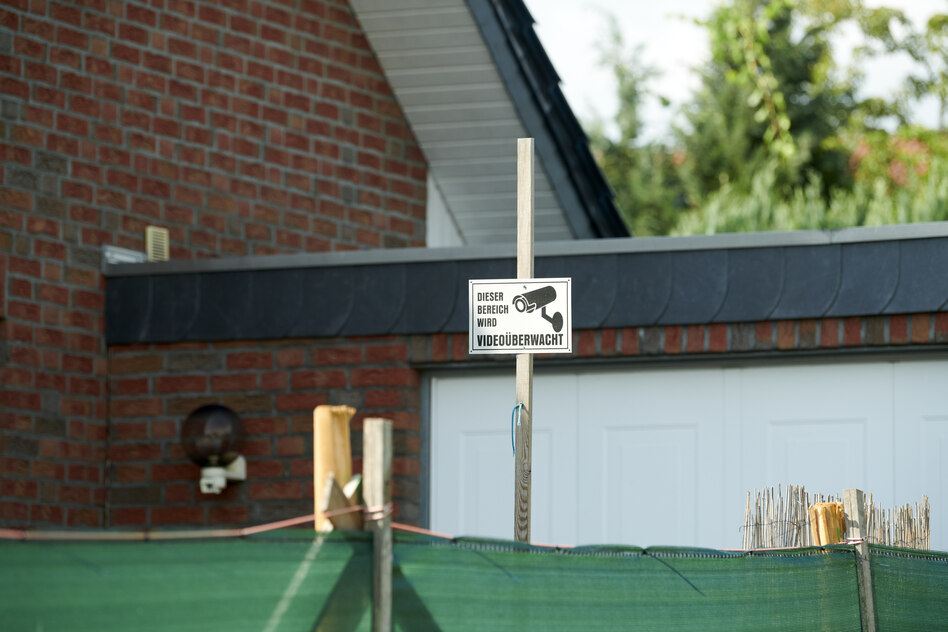
T he small residential street in Melle, Lower Saxony, appears peaceful. But if you look closely, you'll notice: a resident is being excluded. "Private property. No entry for..." is written on a garden shed, along with her name and a black raised palm in a red prohibition circle with a slash. Neighbors have installed cameras, some on high poles, and also a makeshift defensive fence directly on their property.
The 57-year-old* who lives here suffers from paranoid schizophrenia. She has delusions, was in therapy, was under medication, was under care and was in the psychiatric ward several times. Nothing helped. The situation has escalated since 2022.
The woman feels threatened by her neighbors, reacts confrontationally, and contacts the police time after time. Your neighbors do the same. She feels like she's being shot at by laser weapons. The neighbors report smashed car mirrors, solar panels damaged by stones thrown, and a threateningly curved hammer. They admit that their cameras capture the patient's house, including public street space, and the police are also aware of this. This obviously has no consequences for data and privacy protection.
The social psychiatric service of the Osnabrück district was unable to defuse the situation. The relatives are at the limit of their strength. There is helplessness on all sides.
The mentally ill woman recently had to answer before the Osnabrück regional court on charges of insult, damage to property and threats. Her neighbors had filed criminal complaint after criminal complaint, partly in order to “finally be heard,” as one of them said in court.
The woman concerned said in court that she was the one being attacked, not the attacker. She accuses her neighbors of manipulation and “hard-core lies”: “How I am perceived by them is misguided.”
The process ends well for them. The expert determines incompetence. The court rejects compulsory psychiatric placement. “The crimes were low-threshold,” says court spokesman Christoph Willinghöfer to the taz. “And significant ones are not expected in the future.” The accused is briefly in forced custody - she missed a court date.
At the beginning of August, the Neue Osnabrücker Zeitung (NOZ) poured oil on the fire. In her contribution “At some point you'll get tired” she gave the neighbors complete freedom of interpretation and spoke of terror.
The article “unfortunately contributed to increasing fears and prejudices against mentally ill people,” writes a relative* of the patient to the taz. Those affected do not need “condemnation, but rather understanding, compassion and reliable support that is effective in the long term.”
“The sick person is not the enemy,” she writes. “She is the real victim of her illness.” Assigning blame is not helpful. Only “enlightenment, humanity and the will to offer real help to both sick people and their relatives”. Mental illness should not be a reason for exclusion. “They are a reason to take a closer look, to listen and to look for solutions together.”
The NOZ text is “under preliminary review” at the German Press Council, says Anna Ernst, the council’s spokeswoman. The NOZ has now defused it.
The social psychiatric service of the Osnabrück district remains silent about what is happening in Melle. The police are also keeping a low profile: “We are taking the situation very seriously,” writes Jannis Gervelmeyer, spokesman for the Osnabrück police station, “and have been regularly dealing with the woman and the incidents associated with it for years.” “Numerous measures have been taken and other responsible bodies have been involved”. Apparently that didn't help.
Social educator Herbert Knappe, author of the book “Violence by and against the mentally ill. Ways out of a dilemma in psychiatry,” knows situations like this well: “There is currently no solution for this social helplessness,” he says. “There’s a huge vacuum.”
“A small proportion of mentally ill people often cross red lines without this having any noticeable consequences for them,” says Knappe. "And after that it escalates more often. We need an institution that can influence what is happening early on, before it gets worse, in time windows in which the patients are accessible."
Knappe suggests a “task force”, composed on a case-by-case basis, from the social psychiatric service to the psychiatrist, with the police also being involved in certain cases. “It has to be impartial, everyone affected has to be heard, otherwise it won’t work,” he says. Our support and assistance system is event-related and reactive. The possibility of acting proactively is not provided for in this action plan. “This leads to confusing situations that often lead to a vicious circle.”
The fact that modern psychiatry and psychotherapy relies heavily on voluntary action, on as much help as necessary, as little coercion as possible, is a reaction to the crimes of the Nazi era, in which people with mental illnesses and intellectual disabilities were persecuted and murdered, not least in the “euthanasia” program “T4”.
“It was right and important for a long time to be particularly reserved,” says Knappe. "But now we have a different time. We must ensure that the physical and mental integrity of the environment of the mentally ill is preserved, as is the sick person's right to adequate treatment." When violent acts committed by mentally ill people become official crimes and the law enforcement authorities come onto the scene, it is a sign “that no suitable instruments were available in advance to break the escalation spiral.”
The consequences are criminal proceedings and forced placement in forensic psychiatry. Knappe says that the public attention that such trials receive always has a somewhat stigmatizing and discriminatory effect, as these individual cases tend to be transferred to all mentally ill people.
After the regional court, the Osnabrück district court is now dealing with the 57-year-old in care proceedings initiated by the social psychiatric service. The outcome is open, the patient refuses care. “She is currently under interim care,” says Damaris Fleige, the court’s spokeswoman.
So everything is the same. Nothing is clarified.
Read the full story at the source →
Source: taz