
Germany taz
Presidential election in Bulgaria: Jotova ahead according to forecasts
According to initial forecasts, the incumbent head of state Ilijana Jotova is ahead in the runoff election for the presidency. more...
Deutsch (original) ·Auto-translated to English
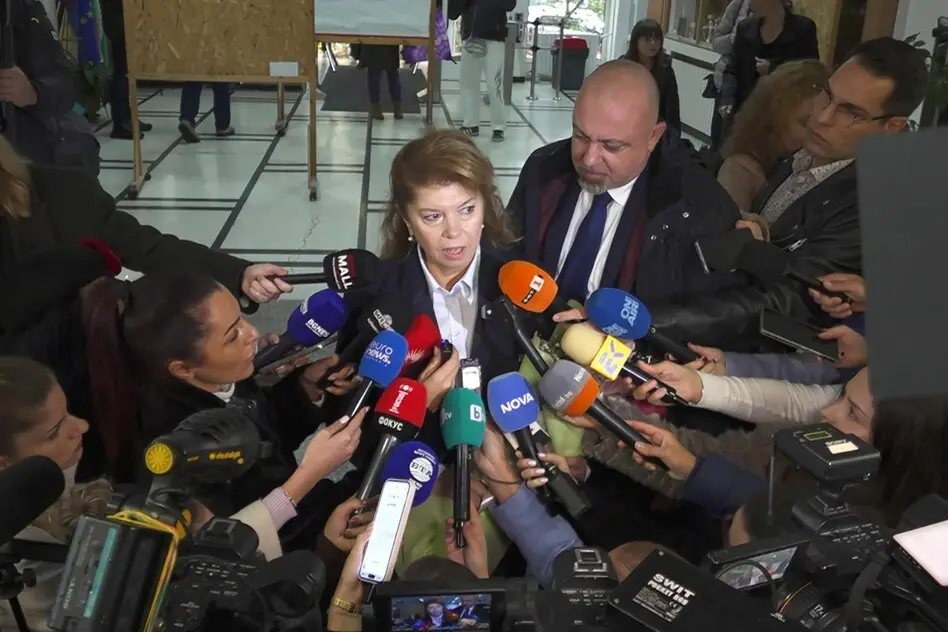
afp | Directional decision in the presidential election in Bulgaria: The Russia-friendly incumbent Ilijana Yotova clearly won the runoff election in the EU and NATO member state on Sunday. According to forecasts, the head of state prevailed with a clear lead against her pro-Western challenger Andrei Gyurov. He admitted his defeat on election evening. EU Commission President Ursula von der Leyen congratulated Jotowa on her election victory.
Jotova, who advocates dialogue with Moscow and against military aid to Ukraine, received between 57.4 and 58.2 percent of the vote, according to the latest forecasts. Gyurov accounted for between 38.6 and 39.6 percent.
With her victory in the runoff election, Jotova becomes the first woman to be elected head of state - she succeeded her predecessor Rumen Radev without being elected.
The vote was seen above all as a decision on Bulgaria's foreign policy course, particularly with regard to the war in Ukraine and the relationship with Moscow. The 62-year-old Jotova supports her country's EU and NATO membership, but rejects military aid for Ukraine. During the election campaign, she presented herself as a “president of peace” who wanted to enter into a dialogue with Moscow.
Immediately after the forecasts became known, Jotowa declared herself the winner of the election. Her message focused on “income, peace and the challenges that lie ahead,” she said alongside Prime Minister Radev. He congratulated the candidate he supported with the words: “Today the Bulgarian people have decided for the future and against the past.”
EU Commission President Ursula von der Leyen also congratulated Jotowa. “From security and defense to our competitiveness and energy independence – I look forward to continuing our work together,” von der Leyen wrote on the online service X. “For a strong Bulgaria in a strong Europe,” she added.
After casting her vote in Sofia, Jotova said she wanted “Bulgaria to be strong in a strong Europe” and to remain “sovereign in its decisions.”
The opposition candidate Gyurov said after his defeat: “We have laid a solid foundation on which we can build.” It is now important to strive for unity.
The election was overshadowed by several drone attacks on merchant ships in the Black Sea in recent weeks. Before the runoff election, Gyurov criticized the incumbent for not explicitly blaming Russia for the attacks.
Four merchant ships were hit by drones off the Bulgarian Black Sea coast in early and mid-October, presumably as a result of the war in Ukraine. 21 people have been missing since then and are presumed dead. Prime Minister Radev summoned the Russian ambassador, but refrained from officially naming a culprit.
In the first round of voting a week ago, Jotova received 35 percent of the vote, just ahead of Gyurov, who got 32 percent. The incumbent did significantly worse than polls predicted.
Jotova, a former journalist and socialist MEP, only took over the presidency from the then incumbent and current head of government Radev in January. He resigned and then won the parliamentary election and took over the office of Prime Minister.
The government stopped arms deliveries from the Bulgarian army to Ukraine in June and later withdrew from the international “coalition of the willing” supporting Kyiv. However, the Bulgarian arms industry continues to supply weapons to Kyiv. The Balkan country with its 6.4 million inhabitants has traditionally had close relations with Russia, but is deeply divided on this issue.
Sociologist Borjana Dimitrova from the Alpha Research research institute said that given the concerns and insecurities among the population after the attacks in the Black Sea, Jotova convinced voters by presenting herself as a “peace president”. “The fear of war was exploited.” For Radev and his party, the election was “crucial for the stability of their stay in power”.
Participation in the first round of voting reached a historic low of 23 percent. According to initial forecasts, in the runoff election it was slightly higher at between 27 and 29 percent.
In the Bulgarian political system, the head of state has primarily representative tasks. However, it can veto laws and is the commander in chief of the armed forces of the NATO member country.