
World taz
Protests in France: Collective liability for riot damage
After riots during social protests, the French Senate passes new security laws. Even uninvolved people should be asked to pay. more...
Deutsch (original) ·Auto-translated to English
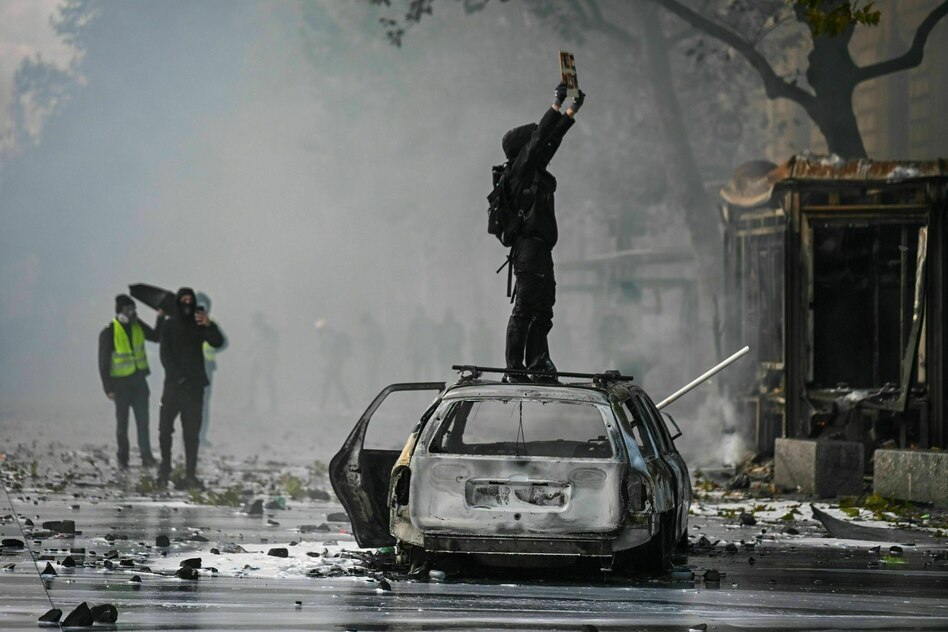
A large majority of people in France believe that those who cause damage during the riots should pay for it. The political right wants to go much further: still in shock from the riots and looting on the sidelines of the demonstrations on October 17th, the French Senate, with its right-wing majority, approved a bill that provides for a form of collective financial liability for property damage during riots.
The bill passed with 229 votes to 105 after a heated overnight debate. Senators from the right and the extreme right outbid each other with proposals to tighten these security laws even further. Members of the National Assembly will soon debate the Senate's version. Since the left-wing factions are also in the minority, the very repressive legislation has every chance of being passed.
The focus is on a criminal novelty: Anyone who simply stands by and watches while cars are set on fire, shop windows are smashed and shops are looted or public furniture (such as bus stop shelters or billboards) is vandalized will in future have to pay like the actual criminals. The senators refer to this as “financial solidarity” by participants in a rally or gathering that turns violent.
Should we imagine this as an offense of “passive rioting”? The text of the law is precise and at the same time difficult to interpret - and probably even more difficult to apply in courts: people who "knowingly and even after two police warnings" are in a gathering that intends to cause harm or disturb the public peace are indirectly guilty of aiding and abetting.
Not only the rioters themselves, but also bystanders should pay for the damage. This “solidarity” should be demanded for compensation up to a maximum amount of 10,000 euros per person. And so that the money can then be collected, the senators specify that it can also be deducted from child benefit, rent allowances and minimum income replacement benefits and other public supports for families. This also transforms collective liability into clan liability.
The right-wing Senate is also using the opportunity to threaten troublemakers with even tougher punishments. After a conviction, they may be thrown out of their social housing, and foreign citizens can have their residence permit revoked as an additional punishment. Drones and AI-supported software may be used to monitor and identify suspected rioters and passive demonstrators. And it should also become easier to officially ban announced demonstrations without intervention from the courts.
As President Emmanuel Macron had wished in a speech after the riots on October 17th, the responsible supervisory authorities should also be given new legal means to block network content that incites unrest and violence. The relevant social platforms should then comply with the French request within 24 hours. Otherwise, it would be up to internet providers and phone companies to stop connecting to the platforms.
For the third time in three years, France is trying to find legal means in this area to take action against criminal or offensive publications on the networks. So far it has been about the fight against terrorism, child pornography and drug trafficking. Now the violence of the “Casseurs”, which the state leadership largely attributes to the “ultra-left” or youth gangs from the banlieue, should be combated in the same way on the Internet.
Human rights organizations and the political left reject these emergency laws as a serious restriction on civil rights and especially the right to demonstrate. There are considerable doubts as to whether the provisions would even be compatible with the constitution. The constitutional judges of the Conseil constitutionnel should therefore have the last word.