
World taz
Protests in France: youth without youth
Why do French people take to the streets? What are they against? What do they want to achieve? We spoke to a pupil and a student. more...
Deutsch (original) ·Auto-translated to English
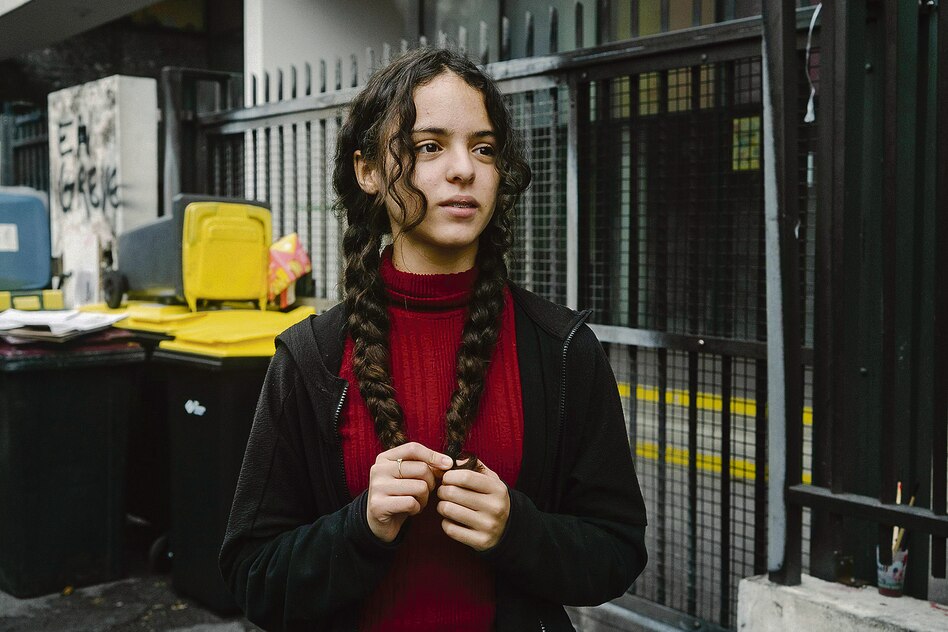
We live in Seine-Saint-Denis, the poorest department in France. Growing up here is different from growing up in Paris. Still, I really like my neighborhood. My environment is not that privileged. But my parents have jobs and I live in stable conditions.
The problems at my school are big. I notice that even though I've only been there since September. It's my first year at the Lycée, the upper school. Our sports hall is moldy. We can no longer use the changing rooms. Teachers are missing everywhere. I haven't even seen a teacher for some subjects.
It makes me angry how unequal the situation is in schools. The government is not putting enough money into the public sector. After middle school, many of my friends moved to a lycée in Paris. The ones in the suburbs have a bad reputation. This doesn't give you a good chance when applying for university places. The allocation platform “Parcoursup” systematically sorts out people like me.
We are fighting against all of this with the protests. I take part so that the movement is not stifled. I’m also doing this for future generations – actually for everyone. My mother is a teacher. She is also directly affected by the problems. She supports me.
This text first appeared in wochentaz, our weekly newspaper from the left!
Every week, wochentaz is about the world as it is – and as it could be. A left-wing weekly newspaper with a voice, attitude and the special taz view of the world. New every Saturday at the kiosk and of course by subscription.
It's my first big protest. When I arrive at school at eight in the morning, the older students have already set up the trash cans for the blockades. There aren't just fights everywhere. Here in Bagnolet we sang karaoke, grilled and painted banners during the occupations. But here too the police came with helmets and tear gas. One day they also arrived in cars like those you see in war. Big armored trucks.
On the Saturday of the big protests, I was already in the metro on the way into the city. Then I learned that many people were sprayed with tear gas. I became afraid of the police and turned back. I have the impression that the government is waiting until the beginning of November for the autumn holidays. She hopes it will be over after this. That we put out the fire. But we don't want to give up until we've made our voices heard. There is more money for the army than for schools. In an open letter we demand a schedule for the renovation of the buildings, a revision of the award criteria for “Parcoursup” and more respect for the right to demonstrate.
What also makes me angry is how we are caricatured. “The young people in the banlieues are dangerous and violent,” is often said. We also have a right to education. We just want equality. This is actually supposed to be a French value. But instead of listening to us, everyone talks about burning trash cans.
Sofia, 15 years old, Lycée “Eugène Hénaff” from Bagnolet, a suburb of Paris
We students have joined the movement to support students in the suburbs of Créteil and Saint-Denis. The main trigger for our mobilization at Paris 8 was the shocking police repression against the young people. They simply asked for resources so that they could learn with dignity.
We couldn't sit idly by. I myself went through the application process via “Parcoursup” and “Mon Master”. These platforms function as social and racial filters. I come from a privileged background, didn't grow up in the suburbs and don't experience racial discrimination. Still, the process was extremely stressful. The system selects heavily based on the school's reputation. Anyone who has attended a well-known high school will have almost all their wishes fulfilled. Graduates from unknown schools have little chance, even with excellent grades. There is no real equal opportunity in France.
Like schools, we are missing a lot. This particularly affects us in the art sector. There are hardly any rooms for practicing on site. Teachers lack the budget for equipment and course materials. In courses there are often only 10 places for over 30 students. Last year we sat in the back of a class with 45 people. There were no chairs or tables. This year, a course was even canceled because the teacher could not be paid. The structure of some buildings is also outdated. There are far too few toilets.
Our university is known as a left-wing university. But after the blockades, the administration closed the buildings. We were locked out and had no safe place to go. That's why we're now permanently occupying the university and sleeping here too. We are continuing the tradition of an open university that is accessible to everyone: students, pupils and workers.
University management has not yet called police to campus. At demonstrations, however, we experience violent police violence with tear gas and encirclement. We've almost gotten used to it. It's almost like a routine. Many of us take to the streets with swimming goggles and masks - including on Saturday during the big protests. In my opinion, the real violence systematically comes from the armed police. In my opinion, she uses “weapons of war”. This has caused serious injuries to students, including the loss of eyes or hands.
Police violence against children opens the eyes of even older generations. It leads to a convergence of struggles. I hope that the left, especially La France insoumise, will be successful in the elections. This is the best we can hope for to change France for the better.
You can feel it everywhere: there is deep exhaustion throughout French society. The cost of living and rents are rising, gasoline costs over 2 euros per liter, and wages are stagnating. Many people feel like they have nothing left to lose. A general strike by workers is needed. And we lead him.
Coline, 23 years old, studies at the University of Paris 8