
World taz
Protests in France: Disappointed officials and a lot of anger
Once again, hundreds of thousands of people across France demonstrated for higher wages and more educational opportunities. The frustration is great. more...
Deutsch (original) ·Auto-translated to English
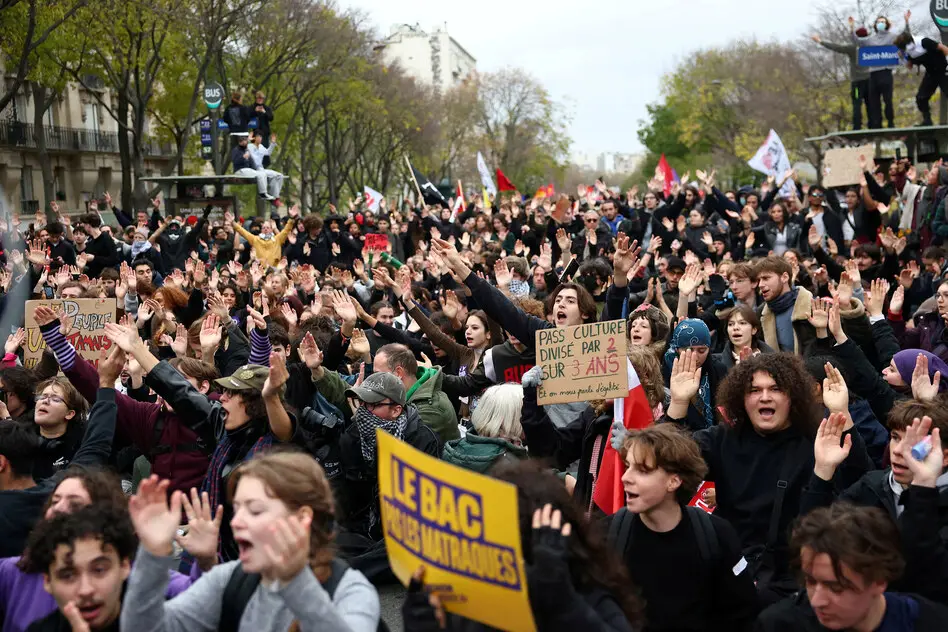
In Paris and other cities in France, hundreds of thousands of people took to the streets again on Tuesday. They demanded lower costs of living, higher wages and more educational opportunities. It was about loans for healthcare and public services.
Another concern of the protesters is the defense of the right to demonstrate. In recent weeks, several rallies have not been approved or have been banished to the outskirts by the authorities. At the beginning of the week, the authorities ordered a ban on gatherings in the lycées and universities in Paris. However, this restrictive measure was declared invalid by the judiciary on Tuesday.
From the authorities' point of view, the protest has already lasted long enough. Since the police are tired of the protests, they are looking for new assistants: In addition to the school principals, parents were also asked to prevent the blockades or barricades in front of some lycées. According to teaching staff unions, the Ministry of Education is trying to conceal the extent of the lycées and faculties paralyzed by protests by providing grossly understated figures.
Two months have passed since the first protests in front of the lycées (high school level), with which middle school students launched a social protest movement the likes of which France had not seen since the youth revolt of “May 68”. There is no end to the conflict in sight. The government had made some, albeit insufficient, concessions to the young people. Prime Minister Sébastien Lecornu had promised to reform the controversial selection process for the “Parcoursup” study program.
But: This in no way appeased the anger of the lycées and students. They protest and say that the government's response was repression and disproportionate use of force in police operations. In fact, thousands of minors were arrested and dozens were injured, some seriously, by police violence. An unknown number of lycées who took part in the actions were reportedly temporarily excluded. Dozens of police officers were also injured. Looting and malicious damage to property during riots on October 17th allow the state leadership to justify this action against demonstrators.
Finally, under pressure from the trade unions and the yellow vests, which had joined the youth movement, the head of government announced a minimal increase in the statutory minimum wage SMIC for private companies. He did not respond to any other demands, such as real cost-of-living compensation and salary increases for state staff. The unions took this as an opportunity to organize another nationwide day of action on November 5th with a general strike and demonstrations in which around a million people took part.
The state employees point to official statistics, which show that they have suffered a loss of purchasing power of around 20 percent over the last 20 years and therefore have a real need to make salary adjustments. They also received nothing for the time being when the SMIC was increased by 24 euros per month for employees in the private sector. Around 1.1 million civil servants even have salary levels below the minimum wage. CGT union leader Sophie Bidet said that never in recent decades has anger been as great as it is today.
Now it would actually be up to the government to find a way out of the crisis with a concession and an acceptable compromise. The state leadership, however, points to “empty coffers” or debt that does not give it any scope for more than symbolic concessions in the ongoing debate about the 2027 state budget.