
World taz
Protests in France: The power of purchasing power
A growing number of people in France believe they can afford less and less. The fear of impoverishment is growing. more...
Deutsch (original) ·Auto-translated to English
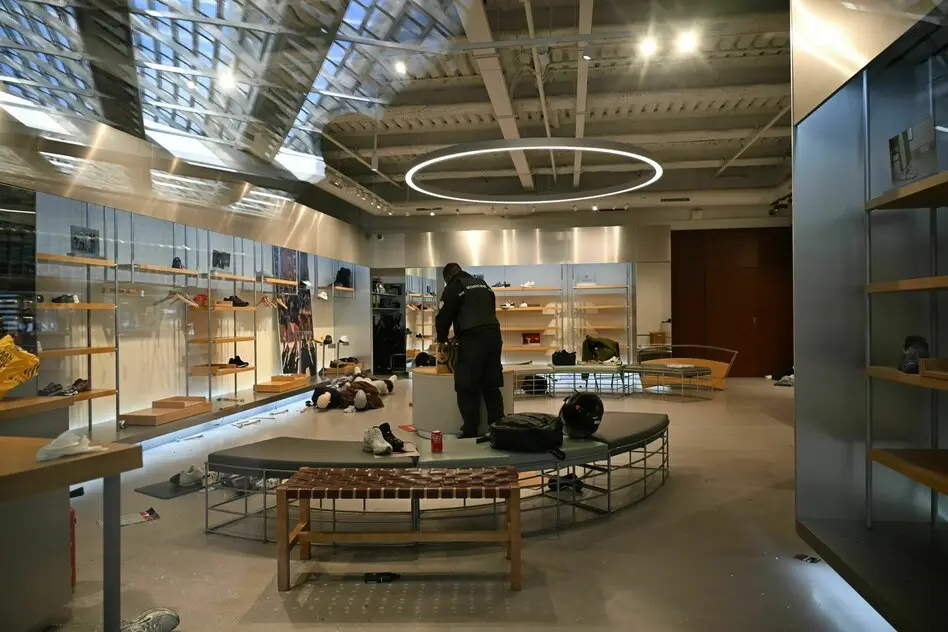
In October 2026, the inflation rate in France was 3.4 percent compared to the previous year, according to the Insee statistics office. That is a lot and relatively little at the same time - but apparently still enough to trigger a social crisis with strikes, demonstrations and riots, the likes of which France had probably not experienced on this scale since the memorable revolt in May 1968.
It is also becoming apparent that the question of purchasing power and the fear of impoverishment - alongside a widespread and general desire for "change" - will be at the center of the debate in the presidential elections in spring 2027: Which candidate has the best proposals or does his personality seem most credible to the French in defending their standard of living and their social status symbols?
The midterms in the USA have dramatically demonstrated how much this factor can determine victory or debacle. The weight of the official inflation rate must first be put into perspective for various reasons. This is an average comparison value. It is calculated based on a “shopping basket” with 4,600 goods and services.
The average French consumer is a statistical construction in which many real citizens, whose consumption habits differ, cannot necessarily identify themselves. The inflation felt when shopping corresponds to an individual assessment. Not everyone feels equally affected by rising or falling prices and most often seem to exaggerate the magnitude.
A study by the Banque de France analyzed this subjective behavior in 2021: "When prices rise, people have the impression that they are rising more than is actually the case. And when they fall, on the contrary, they consider the reduction to be weaker than is the case," sums up the National Bank economist Vincent Bignon.
The same phenomenon was also experienced when the euro was introduced. However, the subjective factor can transform into collective anger and become the starting point of serious social conflicts, as the example of France is currently showing.
Various feelings of threat from impoverishment, insecurity, inequality and social isolation crystallize around purchasing power. This is the figure of a study by the Jean Jaurès Foundation on behalf of a coordination of more than 60 aid organizations, which was recently published in the form of a “barometer” (pressure gauge) with which not only purchasing power in the narrower sense is monitored.
The results are worrying for politicians: 50 percent of the 12,000 representative respondents say their financial situation makes it difficult for them to live a decent life. Because of the increase in energy costs, transport and food expenses, 59 percent, 45 percent and 44 percent respectively believe they cannot keep up. 42 percent of tenants also have a similar feeling of getting into serious financial difficulties.
Of those in employment, 44 percent say their working conditions have worsened in the past five years. A majority (54 percent) also believe that the quality of public health care has declined. One in three people also say they would be isolated in emergencies and could not count on material or moral help from those close to them. If all respondents (95 percent) say they live in a society in conflict because of tensions, insecurity (59 percent), economic and social inequality (42 percent) and disrespect (39 percent).
Politicians would be ill-advised to dismiss all of this as the exaggerated emotions of notoriously dissatisfied and contentious “Gauls”. Because the loss of quality of life is related to real changes in everyday life. The accumulated resentment can turn in concentrated form against the state and the economic system.
The detailed analysis of individual threats and collective fears of decline also explains why the social crisis is giving impetus to the political extremes, the populists from the right and the left. The more moderate parties in the middle, which call for reason and prudence, are hardly listened to anymore.
In the form of social protests, the dissatisfied are now presenting Emmanuel Macron with the bill for ten years of his presidency. He is held personally responsible for the conflict with his policy of “Et en même temps…” (“On the one hand and at the same time”).