
Housing taz
Project against homelessness in Hamburg: Your own apartment will have to wait even longer
Hamburg assumes there are 150 to 170 homeless minors. Now the announced “Housing First” project for street children is being delayed further. more...
Deutsch (original) ·Auto-translated to English
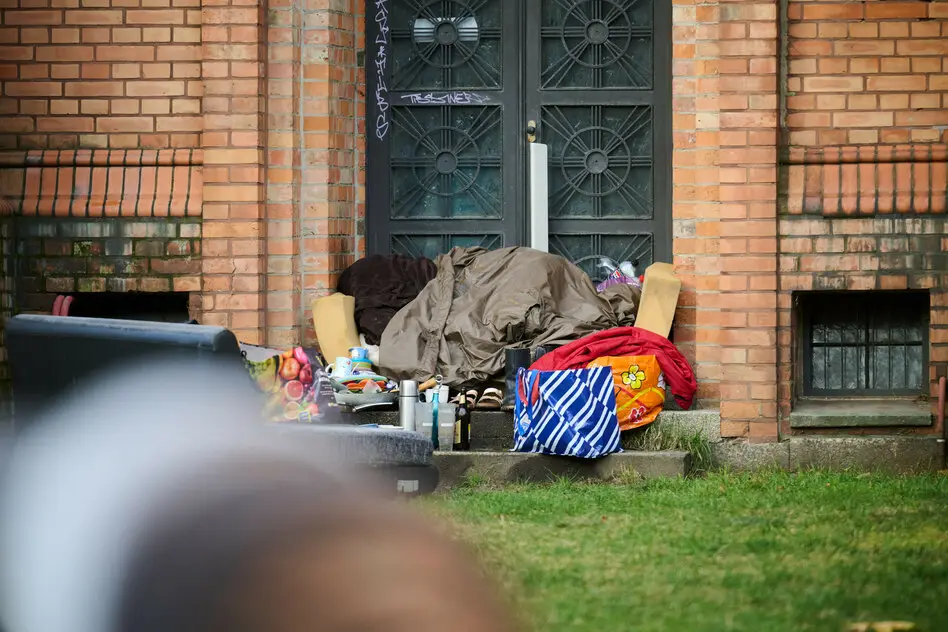
Social workers have long wanted to install the “Housing First” project for street children in Hamburg. Young people are also affected by homelessness. But the realization takes a long time. Now, after two years of discussions, the responsible authority for schools, family and vocational training has decided to put the contract out to public tender. If things go well, it will happen this year.
The idea of offering “Housing First” for young people in Hamburg came up in 2018 at a conference on home education at the university. There, social worker Peter Heemann from the “Solidity Workshop” in Essen clearly reported how the Ruhr city prevents young people from becoming homeless. “We are turning youth welfare on its head,” he said. Young people are often thrown out of the homes because they don't follow the rules. The Essen project unconditionally provides minors with their own apartment, whose rental agreement they can take over when they turn 18.
What is being done in Essen is good, said Josie from Momoe, a project run by street children. There should be something like that in Hamburg too. And social authority spokesman Marcel Schweitzer told taz at the time that they were “confident” that a solution would be found. That was eight years ago.
The idea was persistently pursued by Ronald Prieß, a former youth speaker for the Left, who was appointed one of its ambassadors at the 2nd Federal Conference of Street Children in 2015. In June 2024, he and four youth welfare providers wrote a concept to set up Housing First for young people in Hamburg. It is signed by the Housing First Jugend association, which includes the providers Basis & Woge, Gangway, Auf Kurs and SME.
Young people fall out of the help system because the youth welfare residential groups are very large with eight to ten places, according to the 21-page key points paper. Such forced group membership is too much for many young people. They are often unable to cope with group processes and run away, also due to regulations.
The concept estimates the need for around 200 places, which is a similar size to that in Essen - derived from the number of young people who knock on offers of help such as Kids am Hauptbahnhof or Sidewalx every year. Since the housing shortage in Hamburg is greater, the city should negotiate a housing pool with the housing industry, according to the suggestion. Hamburg should start with a pilot project of 20 apartments for an age group of 14 to 18 years. “We are happy to support the authority in further development, planning and implementation,” the paper ended.
Since September 2024 there have been discussions with Dirk Bange, the head of the Office for Family, which is part of the Authority for Schools, Family and Vocational Training. Bange signaled at a specialist conference in February 2025 that the Housing First project could be set up within a year. In June 2026, the Hamburger Abendblatt reported that, according to the authorities, the project should start in 2026. When Ronald Prieß presented the model at a panel discussion at the end of October, authority representative Lars Schulhoff said: "There is no disagreement on the matter. Zero."
But why does it take so long? The Authority for Schools, Family and Vocational Training has been responsible for youth welfare in Hamburg since 2025. The taz asked whether there were any concerns? The authority “supports this approach,” replies spokeswoman Monia Wachsen. A housing-first project is planned that is oriented towards food. During implementation, it is important to ensure the protection of minors and to find living space. The authority is already talking about this with the housing industry and the municipal housing company Saga.
There are no reliable figures as to how great the need is, says Wachsen. Based on a study by the German Youth Institute, the authority assumes that 150 to 170 minors are homeless in Hamburg, although the study also includes so-called sofa hoppers and boys and girls who live in residential accommodation, said the spokeswoman. Regardless, “every homeless minor is one too many,” said Wachsen.
The start of the project has now been further delayed because the authority is initially conducting an expression of interest process, i.e. a public tender. This should “start in 2026 if possible,” writes Monia Wachsen. The offer is aimed at homeless and at-risk young people aged “around 16 to under 18”. The number of places depends on the results of the tender and the available apartments. You want to start with at least five places. If the project is successful, further expansion is planned gradually.
The project is still not in the clear. The Housing First Jugend association, which now also has to apply for the public tender, has five places too few. This emerges from a statement that he wrote last November when the number was brought to the table.
Such a “minimal offer” would not meet the needs of this vulnerable target group. The concept provides around-the-clock support from social workers for the young people. At least 20 places are necessary to build stable structures. Now it depends on whether the sponsors receive an offer that the project is also economically feasible.