
Germany taz
Premenstrual dysphoric disorder: ten years without a diagnosis
Every month Leo is angry again, feels empty and constantly cries. She doesn't understand why. Until she gets diagnosed with PMDD. more...
Deutsch (original) ·Auto-translated to English
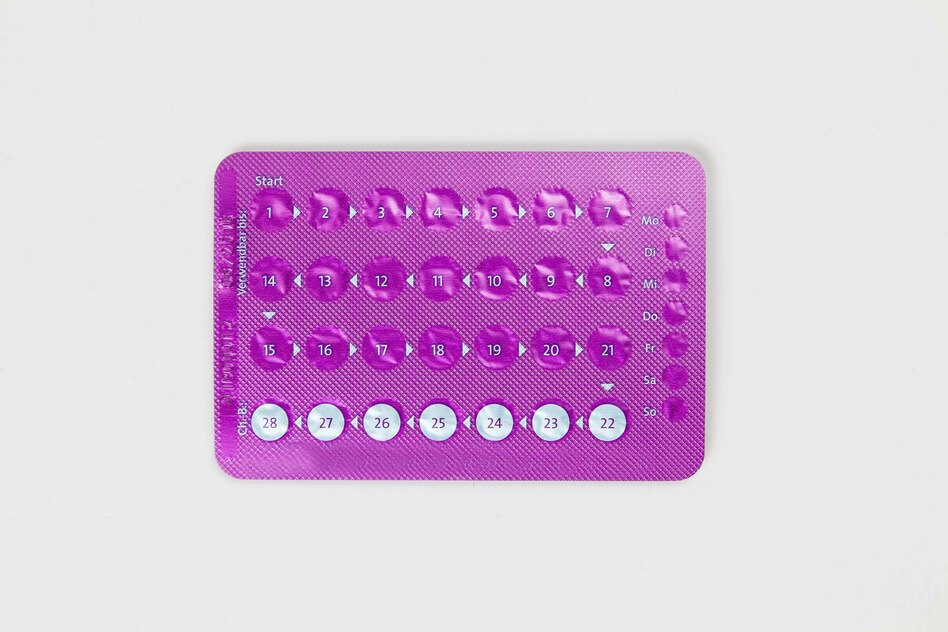
Leo feels like he's been replaced. Your inner balance is out of whack – again. A feeling that comes back every month, always in the phase after ovulation and before menstruation. During this time, Leo, who does not want to be in the public eye with her full name and medical history, is often tense. She is angry at the world, feels empty, and has trouble sleeping.
For a long time, many doctors did not have the disorder on their radar. According to studies, around 3 to 8 percent of all menstruating people are affected by PMDS. In Germany this corresponds to around 450,000 to 1.2 million people. Only in recent years has women's health come into greater focus and with it studies into the influence of hormonal fluctuations on the body and psyche. The research is still in its early stages.
When Leo says that for so long she didn't know what was happening to her every month, she shook her head angrily. She used to think she had bipolar disorder. "Because it always changed like that. I felt great for two weeks and then I had this time again where everything felt empty or I was totally aggro." She first came across the possibility of having PMDD through a website that provides information about the syndrome. “I read the symptoms and thought: That’s me!” Leo turns to the Berlin Center for Women's Mental Health, where she finally receives her diagnosis at the age of 25.
Many patients who come to Stefanie Krüger have had such a long journey to their diagnosis. The gynecologist works in the Berlin center. It is one of the few that specializes in psychological changes caused by hormones. Many doctors do not take the disease seriously. Many of her patients were repeatedly told: “Don’t act like that” or “You have to go through that as a woman, many people have symptoms like that.” In addition, the diagnostic tools were weak, so the disease was not officially listed for a long time.
It was not until 2021 that the disorder was included in the current classification system for diseases, the International Classification System of Diseases (ICD-11), as a gynecological disease. “The symptoms such as increased irritability, sleep disorders, depression and even suicidality are psychological,” explains Krüger.
So which discipline is responsible? The question is not easy to answer and arises for several syndromes in which hormonal changes affect other organs. For too long, responsibility rested solely with gynecology, and interdisciplinary collaboration with endocrinology, which is responsible for hormones, was neglected. In general, studies and research have too often been aimed at Western men as the benchmark.
The German Research Foundation (DFG), one of the largest donors in this country, is joining in. Since 2020, research proposals must demonstrate the relevance of gender to the respective project. “This is one of the reasons why there is now more awareness of the relevance of gender among researchers,” says the psychologist.
Nevertheless, there are still studies today in which gender is not recorded or is not taken into account in the analysis. An upward trend with drawbacks. “It’s more of a lagging behind because gender-sensitive research has been neglected for so long,” says Derntl.
The causes of PMDS are largely unknown. What is clear, however, is that Leo's symptoms come from the fact that the brain of PMDD sufferers has difficulty adjusting to the monthly hormonal fluctuations. Early traumatic experiences are one of many risk factors. PMDD can also develop after major hormonal changes, such as pregnancy. Stress also plays a role; it increases the symptoms, but is not a trigger.
Maria Kühne, neuroscientist at the University of Magdeburg, researches the causes and treatment options for PMDD. She says: “There are some factors in the nervous system of those affected that are not the sole cause, but are related to the symptoms of PMDD.” Allopregnanolone, which usually has a calming effect, plays an important role. It is a breakdown product of the hormone progesterone, which is produced after ovulation. In PMDD, the nervous system adapts less well to the changing concentration of the breakdown product.
According to Kühne, the extreme exhaustion that many PMDS sufferers experience is, among other things, related to a changed immune reaction. "Markers in the immune system that signal to the body 'You're sick. You're staying in bed!' could be more activated in PMDS," she says.
Kühne is also currently researching a new treatment option. This involves stimulating the vagus nerve using electrodes that are attached to the ear using a hearing aid-like structure. “The vagus nerve does a lot in the body and brain,” says Kühne. It has an influence on the emotional center, on the immune reaction, on the parasympathetic nervous system, the body's “recovery system”. According to Kühne, research into this is still in its infancy. “But there are initial indications that PMDD symptoms may be able to be alleviated using the method.” And that without having to take the pill or antidepressants, which have side effects.
Currently, the costs of treating PMDS can only be covered by statutory health insurance companies. Because PMDS is not included in ICD-10, and the new ICD-11 classification system is not yet used in the German healthcare system.
The symptoms of PMDD and a lack of support are “a completely diabolical combination,” says Krüger. A combination that also increases the risk of other mental illnesses. Around 20 percent of those affected also suffer from another mental illness, such as depression, panic disorder or ADHD. Leo also says that she suffered from panic attacks for a while.