
Germany · taz · · 49m
Private space travel: Musk's “Starship” reaches Earth orbit for the first time
Deutsch (original) · Auto-translated to English
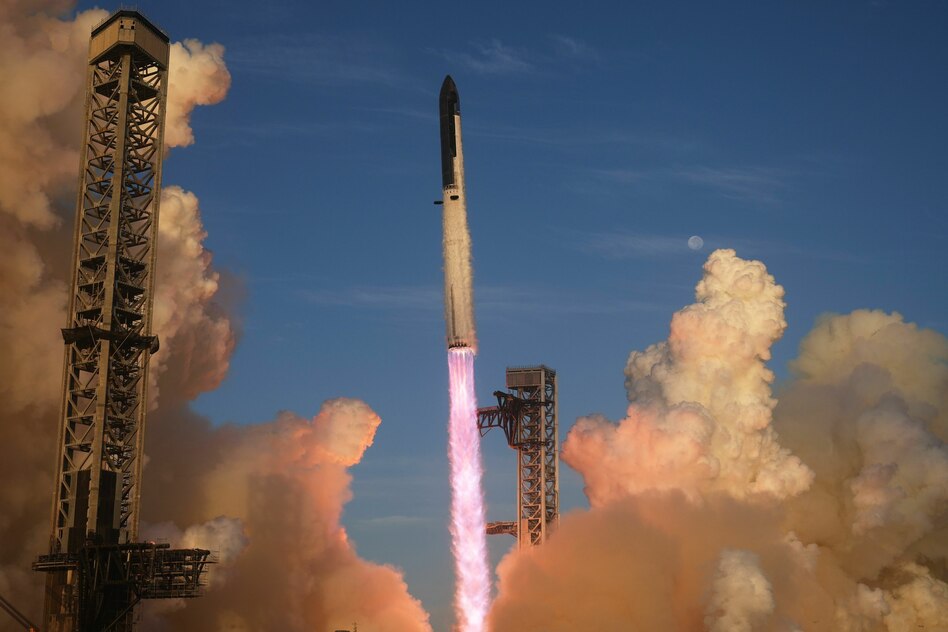
dpa | The giant Starship rocket from tech billionaire Elon Musk's private space company SpaceX made it into orbit around Earth for the first time during an extraordinary test flight. The largest rocket system ever built lifted off from a spaceport in the US state of Texas, then the upper rocket stage entered an orbit about 275 kilometers above Earth and finally crashed into the Pacific in a controlled ball of flames around three hours later. The lower rocket stage had already fallen in a controlled manner into the sea near the launch site.
A mission of around ten hours was actually planned, during which the rocket would enter Earth orbit and circle the Earth around six times in total. After successfully entering orbit, SpaceX announced that the Starship should return to Earth after around three hours - significantly earlier than originally planned. A reason for this was initially not given. One of the rocket's engines had previously failed.
SpaceX founder Musk still spoke of a “successful” first orbital flight of the Starship. The head of the US space agency NASA, Jared Isaacman, also congratulated SpaceX. “Beautiful launch, putting the ship into orbit and managing every step in a safe, responsible and particularly inspiring way,” Isaacman wrote on the online portal X, which is also owned by Musk. “NASA and the rest of the interested public look forward to helping where they can and to Starship missions becoming routine.”
According to SpaceX, Starlink satellites were also deployed for the first time as part of the mission. Once deployed, these so-called V3 satellites will unfold their antennas, deploy solar panels, and then establish connections to Earth and other Starlink satellites. Everything worked out as planned, Musk said. The deployment of satellites had previously been simulated several times in tests.
It was the Starship's 14th test flight. The missile system is larger than the Statue of Liberty in New York. It consists of two parts that separate after launch: the approximately 70 meter long booster Super Heavy and the upper stage - also called Starship - which measures around 50 meters.
Both parts are designed to be reused after returning to Earth. The US space agency Nasa wants to send astronauts to the moon with the Starship, while SpaceX also aims to reach Mars one day.
The rocket system was tested for the first time in April 2023 - and exploded completely after a few minutes. During further tests, the upper stage reached space and landed in a controlled manner in the Indian Ocean. However, several test flights had already fallen well short of expectations.
Read the full story at the source
Source: taz