
Germany · taz · · 3h
Premiere at the Vienna Volkstheater: The Final Boss in Stratford
Deutsch (original) · Auto-translated to English
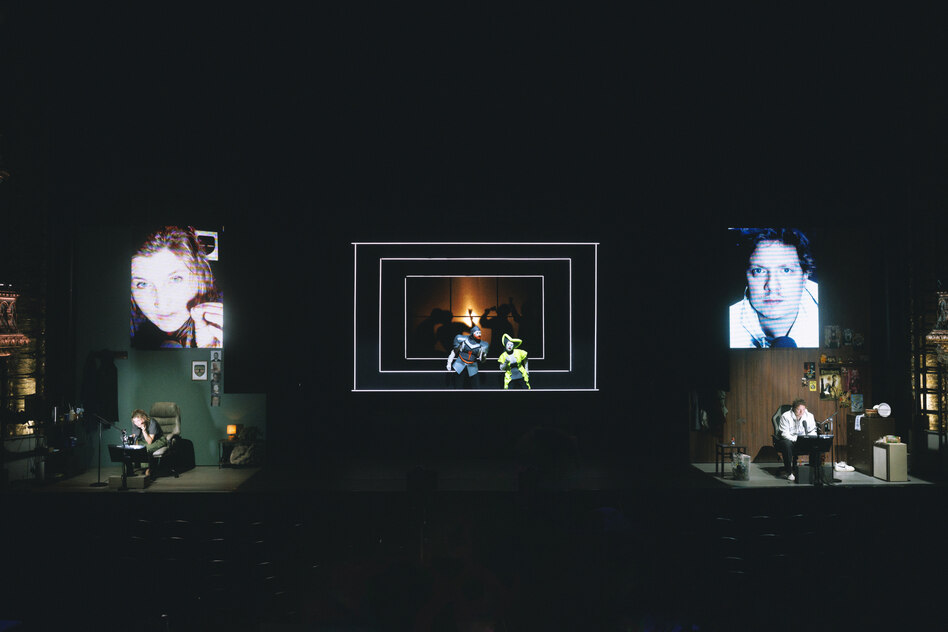
You're lost. From the morass of the dark Scottish Middle Ages, Mr. and Mrs. Macbeth ended up in a current cellar hole. On the left of the stage at the Vienna Volkstheater is the lady (Karoline Reinke) in boots and contoured uniform trousers, a microphone and video game controller, the screen above her shows the contents of the screen. She excels in contemporary prose, only to fall into the noble Shakespearean tone. You would easily believe that she doesn't just paddle around, but also controls drones with a joystick somewhere in the Kharkiv underground.
On the other hand, Rieke Süßkow's production places the hero as a bored nerd (Nicolas Frederick Djuren), who keeps throwing crumpled paper into the basket, behind him film posters from the fantasy genre that have been hanging there since puberty. He has a date, even with a woman. When the lady knocks on the video call, Macbeth quickly looks for a clean hoodie. They want to play “Hail Macbeth – the Game”, at least they do, and uses coarse sayings to encourage the hesitant to ignite the fire of toxic masculinity within him.
Witch madness and regicide as a crude incel fantasy? The program finds a little support from the Shakespearean sage Jan Kott, who perceives sexual energies that have turned destructive in Macbeth's murder. The beginning of the game immerses everything in the fairytale innocence of button-eyed, clammy characters in colorful robes. Nested light frames mark the boundaries of the screen and different levels of action on the stage.
Esther Falk's lovingly built, virtuoso puppet and material theater tells the story of punching and stabbing at a brisk pace. Sometimes there is murder in silhouette, sometimes figures explode under blows and meters of blood-red silk ooze out of them. In between there is a lot of declaiming, Shakespeare is hard to beat when it comes to character development.
In the German-speaking tradition, puppet theater has mostly had a marginal existence as children's stuff, wrongly so. The deposition of the human form on the inanimate material, which can nevertheless animate the illusion, gives it an unexpected, sometimes frightening aura. In times when people no longer feel secure in their reservations because they believe that machines will soon replace what was previously inalienable to them, the theater of puppets and things could take on new meaning.
However, it cannot exploit its own virtuality here; it is only a metaphor for another, digital virtuality. For anyone who played their first role-playing games over the Internet in the early noughties, the stage character game in the Volkstheater triggers tender childhood memories of how the characters move perfectly straight but jerkily, floating up and down in the limbo before entering the game until new weapons, properties or levels are unlocked for them.
Then things happen in quick succession and get out of control. Lady Macbeth herself is sucked into the game, and two black figures steal the regicide from the gaming chair. The final boss (Aleksandra Ćorović) appears: Macduff? The big other? The man from Stratford himself? A severe case of daddy psychosis, which can't just be triggered by the wrong drugs.
After 80 minutes it's all over, an hour earlier the question arises as to what's gained other than a mechanical rendition of the plot. The evening becomes the victim of a common industry misconception in the theater about its intermediality, the “content” is negotiated separately from the form, which only needs to be translated in a contemporary way, as a play-to-book-to-film, so to speak.
The heaven of ideas is empty, its ghosts are figments of the mental processes of human bodies, and Shakespeare exists only in close combat with form. How else should one, beyond current clichés, learn about his analyzes of power, the motives of human action, and Shakespeare's unwavering optimism for the genre, which reveals the impossibility of perfect crime even in the darkest of his plays?
Read the full story at the source →
Source: taz