
Germany taz
Portuguese exile novel: Ilse Lieblich's unlikely books
Ilse Losa, née Lieblich, was wrong to mistrust her own language skills: her straightforward prose is captivating thanks to its new-objective coolness. more...
Deutsch (original) ·Auto-translated to English
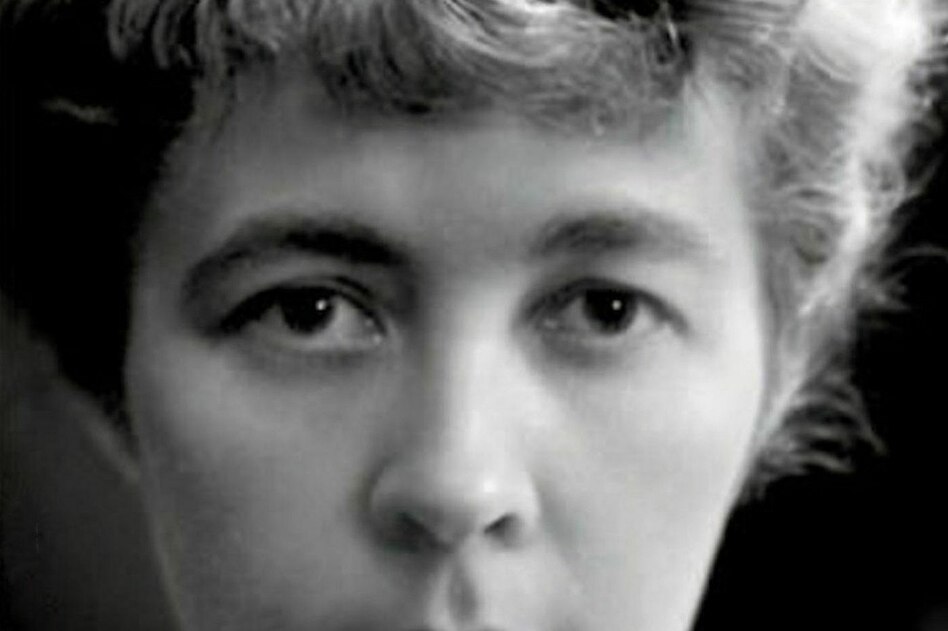
At the heart of the book is expulsion. As soon as it is told; It is simply there, occurs gradually and inconspicuously, in inconsequential scenes, while drinking tea on a courtesy call, in the context of conversation: It only thinly disguises the evil that has long since seeped in everywhere. It resonates, while all we talk about is furniture, decoration and porcelain. “That’s how we talked,” says the German translation of Ilse Losa’s first novel “O Mundo em que vivi,” which is set in northwest Germany between 1917 and 1933.
But when it is established in the self-conscious chat that there is simply nothing about Meißen, the gaze of the beloved Paul, who dreams so much of marriage and traveling together, falls on a piece of paper at the window: "He got up and looked at it, turned pale and stammered, 'My sister apologizes. She urgently had to go to friends... Someone is probably sick...'"
The embarrassing lie doesn't even have to be said. It's obvious: Paul's sister hates Jews. On the note she must have reproached him for bringing this girl into the house in which the siblings have lived together since their parents died, the one Rose Frankfurter from whose perspective the book is told. And she doesn't even want to know what it really says. Instead, shortly afterwards there is something that looks like an engagement scene: “He put a narrow silver ring on my finger and said he would never forget me.”
Ilse Losa: “The world I lived in”. Translated from Portuguese by Maralde Meyer-Minnemann. Wallstein Verlag, Göttingen 2026, 238 pages, 25 euros. Reading on October 29th, 7:30 p.m., in Melle, city library
But it remains so cold that it is clear: the wound of the afternoon is much more final than Paul's unquestionably sincere "never." The ring given as a gift does not promise a happily ever after, but only a farewell forever.
Ilse Losa herself distrusted the rough poetry of her writing and trivialized what readers would admire as a laconic, straightforward style as a result of inadequate language skills. At the end of her career, after she had written three novels, many short stories and several children's books, and had opened up Bert Brecht, Anna Seghers, Max Frisch and "The Diary of Anne Frank" for the Lusofone world, she stated in an interview in 1989 that her decision to speak Portuguese had been "a big mistake".
But this self-devaluation is the only thing wrong with what this woman, born Ilse Lieblich in Buer near Melle in 1913, left to the world. Her work is literature, it is art, and that has to be emphasized because it is also so many other things, therapy for example: She began writing in the mid-1940s on medical advice in order to tame depression. Her autofictions also often have documentary value: “The World in which I Lived” is a unique portrayal of Jewish childhood in rural Germany after the First World War.
Her artistic layering of narrated and narrative times, of memories, present and flashbacks, allows the reader to literally slide into the homelessness of her characters. This focus on biography is understandable. Ilse Losa's literary work is sensational because of the unlikely story of its creation.
Nothing from her childhood in the Osnabrück region could have prepared her for a writing career. “Nobody told me stories in the evenings in my parents’ house,” it says in “The World I Lived In,” and that may be a true memory: The family of the horse trader Arthur Lieblich, son of the horse trader Joseph Lieblich, can be considered culturally distant.
It seems downright crazy that the daughter ends up becoming a writer in Portuguese: the family has nothing to do with this language and they don't know the school subjects of the Weimar Republic. When her first novel was published in 1949, a few months before the birth of her second daughter, it had really only been 15 years since the author learned to say “Bom dia” and “Obrigado”. He married Arménio Taveiro Losa in 14 years.
She met the architect - who would soon be appointed the first head of Porto's new urban planning department - in a café. The couple's house becomes an important meeting place for the dissident intelligentsia, exiles and people in transit.
Ilse Lieblich booked the crossing to Leixoes in 1934 without thinking twice. The port of Porto is the last stop on the South America line from Hamburg. There, on March 9th, ten days before her 21st birthday, she bought a third class ticket for the “General San Martin”, which was leaving on the same day: just go!, just go! Because Ilse Lieblich had seen the monster's claws.
Politically alert and fearless - she will also be involved in the pacifist women's organization Associação Feminina Portuguesa para a Paz in Portugal until it is banned - she was targeted by the Gestapo at the beginning of the year: because she called Adolf Hitler a criminal on a postcard, she was summoned for interrogation. She recants and is allowed to go, but she knows that this would have almost landed her in a concentration camp.
So praise goes to Wallstein Verlag, who are now bringing “The World in which I Lived” to a new edition. The book is written in accessible, precise and often new-objective, cool language. Maralde Meyer-Minnemann's well-aged translation from the 1980s reproduces it excellently. The design of the cover alone is a bit perplexing: Gretchen Wohlwill drew a girl's head for the first Portuguese edition.
The painter who returned to Hamburg from exile later described Losa as the woman with whom she felt the closest in Portugal. In her stories and novels she “described what I had experienced myself”. Decorating the book with a pretty but somewhat random Edvard Munch painting seems a bit thoughtless. It does not diminish the importance of the new edition.