
World taz
Portrait of clarinetist Shabnam Parvaresh: There was male dominance in the orchestra
Bass clarinetist Shabnam Parvaresh combines free jazz with classical Persian music. The artist also uses her voice to talk about the conditions in Iran. more...
Deutsch (original) ·Auto-translated to English
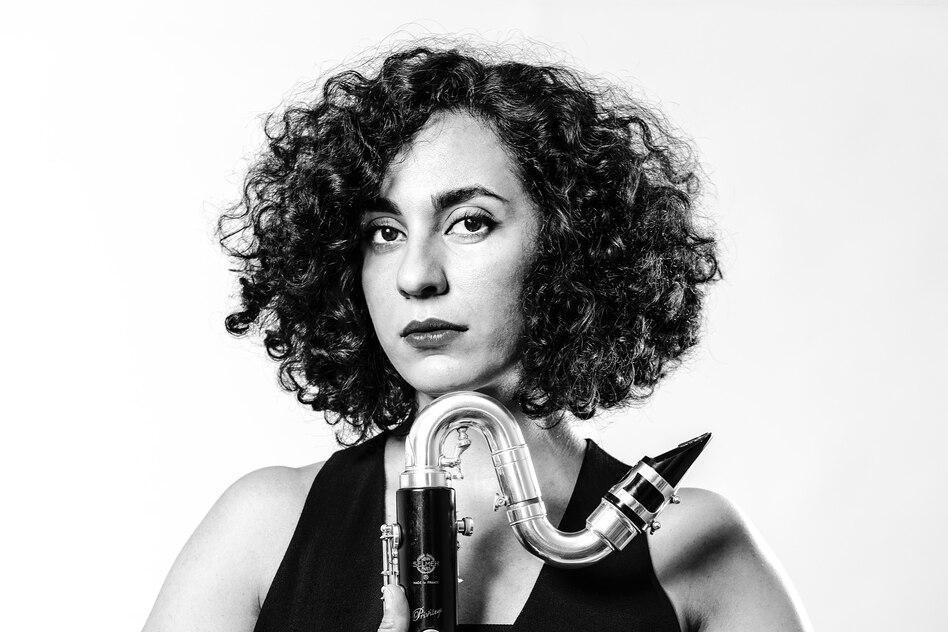
At first only breathing can be heard. And the gentle slapping sound that the keys of a bass clarinet make when someone works the entire body of the wind instrument with their hands and mouth. Individual layers of sound are layered over it, as rhythmic shifts and electronically alienated drones. Atonal and condensed. It is the music of the Sheen Trio, which is led by the Iranian-German clarinetist Shabnam Parvaresh.
Persian maqam quarter-tone scales, elements of free jazz and free improvisation, appear in their inimitable sound. Sheen is the 16th letter of the Persian alphabet and in Farsi corresponds to the sound “Sh”, the first letter of her name. For the 43-year-old artist, who grew up in Iran and has lived in Germany since 2014, the improvisational freedom of jazz is not a given.
Shabnam Parvaresh has just released “Transitory”, her second album with the Sheen Trio. As the title suggests, the music is based on a personal narrative of transition into different worlds, full of biographical breaks and a life in the diaspora. With her status as an exiled Iranian, Shabnam Parvaresh also sees herself as a voice for those who are still in Iran.
live on October 30th 2026 at the Jazzfest Berlin in the club “A-Trane”
Currently, she reports in an interview with the taz, the mullahs are carrying out more death sentences than in previous years. The Iranian population is being massively intimidated; official news in the state media consists solely of regime propaganda. The Internet in Iran is being massively restricted.
Shabnam Parvaresh now also has German citizenship, but she no longer travels to Iran. “I don’t want to risk it because, especially with two nationalities, there is a great risk of being held hostage on site.”
Her parents, who are considered dissidents - her father was imprisoned as a political prisoner for seven years - are finally able to travel to the USA with a visa, but she is not allowed to come with them. “If you are over 21, you are no longer part of the family,” she reports. And also how she experienced this exceptional situation as a child: "We were constantly monitored, our telephone was also tapped. You still somehow get used to it, even though everyday life is very bizarre."
Since Trump's re-election in November 2024, Iranians have no longer been allowed to enter the USA. With her German passport, she was last in her parents' adopted homeland before the US war against Iran in June 2025. She had previously been worried about possible persecution by the immigration authorities ICE.
"There are always problems entering the USA because my passport says that I was born in Iran. The document comes in a red box, after arriving at the airport I have to go to a separate office and wait at least an hour and a half for clearance. Then I am asked whether I have weapons or drugs. But that is standard for me, because even though I have a German passport, I am treated differently as an Iranian."
Shabnam Parvaresh was born in Tehran in 1983. Even as a child, she received classical clarinet lessons from musicians in the Tehran Symphony Orchestra, of which she, as the only one of two women in the woodwind section, joined after completing her training. "There was a male-dominant atmosphere in the orchestra back then. In any case, we were monitored with cameras the whole time," she says. "We weren't allowed to shake hands with anyone or talk to the men, not even to greet them. It was very difficult."
At that time, Parvaresh played works by Mozart, Chopin and Mahler, but the Tehran orchestra also had to perform symphonies written to glorify the mullahs' regime. “For example, there was the ‘Nuclear Energy Symphony’ and Ahmadinejad, the president at the time, came on stage and gave everyone a little money and thanked us.”
At the same time, she plays on a santur, a zither, in the “National Orchestra Melli Tehran” and learns Persian classical music and gets an art degree in painting. But as a woman in the theocracy, she is neither allowed to perform her own compositions nor show her pictures publicly. She has to cover herself up. "Because I was a woman, it was always complicated. I had to constantly be careful about who I made music with, where and how."
In 2014 she applied for postgraduate jazz studies in Osnabrück and was finally allowed to leave Iran. She now leads a concert series for improvised music and the Morgenland Festival there. But the events in Iran do not leave them indifferent: people who were shot in the streets after the uprisings in Iran, public executions. "It's a trauma. I'll never forget images like that again. I always have to remember that my friends risk their lives every time they take to the streets to protest. I live in freedom here in the West and can make music. That's why it's important for me to use this freedom and talk about what's happening in Iran."