
World taz
Political scientist on US midterms: “Trump is now a lame duck – with a bazooka”
The Democrats are the clear winners of the midterm elections in the USA. You should now use the opportunity to be less ideological, says political scientist Yascha Mounk. more...
Deutsch (original) ·Auto-translated to English
taz: Mr. Mounk, did you even in your wildest dreams expect the election result to be this clear?
Yascha Mounk: The predictions were that the minimum would be a whopping Democratic victory. But what we have now is a massive, historic Democratic victory.
taz: Do you think this is the beginning of the end of the Trump era?
Mounk: That was my first feeling, but he's still there and can still do a lot of damage. Nevertheless, the dominance he had for so long over the political system, the Republican Party and, above all, public discourse is now slowly coming to an end. He's officially a lame duck now. But a lame duck with a bazooka.
We analyze the US midterm elections on November 3rd: What does the result mean for US politics, the Democrats, Donald Trump and the 2028 presidential election?
Register here or watch live in the stream.
taz: We have also seen this tilting of authoritarian demagogues in Hungary, Brazil and Serbia. Can you tell when such regimes are overturning and what the mechanisms are?
Mounk: What all of these cases have in common is that populists make big promises and rarely implement them. For the first few years they can still say: It's someone else's fault. But at some point people say to themselves: So now you're still talking about how it's all Obama's fault. I can barely remember that one. So maybe it's your fault after all.
taz: Is that the central reason why Americans are turning away from Trump?
Mounk: Of course there are many reasons for that, the Iran war, the inflation, the corruption, the radicalism of his government, the cruelty. But I think the fundamental thing is that the people who hoped for something from him have given up that hope.
taz: The election completely turned the political landscape in the USA upside down. What does this mean for the future?
Mounk: To me it shows that the USA is far less polarized than people generally think. Of course, the last four or five presidential elections were all very close. There was a great temptation to believe that there were two groups, the Democrats and the Republicans, who hated each other and there was no movement. But in the USA the political situation has changed significantly. I believe it is still possible to win a large majority in the USA. And if the Democrats don't go overboard now, they have the chance to do the same in 2028.
Born in 1982, is a German-American political scientist and journalist. Mounk is known for his work on the crisis of liberal democracy, populism and identity politics. He teaches at Johns Hopkins University in Washington, D.C. Mounk is the founder of the political online magazine “Persuasion”.
taz: What mistakes do you have to avoid?
Mounk: We have seen over the last ten years that almost every election has been a referendum against the current government and the party that came to power has misinterpreted that election result as a mandate to implement its own ideology in the purest possible way. You saw this, for example, with Biden, who didn't win because he embodied a vision for the future of the country, but because people didn't want Trump again. But then Biden made politics in a very ideological way. That then led to Trump’s re-election. But instead of Donald Trump correcting course, he went overboard in an even more extreme way.
taz: There has been a lot of discussion about the Democrats' lack of leadership. Are plausible leadership figures now emerging?
Mounk: Unlike German parties, American parties don't really have elected party leaders. This means that American parties actually only have a leader when they either have a president in the White House or when there is a presidential election campaign and a candidate has already been chosen. So it was in the nature of things that the Democrats didn't really have a leader for the last two years. But when you look at this election, you see a lot of great talent. Jon Ossoff, for example, who won by almost 20 points in Georgia, which is supposed to be a swing state. He is certainly now one of the very serious contenders for the presidency. Or Senator Scott Colom, who managed to defeat the Republicans in deep red territory in Mississippi with a very clever campaign.
taz: Is a left-wing candidate like Alexandria Ocasio-Cortez plausible after this election?
Mounk: AOC is one of the most famous Democratic politicians. She would, ironically, be able to raise an incredible amount of money. She is one of the serious candidates. But what we also saw clearly in these elections was that left-wing candidates performed worse than moderate ones. This was most evident in states where a progressive and a moderate candidate ran: Michigan had a more left-wing candidate for Senate and a more moderate candidate for governor, but there were also such combinations in Florida, Maine and other states. And in every case, the more moderate candidate did three to six points better.
taz: So your recommendation to the Democrats would be to ultimately focus on the middle.
Mounk: My recommendation would be to find a charismatic, intelligent candidate who would be a good president.
This text first appeared in wochentaz, our weekly newspaper from the left!
Every week, wochentaz is about the world as it is – and as it could be. A left-wing weekly newspaper with a voice, attitude and the special taz view of the world. New every Saturday at the kiosk and of course by subscription.
taz: What can and should Congress do in the next two years?
Mounk: The first thing is that this Congress must do what it can to prevent Trump from causing further harm to the United States. The second thing is that he needs to set up investigative committees to learn more about the ways in which Trump enriched himself and broke the rules. This is important democratic work. But I'm a little afraid that this would develop into a dynamic in which the Democrats would try to remove Trump from office for the third time.
Mounk: That would allow Trump to once again present himself as the absolute center of American politics, just at the moment when the attention is finally moving away from him. That's why it would be an own goal.
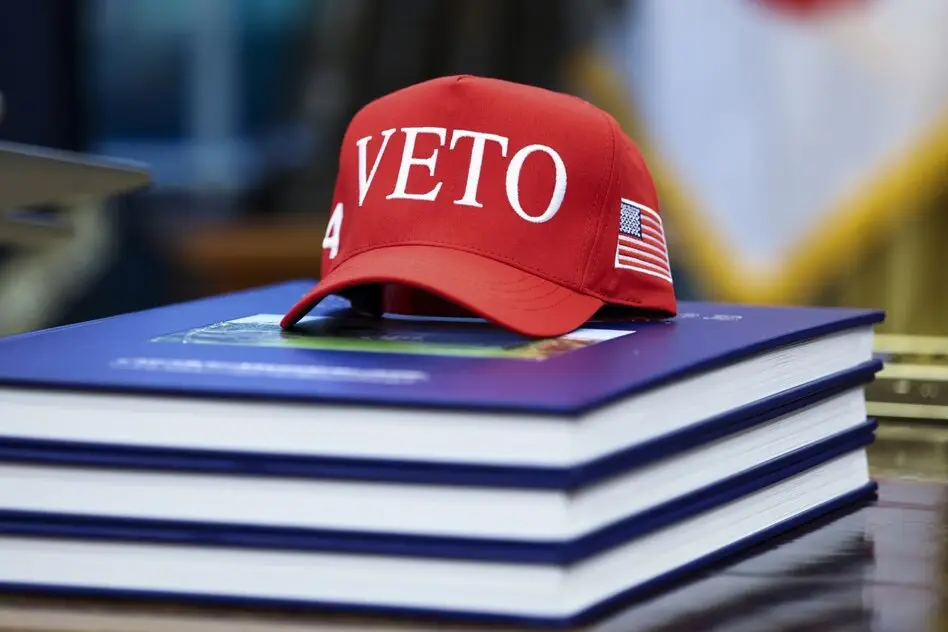
taz: Trump can veto any bill introduced. How should the Democrats handle this?
Mounk: That's tricky because of course you also have to show the Americans that they want to do something for the average citizen in Congress. A classic parliamentary game is to introduce bills and then force Republicans to vote against them. For example, when it comes to gaps in the taxation of the rich. This then shows a clear contrast. Overall, however, Democrats need to start showing citizens what they actually want to do for the country. It would be wise not to introduce deeply ideological legislative proposals and to resist the temptation to remove Trump from office.