
Germany taz
Podcast “unscripted”: Do liars need to be corrected?
The podcaster Ben Berndt has sued the State Media Authority of North Rhine-Westphalia for violating press freedom. Why? The most important questions and answers. more...
Deutsch (original) ·Auto-translated to English
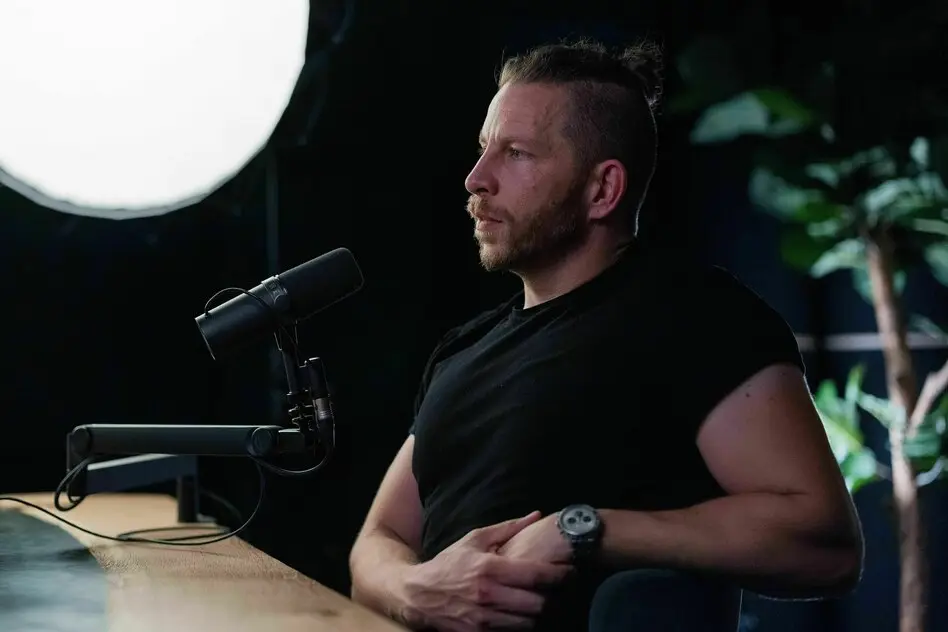
The business economist Benjamin Berndt has been running the podcast “unscripted” since 2022, where he chats with controversial guests and hardly asks any critical questions. The podcast has 1.3 million subscribers on YouTube alone. At the beginning of May, Berndt invited the Thuringian AfD leader Björn Höcke and spoke to him for four and a half hours. The conversation has been viewed over 6.8 million times on YouTube.
In mid-June, the North Rhine-Westphalia State Media Authority sent a letter of warning to Berndt in which it accused him of violating his journalistic duty of care. Höcke falsely claimed in the podcast that the SA (a Nazi organization) had no motto - and Berndt neither contradicted nor pointed out court rulings to the contrary. The point is relevant because Höcke has already been criminally convicted twice for publicly using the SA slogan “Everything for Germany”.
The state media authority completed its audit at the end of September. Although it determined that Berndt had breached his duty of care, it refrained from taking any formal supervisory measures (complaint, prohibition or blocking). Due to the public discussion, the classification that was missed in the interview actually took place.
Ben Berndt and his lawyer Nikolaus Steinhöfel are now suing the Cologne Administrative Court against this decision from the State Media Authority. He doesn't want to be accused of dereliction of duty.
The basis for this is the state media treaty, which came into force in November 2020. Journalistic telemedia, which includes podcasts, are also required to comply with journalistic due diligence (paragraph 19). This is controlled by the state media authorities (paragraph 109). The state media authority in North Rhine-Westphalia is responsible because Berndt's company is based in Cologne.
Berndt denies this. He only has conversations “like over coffee”. However, the state media authority explicitly stated in September that “unscripted” was a “journalistically and editorially designed telemedia offering”. Lawyer Steinhöfel leaves this open, but refers to the protection of “freedom of the press”.
You must research thoroughly, strive for truthful reporting and respect the personal rights of those affected. What this means when it comes to statements made by an interview partner is controversial.
The state media authority demands that Berndt corrects or at least classifies (“contextualizes”) obvious false statements. This is possible because there are a few days between the interview and the broadcast. A corrective text display during broadcast is sufficient.
Attorney Steinhöfel denies that such a duty of care exists. There is “no general obligation to comment on, correct or distance oneself from statements made in interviews by others,” he told the taz.
In fact, the only duty that has been recognized so far is to correct one's own false claims. This also applies to content that is taken over from others. But does this also apply to statements made by interviewees? To date, case law has not accepted such an obligation to correct third-party statements.
The state media authority is trying to enforce a new, stricter standard here. The legal dispute is therefore of fundamental importance. It not only affects podcasters like Ben Berndt, but all journalists.
No. The duty of care applies equally to all journalists. However, supervision by an authority is a special feature of journalistic telemedia offerings. Attorney Steinhöfel sees this as inadmissible discrimination against podcasters. Media supervision does not apply to newspaper and broadcast journalists.
No. Since November 2020, the NRW media authority has only sent 38 letters of information about violations of journalistic duties of care and in the end only initiated two formal proceedings. It is not statistically recorded how many cases involved the lack of correction of statements made by an interview partner. The action against Ben Berndt is probably a precedent.