
Politics · taz · · 1h
Plagiarism affair in Thuringia: Voigt ends legal dispute, AfD fails with dissolution
Deutsch (original) · Auto-translated to English
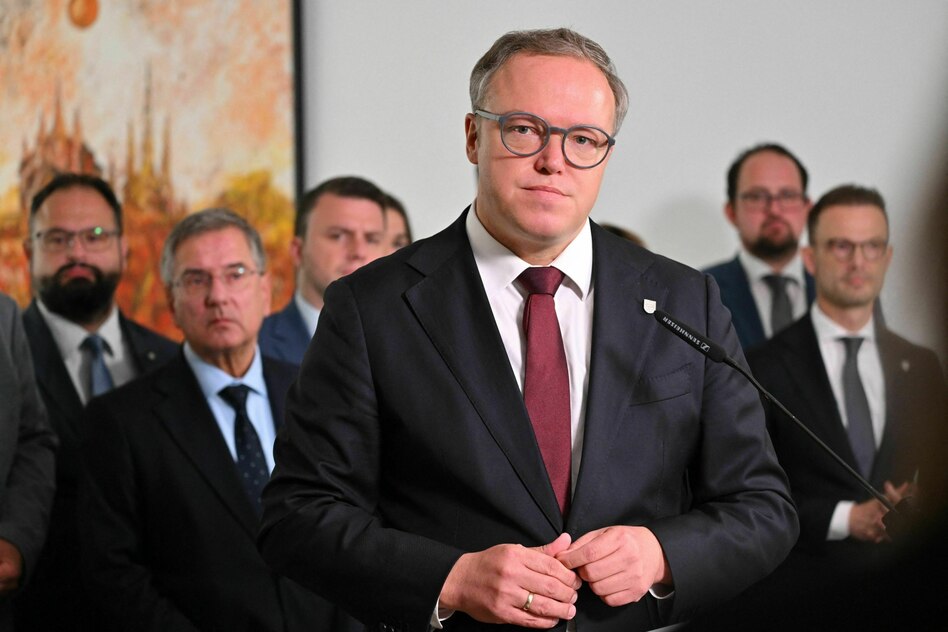
dpa | Thuringia's Prime Minister Mario Voigt (CDU) ended the legal dispute over his doctorate - shortly before the AfD failed in its attempt to dissolve parliament in the state parliament. As Prime Minister, his attention belongs to the citizens, said the CDU politician at a press conference in the Thuringian state parliament. “And that’s why I decided to stop the legal dispute over my dissertation.”
In the subsequent special session, 34 members voted for the self-dissolution of the state parliament, 52 against. A two-thirds majority, i.e. at least 59 votes, would have been necessary. The AfD is the largest parliamentary group and has 32 of the 88 seats. With her, the two non-attached BSW MPs voted for the dissolution. The AfD's chances of success were already considered slim before the vote.
Höcke justified the call for new elections with the Voigt plagiarism affair and the disintegration of the BSW faction. With regard to the application, Voigt said that an attempt was being made to cause discord and chaos. Höcke had announced a referendum with the aim of new elections in the event of a defeat.
In particular, the opposition AfD, which the State Office for the Protection of the Constitution has classified as right-wing extremist, with its state party and parliamentary group leader Björn Höcke, has repeatedly shined the spotlight on the issue and thus put Voigt under political pressure. The AfD parliamentary group has already pushed for two constructive votes of no confidence in the Thuringian state parliament to overthrow Voigt - in February and August. Both failed. The dissolution of Parliament was now their third attempt.
The 49-year-old has been involved in the debate about his doctoral thesis since the 2024 state election campaign, when the first allegations of plagiarism arose. The dissertation dates from 2008 and is entitled "The American presidential election campaign. George W. Bush versus John F. Kerry".
When it became known at the end of January that Chemnitz University of Technology was withdrawing Voigt's doctorate, the head of government immediately announced legal action. “The scientific core of my work is not affected by the allegations,” said the CDU politician in a statement at the time. At a press conference he asserted that he had written the dissertation to the best of his knowledge and belief. “And that’s why I’m fighting for my doctoral thesis,” he said.
Now he is giving up this fight - but insists on his assessment. “Nothing has changed in my position, only in the evaluation, which is important,” he said. After his failed objection to Chemnitz University of Technology, Voigt filed a lawsuit with the Chemnitz Administrative Court in August. When asked, he said the process was still at an early stage. He withdrew the complaint on Wednesday morning and informed about it half an hour before the special meeting.
The decision is not easy for him. His lawyers advised him to continue the proceedings. But he wanted to give Thuringia all his strength, energy and attention and “concentrate on what lies ahead of us” without making any compromises, he emphasized. A legal dispute also demands attention.
The head of government also justified his move with the political situation, which has changed noticeably with the state elections in Saxony-Anhalt and Mecklenburg-Western Pomerania. In Saxony-Anhalt, the AfD had become by far the strongest force at the beginning of September with around 44 percent.
The severity of the political debate requires full commitment, he said. There are also changed majority relationships in the Thuringian state parliament. Voigt was alluding to the breakup of the BSW faction - his previous coalition partner - at the beginning of September. In the meantime, 10 of the original 15 MPs have joined forces around Finance Minister Katja Wolf to form a new parliamentary group called “Thüringen.Gerecht” and are running the state government together with the CDU and SPD.
The previous coalition of CDU, BSW and SPD had exactly half of the 88 seats. Voigt's stalemate coalition has thus shrunk into a real minority government. In view of the developments in Saxony-Anhalt, people in Thuringia must also ask themselves “how we can be successful in 2029,” said Voigt. Then the next regular state election will take place in Thuringia.
Read the full story at the source
Source: taz