
Politics taz
Care reform and financial holes: Protest alone does not solve the problem
The nursing care funds have to save money - this requires standards. Caring relatives must be protected, but future heirs do not. more...
Deutsch (original) ·Auto-translated to English
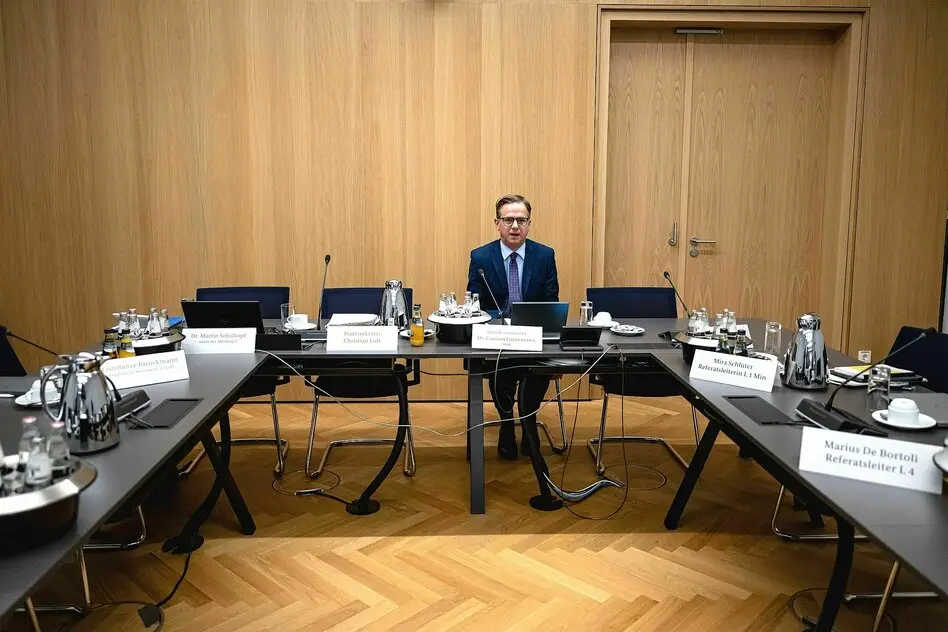
You could almost feel sorry for Carsten Linnemann (CDU). In a video on Facebook, the CDU Federal Health Minister begs for support for his care savings law. It seems desperate: "I'm looking forward to suggestions on how we can make the system future-proof. I'll be happy if you join in," says Linnemann, who is said to have been forced into the position of Health Minister by the Federal Chancellor.
Linnemann is under pressure. It is a financial problem when 20 years ago two million people in need of care received benefits from long-term care insurance and now there are six million. Without reforms, the statutory, so-called social care insurance (SPV) will be short of almost 8 billion euros next year and 17 billion euros in 2030.
Unfortunately, protest alone cannot solve the financing problem, which arose less from the will to make political cuts than from the increase in the number of benefit recipients. Even if the revenue base could be broadened and some kind of financial equalization could be set up between private and statutory nursing care funds, that would not be enough to stabilize the nursing care funds.
The taz is an independent, left-wing and opinionated daily newspaper. We have been arguing in our comments, essays and debate texts since the taz was founded in 1979. We often cannot and do not want to agree on an opinion. That's why you'll find some completely opposing positions here - all part of the very broad left-wing spectrum of opinions.
So there is no way around an austerity debate. The Care Reorganization Act (PNOG), which will come before the Bundestag for the first time this Thursday, is intended to be a start. But the outrage over this shows what mistakes were made.
The nursing care funds are a system behind which very different fates are hidden. A wife who has been caring for and supervising her dementia-stricken, incontinent, behaviorally disturbed, immobile 75-year-old husband, care level 4, at home for years is making sacrifices that those not affected can hardly fathom.
Things are a little different in the household of an old couple, where the woman, care level 3, needs some help in everyday life, but is well oriented and is still mobile with a walker. The almost 600 euros in care allowance per month flow into the general household budget.
Details in the abilities and behavior of a person in need of care, in the living and family situation, can decide whether everyday life is still somewhat relaxed or whether high sacrifices are required from those around them.
The classification into the five levels of care is unclear: it is based on self-disclosure in a single on-site conversation with an expert. Everyday activities are asked and whether you can still carry out them “independently”, “mostly independently”, “mostly dependently” or “dependently”. The information can vary, and there is often envy if, for example, an applicant is granted care level 3, but her neighbor, who is equally frail, is only granted level 2.
Raising the thresholds for care levels slightly for reasons of savings, as provided for in the Care Reorganization Act, is unpleasant, but still relatively justifiable. The two highest care levels, 4 and 5, are excluded from this increase, and that's a good thing.
It must not be kept secret: Unfortunately, there is abuse. A care household can easily collect more than 3,500 euros per year in “preventive care” if just one acquaintance is named as a “substitute carer” for supposed downtime, even though this care did not actually take place. This abuse is not a trivial offense, but a mess because it damages the acceptance of the system.
With reference to frequent abuse, “preventative care” is to be abolished or transformed. This is fatal for hundreds of thousands of caring relatives. For example, for the mother of the severely disabled child, who needs the money to finance alternative care with trusted people because the support center has long holidays and she cannot simply interrupt her part-time job. Caring relatives must also have free time to go to the doctor, exercise and be able to finance preventive care from substitutes on an hourly basis.
According to sources in the SPD parliamentary group, changes to the bill are still being sought in the parliamentary process, including the protection of care services such as respite care. That's right.
The sensitive question is to what extent the person in need of care should use their own income and assets if they have to stay in a home. The SPD is calling for more subsidies to cover the increasing personal contributions of home residents. According to a report by the Institute for Economic Research, more than half of pensioner households would be able to financially cover their own contributions in the event of a stay at home, even without having to sell their own property.
It is therefore right that the Care Structure Commission that has now been set up wants to make higher subsidies for home costs dependent on the income and financial situation of those in need of care. The aim is to prevent people from falling into social welfare and not to protect their assets any more than they already do.
In the event of a stay at home, retired civil servants are currently provided with extra protection under civil service law, using tax revenue, in order to protect their assets. One could question that. Wealthy people who want to secure their assets for their heirs can do this by taking out private supplementary long-term care insurance early on.
The fact that expenses have to be limited is sobering, but it cannot be avoided when it comes to long-term care insurance. A discussion about where in the system savings could most likely be made and where not at all is called for and should not be taboo from the outset, not even from a left-wing perspective. A little pragmatism doesn't hurt the justice debates either.