
Germany taz
Parliamentary elections in Serbia: Governing is about studying
Serbia's student list celebrates a landslide victory. After years of protest, a political upheaval could follow. Impressions of a historic night. more...
Deutsch (original) ·Auto-translated to English
The nine students are waiting hopefully for the election results in an apartment in the center of Belgrade. An election special is running on a Serbian YouTube channel. The young people chat, listen to music, drink beer.
At around 9.30 p.m. Aleksandar Vučić appears on the screen - the hated former president who now wants to become prime minister. For them he is a populist, liar and dictator all in one. In recent months, he or other representatives of his government have insulted the rebellious students as terrorists, mercenaries or anti-Serbs.
“Shut up, shut up,” screams law student Sofija. Then Vučić utters the sentence that everyone hoped to hear but didn't think was possible: “The student list won.”
The young people look at each other in disbelief. “What?!” whispers the aspiring doctor Anja. Then they burst into cheers, dancing, hugging, laughing. Relief and enthusiasm erupt: “Did you actually understand what happened here,” says Sofija, laughing. "We are the winners of the parliamentary elections. We students are the new rulers of Serbia!"
The student list actually wins a landslide victory in the early parliamentary elections. According to preliminary information from the electoral commission, the opposition movement won an absolute majority with a good 53 percent of the votes, while Vučić's party got a good 39 percent of the votes. The vote was widely seen as a referendum on the country's leadership under Vučić and his Serbian Progressive Party (SNS).
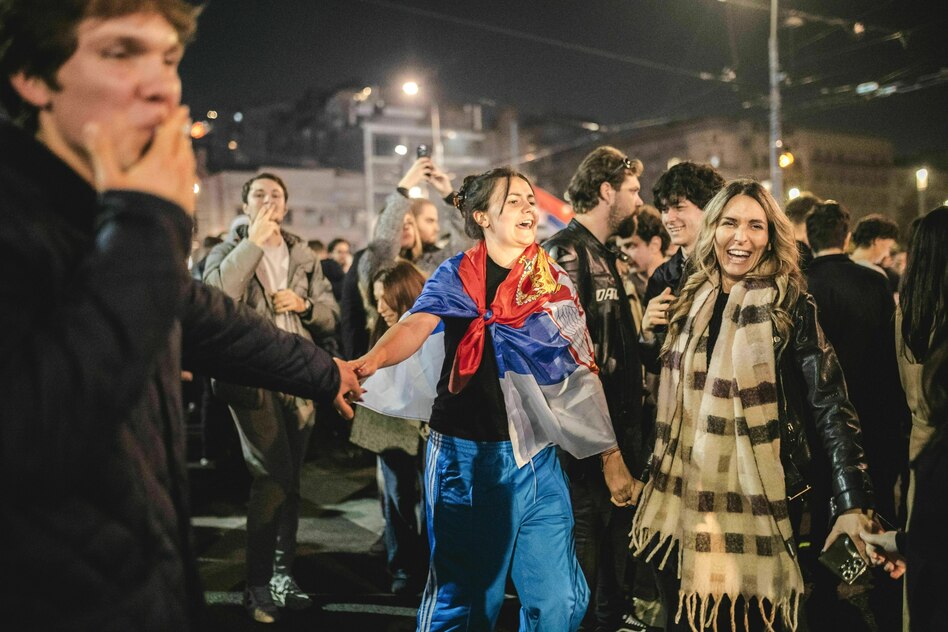
Horns and shrill whistles come through the open window, and fireworks light up in the distance. As soon as Vučić admitted his defeat, exuberant cheers broke out in Belgrade. The young people quickly get dressed to continue partying with tens of thousands in the streets. The big victory party begins and lasts until the early hours of the morning.
Traffic comes to a standstill. People toast each other and take group photos on the steps of Parliament. After a long time, Belgrade feels like a carefree European metropolis again. The Serbian students have continued their protest non-violently for two years. With perseverance, discipline and clear goals, they achieved political change that seemed unlikely for a long time.
What is remarkable is that there were almost no students on the student list. She has set up a movement that foregoes leadership committees and makes its decisions in grassroots democratic assemblies, the so-called plenary sessions. The list consists primarily of university teachers, doctors and artists. The movement had approved each and every one of them at its plenary session. Their brief eleven-point program promises the restoration of the rule of law and democracy as well as the prosecution of corruption and crime. It was still unclear who would become head of government.
The student movement emerged from protests following the collapse of the train station canopy in the northern Serbian city of Novi Sad in November 2024, which killed 16 people. Critics attributed the disaster to corruption and sloppiness on the part of the Vučić government. The subsequent student protests mobilized broad sections of the Serbian population and awakened a desire for change.
Election day already started with confidence. Even before the polling stations opened, long queues formed in many places in Serbia on Sunday. In addition to the usual early voters, pensioners and older people who cast their votes early, there are also many young people waiting.
The student movement called for people to vote as early as possible. In doing so, she also wanted to mobilize people who were critical of the regime but had previously hardly taken part in elections. A high voter turnout could increase the opposition's chances of a change of power and therefore have a motivating effect. An example of this is Hungary, where Viktor Orbán, a political ally of Vučić, was voted out.
It was already clear early on Sunday morning: the voter turnout would be historically high, in the end it would be around 70 percent. But it remains unclear whether that is enough for victory - and whether Vučić will even admit defeat.
When it got dark on Sunday evening, there was initially little to suggest that the student list would win. Special police units take up positions around the parliament, the presidential residence and the town hall. Shortly before the polls close at 8 p.m., the Pionirski Park in between is filled with men dressed in black, many of them with backpacks - Vučić's notorious beating units, his party's storm troops, made up of criminals who attack political opponents on orders.
Pionirski Park has become a symbol of the political conflict over the center of Belgrade. Since March 2025, part of the park has been cordoned off with metal fences. Supporters of the ruling party camp in the tents. The park remained largely inaccessible to the public for months - without the responsible authorities permanently ending the restrictions.
When Vučić admitted defeat, the police immediately retreated and his thugs disappeared. Young people tear down the fence, destroy the tents, and some burn down. It remains the only violent act of that long night.
On Monday morning the sun shines over Belgrade. Emergency services from the city garden department are cleaning up the park. Some dog owners carefully walk along the edge. The children are still missing from the playground. Pensioners are already sitting on the benches, eagerly discussing the night's events.
“A wonderful good morning,” says one of them with a smile. And: “So this is what the freedom of our grandchildren looks like.” (with dpa)