
World taz
Parliamentary election in Israel: Netanyahu, iron excrement and cigarettes in Gaza
There is hardly a conversation in Gaza these days that is not about the Israeli elections. What do people hope for? Our author asked around. more...
Deutsch (original) ·Auto-translated to English
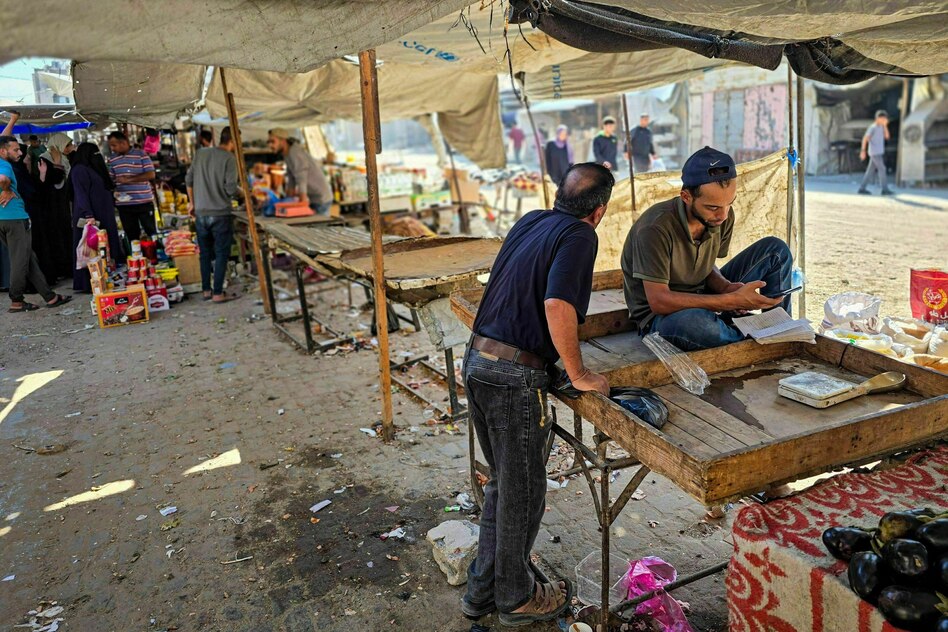
These days, the people of Gaza are following the news of the Israeli elections with such excitement that every meeting is without the inevitable question: “Did Netanyahu win?”
That was the case on Wednesday, a day after the Israeli parliamentary elections, in a small shop in Mawasi, a district of Khan Yunis in the southern Gaza Strip. Here you can buy not only expensive smuggled cigarettes, but also cheap cigarettes - those made from dried plant leaves as a tobacco substitute. I, who always report for the taz, am sitting here with friends and smoking.
“So: Who won the election?” asks the shop owner Ihab – that’s not his real name, he wants to remain anonymous. He is in his late twenties, sells smuggled cigarettes and fears for his business. He believes that the sale of smuggled cigarettes can continue under current Prime Minister Benjamin Netanyahu. After all, cigarette prices have skyrocketed since the start of the war: a shipment of four large boxes - each containing 50 cartons - sometimes reached a value of $250,000. Which means: A single pack was worth up to $500.
Given the unclear election results, no one in this store knows yet who will lead the next Israeli government. The conversation continues, moving from aid organizations to gangs of thieves to corruption under Hamas and back to the elections in Israel.
At first I listen in silence. Then I'll say something. I point out the complex situation, Netanyahu's delicate situation. “He would even form an alliance with Somalia just to ensure his political survival,” I say. I follow the political intrigues in Israel through the media and tell the others about possible maneuvers - for example that Netanyahu could forge an alliance with his challenger Gadi Eisenkot. But something gives me hope: the Arab parties could prove to be a decisive factor in Eisenkot's victory.
In addition to the shop owner Ihab, there is another person who Netanyahu wants to see at the head of the Israeli government. But most of the others sitting here with me in the cigarette smoke are hoping for Eisenkot - despite his career as a former military chief or perhaps because of it.
Ibrahim, for example, an employee of the Palestinian Authority. He has not worked for 17 years, since the beginning of Hamas rule, but continues to receive his salary from the PA - even if it is not enough to cover his living expenses. He is heavily in debt and lives with his children in a dilapidated tent. “I hope Eisenkot wins.” He believes that this could eliminate Hamas.
Yahya, who works as an electrician, agrees. Likewise Kamal, an employee of the United Nations Palestinian Relief Agency, UNRWA. They hope to improve general living conditions, garbage collection, electricity and services in the UNRWA camps: “If Eisenkot can change this bleak reality we live in, then I hope he will form a government.”
If you ask around in front of the store, the mood is similar. Almost everyone among the displaced people in the refugee camps hopes for an end to Israel's Likud government and wants Eisenkot to lead the next government there.
Is Hamas over? Not at all, he says, no matter who governs Israel in the future. "As long as the taxes and the flow of money continue, we are safe. But Eisenkot would be better for us than Netanyahu."
And then there are the many people in Gaza who no longer see a future there and simply want to leave. “Let what’s left of Gaza burn,” says Iyad, a doctor with UNRWA. You can tell that his own words hurt him.
Suli from the UN Development Program wants to go to the Netherlands. Mohammed, who trained employees in water desalination plants in Israel until the start of the war, is also preparing to leave the country. For him, both options – Eisenkot or Netanyahu – look bleak. “I will get my wife and children out of Gaza at the first opportunity,” he says.
I take another drag from my cigarette and blow out the smoke. I too want to leave the Gaza Strip as quickly as possible and never come back. If Netanyahu succeeds, he will delay reconstruction to ensure his own political survival, trapping us in this misery for many long years - possibly until the next election. Eisenkot is no angel, but I still hope he can get a government together. If only because my wish to leave this stretch of coast behind me could become reality under Eisenkot.