
Politics · taz · · 3h
Opposition in Sweden: Ping-pong for mandates provides a thrill
Deutsch (original) · Auto-translated to English
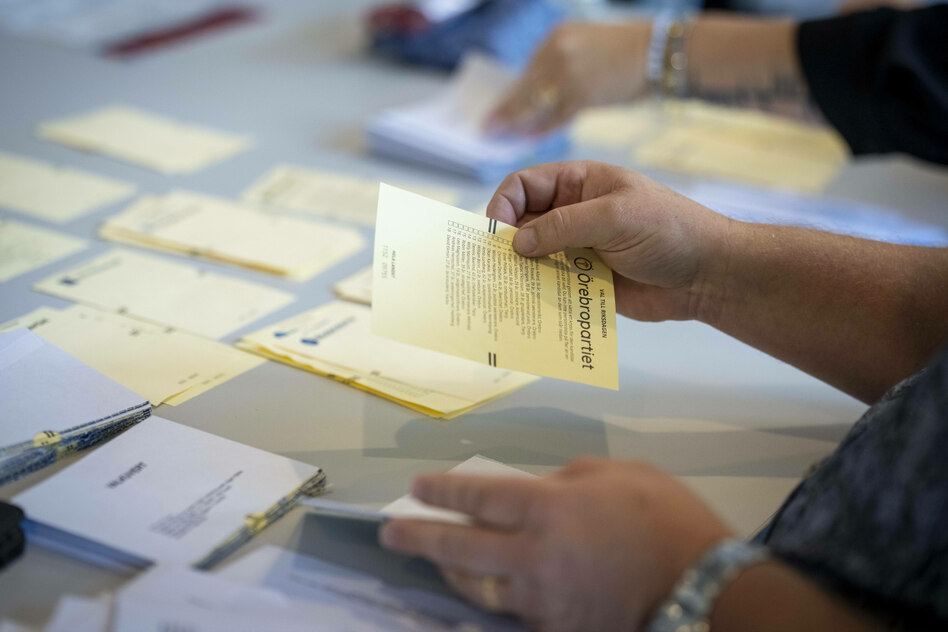
They call it “mandate ping-pong”: After the general election in Sweden, so few votes separated the two political blocs that every single vote counted. During the day-long counting process, one mandate changed sides several times. In between, the red-green bloc was only one parliamentary seat ahead - 175 to 174. On Thursday morning the mandate came back - 176 to 173. And it should stay that way now.
The opposition led by Social Democrat Magdalena Andersson was able to maintain its narrow lead. The people had chosen a new political direction, “for cohesion and against division,” she said in her victory speech – when it was decided four days after the election. She wants to work hard to gain the trust of those who did not vote for a government under her leadership.
It's a victory, but absolutely not a triumph. This is one of the big stories of this election: how the challenger to Prime Minister Ulf Kristersson (Moderate) lost a large lead in her political bloc that had long been believed to be secure in the final spurt of the election campaign. This was not least due to their own historically poor results. The Social Democrats lost over two percentage points and are at 28 percent.
The result means that Andersson is faced with an incredibly complicated process of forming a government that, as things currently stand, is virtually impossible. Next to “mandate ping-pong,” the second most frequently heard term since Sunday: “red lines.” There are serious incompatibilities on their side. The Center Party, which, despite its rather liberal economic views, is classified as a left-green party with a focus on climate and humane migration policy, continues to draw its red lines on both outer political fringes. As a small partner in a minority government under Andersson, it would want to rely on the parliamentary support of the Left Party - but would under no circumstances accept it as a coalition partner.
It was considered a possible strategy for the Social Democrats to look beyond the center to the Christian Democrats, but that would be of no use to them given the result. Calculated in terms of growth, the Left Party is the election winner, with an increase of 1.6 percentage points to 8.4. It was apparently particularly successful in urban suburbs that were considered problem areas. So she can confidently stick to her own red line for now: she won't be content with a role as a majority procurer for an Andersson government, she says.
Now it's time to find a compromise. On Thursday morning, Magdalena Andersson invited party leaders to a joint meeting of all four opposition parties, Swedish media reported.
“Adjö, Tidö” was what Left Party leader Nooshi Dadgostar wrote on Instagram on Wednesday evening, when it was basically clear that Kristersson's liberal-conservative minority government would no longer be able to catch up. It is called Tidö after the place where moderates, the Christian Democrats and Liberals negotiated their cooperation with the right-wing Sweden Democrats four years ago. However, Kristersson did not want to say goodbye to the opposition immediately after the election - because of the close race.
He had spoken of an obvious “non-socialist majority” in parliament and signaled his intention to rally a majority behind him to continue as head of government. Problem: The Center Party also draws its red line to the right. Supporting Sweden Democrats is not their plan. And the Sweden Democrats? Their initial and then surprisingly high decline - by 3 percentage points to 17.5 - should now prompt party leader Jimmie Åkesson to take a break, as the broadcaster TV4 reported on Thursday. The Sweden Democrats had hoped for ministerial positions in a new Tidö government.
The final election result should have been clear on Wednesday - but some of the votes that had been cast in advance were delayed in the mail. Wednesday is usually the day on which these preliminary votes, as well as those of the Swedes abroad, are counted. They are not always decisive - this time they are.
Read the full story at the source
Source: taz