
Germany taz
Nouripour on Iranian intelligence: “Low-level agents play a big role”
Two Iranian agents were convicted in Hamburg for planning attacks on Jewish targets. The danger has not been averted, says Nouripour. more...
Deutsch (original) ·Auto-translated to English
taz: What is currently preventing Iran from simply finding new agents and planning attacks in Germany?
Omid Nouripour: Our constitutional state and our security architecture. Because the aggression of the Iranian regime is increasing. His activities have been causing damage in Germany for decades. Who can tell them about it day and night is the Iranian community. This is constantly in the sights of the regime henchmen. Be it through attempts at intimidation, espionage or even murder. This needs our utmost attention.
taz: The tip about the attack plans in Hamburg, where two spies were convicted on October 15th, came from the Israeli secret service. Have the German authorities failed?
Nouripour: No. We constantly have tips coming from outside. Conversely, the German intelligence services also give tips to other friendly states when it comes to preventing terrorism. This is nothing unusual and certainly not a failure. We now also have a high level of attention from the security authorities in this matter.
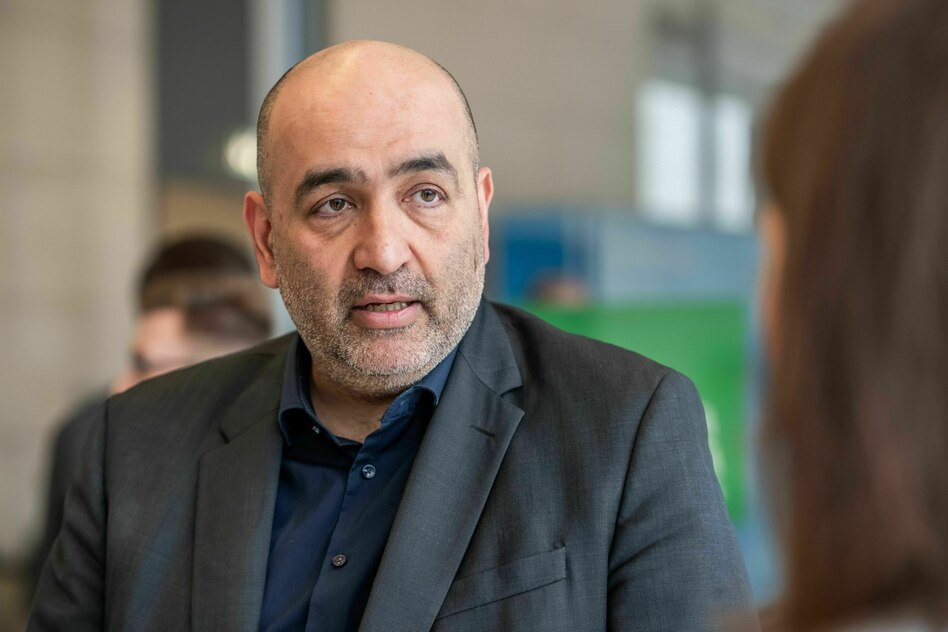
Born in Tehran in 1975, came to Frankfurt am Main at the age of 13. He is Vice President of the Bundestag. He was previously federal chairman of the Green Party.
taz: Do you stand with your party colleague Volker Beck in demanding that the Iranian ambassador be expelled?
Nouripour: If we close the embassy here, the embassy in Tehran will be closed. This is politically understandable, but creates new problems. The embassy could still help when it comes to humanitarian visas for politically persecuted people. Instead, sanctions must be imposed and applicable regulations must be consistently implemented. We must ensure that sanctions do not harm ourselves. In my case in Hesse, the assets of a financier of the regime were recently rightly frozen. As a result, over 100 hotel employees are threatened with unemployment. Such sanctioning measures require compensation, such as trust models.
taz: Has Germany slept too long on the digital threat?
Nouripour: We missed the entire digitization process, which is why we also missed the defense against digital threats. In countries like the Netherlands or Japan, the heads of government are entrusted with this issue. In Germany it is still running. And that's just a huge problem. The digital threat is massive and no smaller than the analogue one.
taz: How do you want to prevent security authorities from placing entire groups under general suspicion?
Nouripour: This is about a clear dividing line. This is not between Germans and Iranians, but between democratic Iranians and the agents of the Iranian regime. And our authorities have to see that too. But to be honest, I have relatively few worries at this point. I think that has arrived.
taz: What role do low-level agents play in Iranian espionage?
Nouripour: A big one! The Russians did it. Low-level agents are relatively low-risk for aggressive states and at the same time highly efficient. The Iranians work with it just like everyone else. And accordingly we need an overall solution.
Nouripour: We have to talk about it more loudly, like I'm talking about it now with the taz. We have to generate broad public attention so that people don't suddenly become sabotage agents of aggressive powers for 150 euros. There is too little awareness of this across society.
taz: Does the lack of prospects in parts of the Iranian diaspora make people more vulnerable to being recruited as agents by Iran?
Nouripour: The Iranian regime recruits much more broadly than in the Iranian diaspora. The problem is this: In recent years we have not only experienced progress in integration, but also setbacks. And above all, failures in the education system, which is not making any progress. Our education system continues to differentiate based on social and economic background. In addition, we simply have far too many professional bans. Too many people could work here and we won't let them. Integration through education and the labor market is primarily important for individual social perspectives and social cohesion. Accordingly, it is also important for internal security. We need to take this into account more.
taz: Flags of the Islamic Republic of Iran can sometimes be seen at pro-Palestinian demonstrations. Where does the solidarity come from?
Nouripour: About the common enemy. And that is the State of Israel in and of itself. It is obvious that the Israeli government needs the harshest criticism for its absolutely disproportionate actions in Gaza. But you don't shake hands with people who want to destroy Israel and destroy Jews. You confront them.
taz: How can solidarity with Palestinians be separated from support for the Iranian regime?
Nouripour: Politics should set an example for this separation. But some parties can't manage that. On the one hand, one must formulate clear and necessary criticism of our friends in Israel and, on the other hand, make it clear that Israel's right to exist must not be questioned. It's actually not that difficult.