
World · taz · · 3h
Northern Ireland, Scotland and Wales: Oh how wonderful independence would be
Deutsch (original) · Auto-translated to English
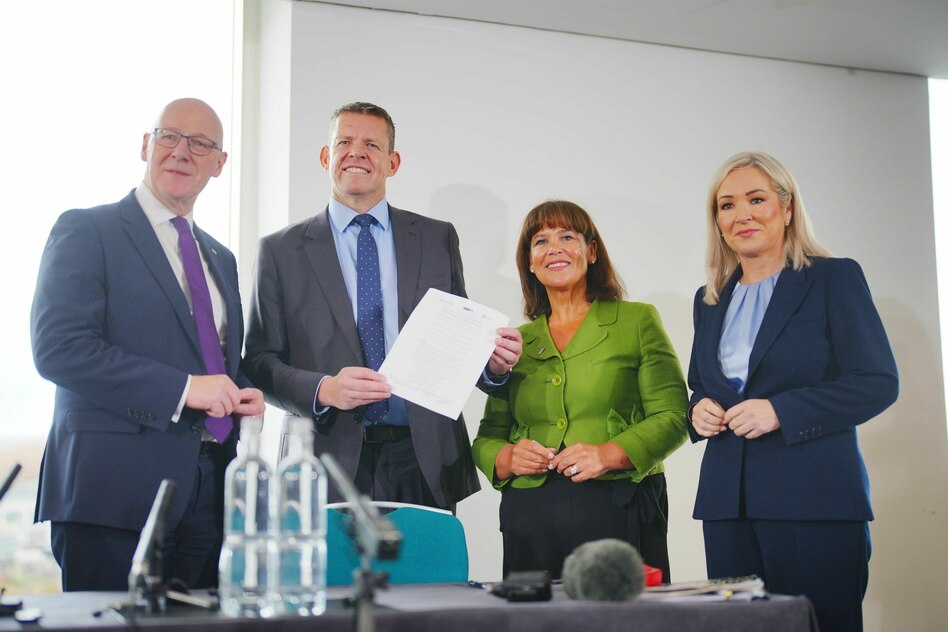
“There can be no clearer sign that Westminster’s time is coming to an end,” says a memorandum of understanding signed by the leaders of the majority parties in Wales, Scotland and Northern Ireland. The head of the Welsh Plaid Cymru party, Rhun ap Iorwerth, the Scottish SNP party leader and head of government John Swinney, the Irish Sinn Féin President Mary Lou McDonald and the First Minister of Northern Ireland Michelle O'Neill signed the declaration on Monday in the Welsh capital Cardiff.
Unlike England, the smaller parts of the United Kingdom each have their own parliament and regional government. The positions of head of government there are now filled everywhere with members of the respective independence party.
They now want to share ideas about economic growth and energy supply and plan a future within the EU. “We demand from the British government a plan to prepare for constitutional change,” the statement continued. In plain language: They are increasing the pressure to give in to demands - especially from Scotland and Northern Ireland - for referendums on the secession of parts of the country.
At a press conference, Welshman ap Iorwerth said: The strong election result for nationalist parties - in Wales Plaid Cymru became the strongest party for the first time with 43 percent of the vote - meant that the UK's Westminster model was outdated. And that there is a mandate to do politics differently.
Specifically, Wales has already announced that it will set up a commission to examine the steps necessary for Welsh independence. In the meantime, ap Iorwerth is seeking concessions from the British government, including a better distribution of resources for Wales from the state budget, expanded control over the Welsh police and justice system as well as rights to areas under the care of the royals, as well as more rights over coastal regions, for example for the purpose of generating energy through wind power.
One reason why the topic has gained momentum in recent years was Brexit, the withdrawal of Great Britain - and therefore all parts of the country - from the EU.
Many of these rights already exist in Scotland, for example, such as a largely independent judicial system.
The Scot John Swinney called for a new independence referendum for his part of the country within five years. And referred to Prime Minister Andy Burnham. Last week he made it clear that a new Scottish referendum would be entirely possible for him if the majority of Scots demanded it. This is a change of course from the positions of his predecessors over the last decade. At the same time, however, Burnham emphasized that a referendum was not currently in prospect.
In opinion polls, more Scots are in favor of independence than against it. Swinney predicted that British Prime Minister Andy Burnham would be “the last Prime Minister of the United Kingdom”. However, his SNP party suffered losses in the last elections in May.
Sinn Féin's Mary Lou McDonald emphasized that it was about the inalienable right to determine one's own future. Ireland, Scotland and Wales have a different history that must be respected.
Northern Ireland's First Minister O'Neill made it even clearer: it was about getting rid of the shackles of Westminster. Northern Ireland's Deputy First Minister Emma Little-Pengelly then accused O'Neill of abuse of office. Little-Pengelly and O'Neill both have equal power, and their positions were enshrined in the Good Friday Agreement that pacified the Northern Ireland conflict in 1998. The Northern Irish unity government also includes supporters of union with Great Britain.
Prime Minister Burnham said after the announcement from Wales that he believed in a United Kingdom and partnership with nations. His focus is not on constitutional changes, but on trying to reduce the cost of living for people in the country.
Read the full story at the source
Source: taz