
Germany · taz · · 1h
Nobel Prize in Chemistry 2026: Nobel Prize in Chemistry goes to a Frenchman and a Japanese
Deutsch (original) · Auto-translated to English
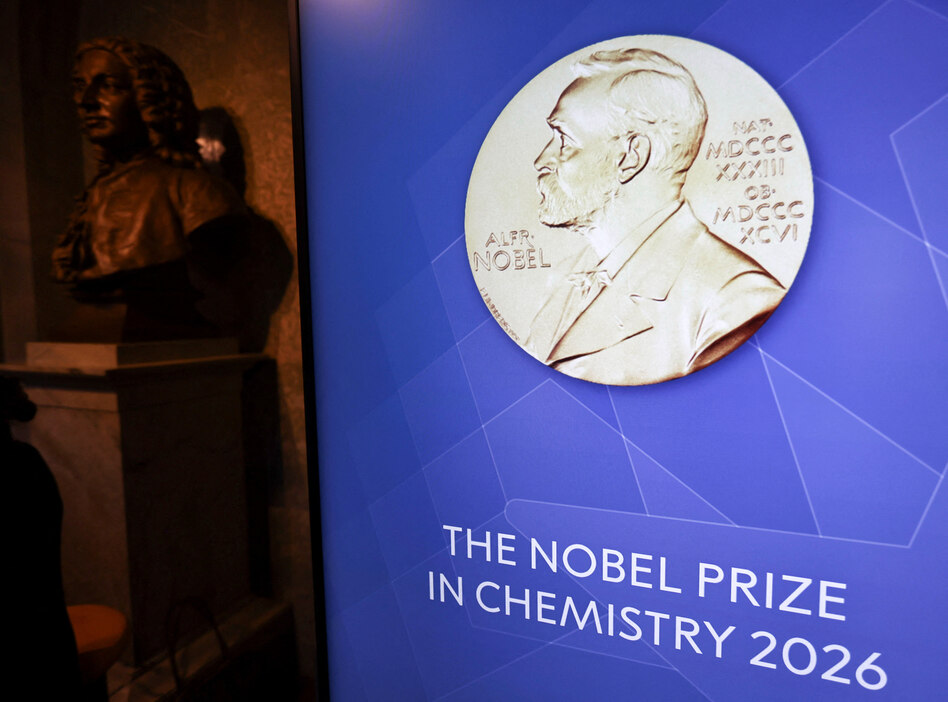
dpa | This year's Nobel Prize in Chemistry goes to the Frenchman Henri Kagan and the Japanese Kenso Soai for the discovery of nonlinear effects and autocatalysis in asymmetric organic synthesis. This was announced by the Royal Swedish Academy of Sciences in Stockholm. The discoveries were crucial for chemists developing the basis for making drugs, it said.
Some molecules, such as amino acids, exist as two variants that are the mirror image of each other. However, living organisms contain only one of these mirror images. How chemical asymmetry like this can arise has long been a mystery to chemists. Kagan (Université Paris-Sud) and Soai (Tokyo University of Science) receive the Nobel Prize for finding a solution.
This year, the most prestigious award for chemists is worth a total of 12 million Swedish crowns, the equivalent of around 1 million euros.
The Nobel Foundation recently increased the prize money to 12 million crowns. "This year we are celebrating the 125th anniversary of the Nobel Prize. To mark this occasion, we are pleased to be able to increase the prize money by one million," said the Nobel Foundation's Managing Director, Hanna Stjärne.
In the 125th year, there is another special feature: for the first time in the foundation's history, the names of the Nobel Prize winners for physics, chemistry and economics will be announced by a woman. Belgian-born Ellen Moons took up her post at the beginning of 2026 as the new Secretary General of the Royal Swedish Academy of Sciences (KVA) in Stockholm, which announces the Nobel Prizes in the three prize categories every year. She is the first woman to hold this position since the academy was founded in 1739.
Last year, the Nobel Prize in Chemistry went to materials scientists Susumu Kitagawa (Japan), Richard Robson (Australia) and Omar Yaghi (USA) for the development of organometallic framework compounds. The molecular structures with large cavities can be used to extract water from desert air, capture carbon dioxide, store toxic gases or catalyze chemical reactions.
Since 1901, the Nobel Prize in Chemistry has been awarded to 198 different researchers. Two of them received it twice. So far, eight women have been awarded the prize: Marie Curie in 1911, who discovered the radioactive elements polonium and radium, and the researchers Emmanuelle Charpentier and Jennifer Doudna, who received the 2020 prize for the development of genetic scissors.
The Nobel Prize announcement began on Monday with medicine: This year, this award goes to two German and one American researchers. Peter Hegemann (71) from the Humboldt University of Berlin, Georg Nagel (73) from the University of Würzburg and the US researcher Karl Deisseroth (54) are being honored for their discoveries in optogenetics. Optogenetics allows cells to be precisely switched on and off using light. This could be used to show how nerve cells in the brain shape memories, feelings and behavior, it was said.
Belgian-American researcher Francis Halzen (82) from the University of Wisconsin in Madison was awarded the Nobel Prize in Physics on Tuesday. He has made significant contributions to the IceCube neutrino observatory - a cubic kilometer of glacial ice in Antarctica equipped with sensors. This was the first detection of high-energy cosmic neutrinos.
This year's Nobel Prize winners for literature and peace will be announced on Thursday and Friday. The series ends next Monday with the so-called Nobel Prize in Economics, sponsored by the Swedish Reichsbank.
The ceremonial presentation of the awards traditionally takes place on December 10th, the anniversary of the death of the prize founder Alfred Nobel. This year's winners of the Right Livelihood Award, commonly referred to as the Alternative Nobel Prize, were announced on September 30th.
Read the full story at the source
Source: taz