
Germany taz
News Fatigue: News? No thanks
If you don't know what's going on in the world, you can't stand up for others. But does being informed really make us better people? more...
Deutsch (original) ·Auto-translated to English
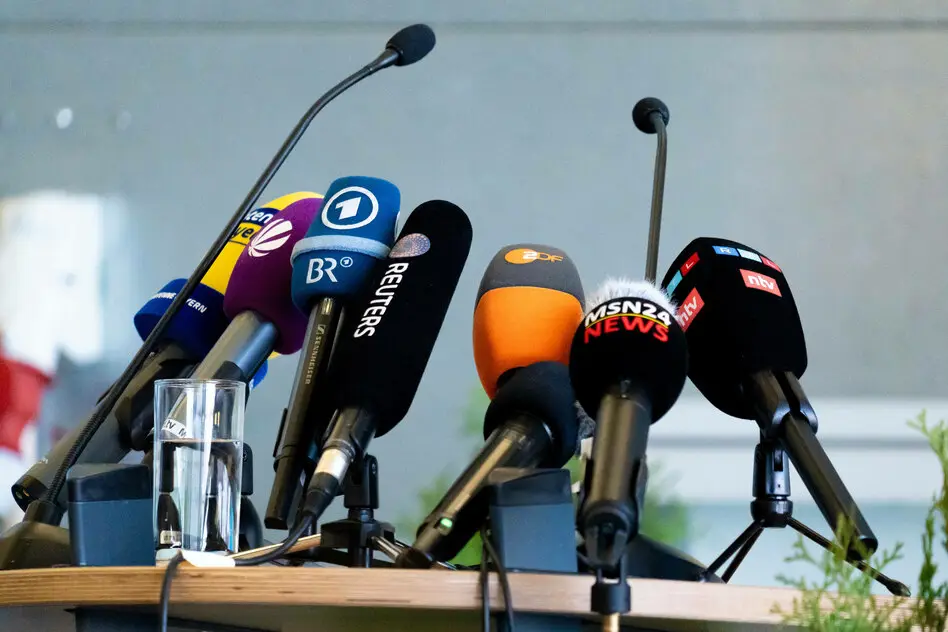
L -Ü-C-K-E-N-P-R-E-S-S-E, he says very slowly, looks around and smiles smugly. Since the beginning of the war in Ukraine, he no longer consumes any news at all, the public-run gap press no longer fulfills its state contract, does not report comprehensively and objectively, not to mention the private ones. The remaining members of my drawing class nod eagerly. They say they no longer follow the news either. Too negative, too one-sided, too depressing.
I swallow and try a counter-suggestion: How about media that does constructive journalism, “slow journalism” or local media? You not only have to deal with the misery of the world, but also with what you can do about it on your own doorstep. “Mhmm,” one murmurs. Then she'll just get stuck on Tiktok.
More and more people are limiting their news consumption. In the Reuters Institute's 2026 Digital News Report, 72 percent of respondents said they actively avoid news at least occasionally. In 2024 it was still 69 percent. The most common reason: the information is emotionally stressful.
I understand that it's not every day that you want to deal with the fact that hospitals in Sudan are being bombed and millions of people are being displaced or that Trump is increasing his racist migration policies with ICE raids, mass arrests and deportations. But there are also ways to stay informed and mentally stable at the same time, instead of taking refuge in baby panda and ASMR videos and chalking it up to self-care.
It annoys me when the gloomy world situation has to be used as a justification for turning away from political events and retreating into private life. It annoys me when my roommate doesn't know who Ayatollah Ali Khamenei is, it annoys me when my cousins don't know who Gisèle Pelicot is. But why?
After all, my wine connoisseur friends aren't annoyed that I don't understand anything about their "cultural heritage" and order any kind of beer, as long as it's cheap. Even my programmer friends aren't annoyed that I didn't know how to convert a Word doc into a PDF until a few weeks ago.
The difference: Not informing yourself is a lack of solidarity. Those who don't follow the news are unlikely to join alliances, support other groups or support political resistance. In “Screw Selflove, Give Me Class Struggle,” Jean-Philippe Kindler advocates “keeping a distance from yourself.” According to Kindler, you cannot initiate changes in a society that withdraws into its own inwardness.
Solidarity is one thing, but abstaining from the news doesn't necessarily help your own peace of mind, on the contrary. The world then becomes a diffuse threat scenario that can attack you at any time.
A woman in the drawing class says that she gets anxiety attacks when she suddenly hears a report on the radio. She can hardly classify scraps of news that she picks up casually without background knowledge and they catastrophize the situation. At the same time, constantly reading the news can also become a stressor.
“Why am I informing myself?” I ask myself. Really out of solidarity? Or not also to give me a feeling of control? To satisfy my curiosity? Belonging to a group and feeling anchored in the world? To lead a political life? Probably everything. But does that make me a better person? Hardly.