
Germany · taz · · 1d
New York City 25 years after 9/11: Attack on a way of life
Deutsch (original) · Auto-translated to English
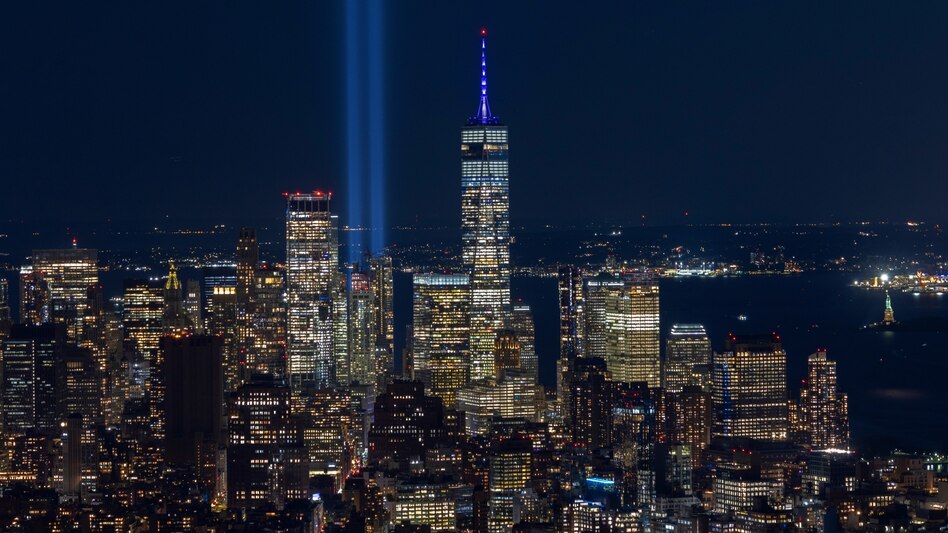
If someone who hasn't been to New York for perhaps 25 years were to look at the Manhattan skyline from New Jersey today, they would probably have a hard time believing that the city on the other side of the river is actually still New York. The view of the iconic Empire State Building is blocked by the Hudson Yards, an ensemble of flagship towers by well-known star architects. The twin towers at the southern end of the city, destroyed in 2001, have also given way to a bouquet of new glass buildings, from the center of which rises the new, ponderous Freedom Tower. The southern edge of Central Park in the middle of the island is lined by a phalanx of super-slim, super-tall “matchstick” skyscrapers, whose penthouses offer the most expensive views in the world.
The city has changed dramatically since the attack on the most striking symbolic buildings of western capitalism. The city, whose central feature is density, only seems to have become more dense. The principle of “higher, bigger, more powerful,” which has always provoked the enemies of the American way: It has been taken even further to the extreme.
There are places in Manhattan today where you simply can't feel like you're in New York anymore. The feeling: that highly intense experience of being forced to come face to face with the entire panopticon of humanity in a very small space. The experience that the urban theorist Rem Koolhaas called the “culture of density” in his 1978 book “Delirious New York”. That intoxicating and disorienting feeling that came over you, and sometimes still comes over you, when you walk through the streets of the city and find yourself in the middle of a sea of people from all imaginable backgrounds and social positions who, despite all their differences, can simply be themselves. Or at least that's how it seemed.
Let's take Ground Zero itself. The original twin towers had already broken through the "grid", the 200-year-old grid of the city, in whose rectangles the bulging, profane life spread. They stood as a separate entity on a platform, a vertical fortress, behind whose glass facade, as the name suggested, the world's business was conducted.
They were an embodiment of the theory of Saskia Sassen, the American sociologist and globalization expert, who argues that major metropolises have more to do with each other than with their immediate surroundings. The World Trade Center had more in common with London's Canary Wharf or Tokyo's Roppongi Hills than with its neighboring Lower East Side or New York's Chinatown. The Arab neighborhood of Little Syria, with its radio repair shops and Levantine bars that had previously enlivened the area, was flattened without batting an eyelid.
The old World Trade Center was the glass and steel vision of a new New York that powerful men around the Rockefeller heirs Nelson and David had been nurturing since the 1950s. With the disappearance of crafts and industry from the city, New York had to be put on a new economic basis. The future, it was decided, lay in finance, and the city's fiscal crisis in the 1970s helped accelerate this development.
However, the destruction of the Twin Towers in 2001 initially created space to rethink the concept for this place - and thus also what message one actually wanted to send to the world from Ground Zero. For a very brief moment, the insight that the publicist Susan Sonntag articulated in a short essay immediately after 9/11 prevailed: “Let us mourn together and not be stupid together.”
A group of left-wing urban planners led by Sharon Zukin and Michael Sorkin called for a rethinking of the global hegemony of finance capital and the centrality of lower Manhattan in this system. Plans ranged from a permanent “Elysian field”, with a shovel of earth from every country in the world, to a landscape garden by the German architect Frei Otto – public, non-commercial spaces. But these ideas were quickly rejected.
Instead, the reflex was to repeat what was familiar. There should be even more, even bigger skyscrapers, with even more office space that no one needed. The right response to 9/11, it seemed, was to flex muscles. Seven new glass towers designed by trusted names in the global architecture industry were planned, ringing a memorial like post-industrial Stonehenge steles.
The memorial itself, the two bottomless waterfalls that mark the exact floor plan of the former towers, is widely regarded as a success. The bottomless abyss here, which simultaneously marks and calls to mind the emptiness of the sky above, is as clever as it is tasteful. But the campus is not part of the city.
And, also this: Ground Zero is a monument to the paranoia that 9/11 triggered in New York and throughout the USA. The plaza is surrounded by improvised police stations and concrete blocks connected with chains that would withstand a tank. From a worm's eye view, the main thing you can see from the Freedom Tower is the 70 meter high concrete base that is supposed to protect it from attacks and which basically makes a mockery of the name Freedom.
At 5 p.m. sharp, the square closes to the public and dozens of security forces swarm to clear it. All you can do then is go to the luxury shopping center in the so-called Oculus, Santiago Calatrava's vain wing building for which taxpayers shelled out $4 billion.
The situation is a prime example of what has become of the city that once promised limitless freedom. Since 9/11 there has hardly been a public space that is not over-regulated. Wherever you go, uniformed men tell you in a sharp commanding tone how and where to stand, walk and sit.
However, you will hardly meet New Yorkers on the 9/11 Plaza anyway. The area, like the underground museum, is dominated by tourists. Sharon Zukin expressed the locals' reluctance to make the pilgrimage here: "Why should I relive the worst day of my life while Danish tourists take selfies next to me?"
The statement also reflects a deep aversion to the instrumentalization of the trauma of 9/11, to which many New Yorkers were allergic from the start. A close acquaintance used to say every time the subject of 9/11 came up: "Suddenly people from Kansas poured into town wanting to hug you. I didn't want to be hugged by people from Kansas."
Helaina Hovitz, who now works as a journalist, describes her experiences in the book “After 9/11” as follows: As a little girl, she went to school directly below the Twin Towers and on September 11th she had to see people jumping out of the fire and hitting the asphalt in front of her. She was left alone to fight her way through the chaotic streets of lower Manhattan through confused survivors and desperate rescuers, not knowing if her family survived. She later developed severe post-traumatic disorders, alcohol and drug problems.
People's personal experience very quickly had nothing to do with what was made of the event. The flag waving, the knee-jerk US government going to war, the rampant Islamophobia - all of this never did justice to those who experienced 9/11 first hand. When politicians and dignitaries showed up at Ground Zero every year, New Yorkers stayed home. They had simply decided not to take notice of it.
9/11 changed the city more quickly and dramatically than anyone could have imagined at the time. In November 2001, still under the direct impact of the attacks, New York elected billionaire Michael Bloomberg as mayor. The hope was that as a successful entrepreneur he could get the economically struggling city back on its feet.
A few months later, in the opulent glass foyer of the World Financial Center, which had survived the attack on the opposite side of West Street unscathed, he announced New York's Olympic bid for 2012. At the time, it was believed that the application was intended to do something for the morale of the city.
The application was used as an opportunity to declare 40 percent of the city “re-zoned,” which means changing or repealing the usage regulations for entire neighborhoods or districts. This led to a level of construction activity that the city had not seen since the post-war period.
Up-and-coming neighborhoods like Williamsburg, Greenpoint and Harlem were opened up to commercial developers, and a massive wave of gentrification swept across the city. In a moment of inattention, Bloomberg even admitted that he saw the city as a “luxury product.” Anyone who can't afford it should just stay away.
What the luxury product looks like today can be seen by walking up Frederick Douglass Boulevard from the northwest corner of Central Park to Harlem's central square, African Square at the intersection of 125th Street. The highway named after the famous abolitionist is now lined with 10- to 12-story new apartment buildings. Chic bars and restaurants are lined up on street level. On the corner of 116th Street, where until recently a mosque marked the center of the neighboring West African community, there is a huge construction pit.
The picture is similar on 125th Street, which Bloomberg “rezoned” like Frederick Douglass Boulevard. Along what was once the “Main Street of Black America,” glass office and shopping boxes have replaced the old buildings. Tenants are primarily chains such as the organic supermarket chain Whole Foods, Starbucks or the sneaker brand Foot Locker. Long-established small businesses have only survived gentrification in a few individual cases. Hardly anyone remembers institutions like the record store Bobby’s Happy House or the National Memorial African Bookstore.
The Harlem Studio Museum, once a loft where African-American artists could work and show their work, has been resurrected as a $160 million flagship project by star architect David Adjaye. The lip service paid to “community” is specious. The monumental building doesn't blend in, but stands out and attracts less people from the neighborhood than tourists interested in art.
The remaining lower-middle-class African-American residents don't think much of it. A group of visitors I recently led through the neighborhood were compared by an older woman to the Israeli forces in Gaza. A very drastic and oblique comparison, but the woman probably wanted to say: Harlem, once a refuge for African Americans from all over the USA, feels occupied.
As the globalization critic Naomi Klein noted, the shock of 9/11 was used to turbocharge the city's neoliberalization, which had begun long before the construction of the World Trade Center. New York itself initially flourished economically, but social inequality increased dramatically. Rents rose inexorably and the number of homeless people doubled. Investments in public housing complexes were scaled back and many fell into disrepair.
As the crown jewel of Bloomberg's efforts, the new Hudson Yards district opened shortly before the outbreak of the Covid pandemic on the site where the Olympic Stadium was planned - at $25 billion, the most expensive privately financed construction project of all time. Writer Jeremiah Moss, an ardent critic of gentrification, called the Yards a “gated community for the super-rich.”
Like Ground Zero, the campus has nothing to do with the actual life of the rest of the city. You get lost in another high-end shopping center with an abundance of overpriced luxury apartments and an observation deck from which you can look out over New York for $65. To date, around 15 percent of the apartments are empty. The most expensive tower, number 35 Hudson Yards, is more than 35 percent vacant. Meanwhile, standing in the plaza between the new, glittering towers, you have the feeling of having lost yourself in an AI-generated, futuristic city experiment. But New York is somewhere else.
Bloomberg's successor, Bill de Blasio, failed to revise Bloomberg's neoliberal vision. But then New York suffered another shock with the pandemic. One that made visible all those New Yorkers who are not suitable as high-end consumers, but without whom the city cannot function: the people, often migrants, who work in restaurants, as cleaners, in hotels.
Where the reaction to the Covid shock will lead is still undecided to this day. First of all, the merciless mechanisms of an unbridled market took effect again in New York. When the wealthy pandemic refugees moved back into the city and with them a new population of technology workers that Bloomberg had attracted, the cost of living initially shot into absurd levels.
But then on November 4, 2025, the city elected a mayor who will stand up for those who refuse to disappear silently back to the margins of society or the city. The leftist Zohran Mamdani, who has been in office since January, misses no opportunity to celebrate places like Steinway Street in Queens or Belmont Avenue in the Bronx as the real New York: intact neighborhoods of hard-working, upwardly mobile immigrants - and not the glittering luxury New York of Bloomberg.
Mamdani finds broad support for this among the population. There is hope, however slim, that the shockwaves of the pandemic will cause a change in the course that the city and country have taken over the past 50 years, which 9/11 dramatically accelerated. People have become more awake in the past 25 years - just as Susan Sonntag called for back then. In any case, disguising profit-seeking and a lack of social empathy as patriotism no longer works. Or at least not as good anymore.
Read the full story at the source →
Source: taz