
Germany · taz · 47m
New novel by Ulrich Peltzer: When specialness is met with rejection
Deutsch (original) · Auto-translated to English
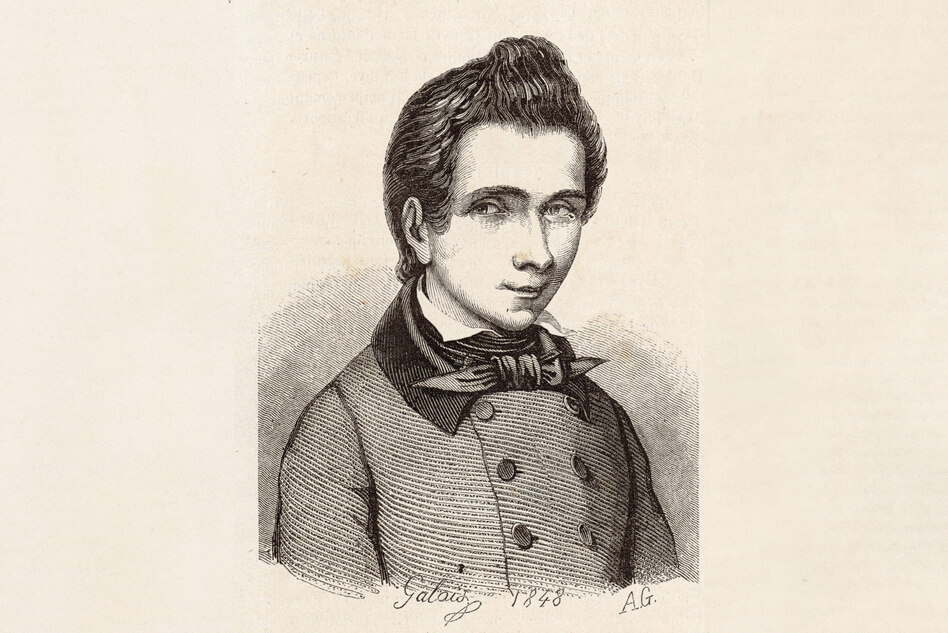
Ulrich Peltzer's characters have always oscillated between extremes. His novels always tell a story of subcultural and political movements. “The Lost Sleep” is now dedicated for the first time to historical material: the mathematical genius Évariste Galois, who was killed young in a duel, and the French July Revolution of 1830.
But this is only partly historical material. Because what is it said about the protagonist? “Always on the edge, including crashes.” This is almost literally reminiscent of the main character of Peltzer's last novel, “The Seriousness of Life,” which was about borderline experiences in the present.
Peltzer's new novel is certainly not a self-assured descent into a distant past. Passages like this are typical: “Évariste turns towards the camera, perhaps he is looking directly at the audience… that is me, what do you want from me, look into my soul?”
From the beginning it is clear that there are two protagonists in this novel. In addition to the radical subversive and mathematician Évariste, there is also a nameless narrator from today who never writes in the first person, but who thinks about a film subject during a night in hipster-tourist Berlin on the Landwehr Canal and, under considerable financial and time pressure - the producer is pushing - tries to turn the story of that Évariste Galois into a screenplay.
This biography is indeed dramatic. The hero dies at the age of twenty under dubious circumstances, and it is only 15 years after his death that the groundbreaking significance of the formulas he hastily thrown out shortly before his death is recognized.
The Galois theory named after him deals with highly complex questions of algebraic equations that seemed insoluble to his contemporaries. At the same time, he developed into an impetuous political radical who was viewed as extremely dangerous by the henchmen of the last Bourbon king and the new "Citizen King" Louis Philippe - his death was preceded by an intrigue in which the secret service was involved.
The author Ulrich Peltzer and the screenwriter in his novel take seriously a fundamental question that is rarely thought through to the end and that forms the beginning of all art: How do you tell a story? Especially when you know little or almost nothing?
The well-known fragments of Évariste's biography are named and questioned, but what is essential is how they are pushed back and forth and, under the aspect of a film adaptation, always acquire an aesthetic dynamic of their own. They are also confronted with the scriptwriter's own memory fragments as he searches for connections across time.
The amazing thing about Évariste is that he was at the same time a mathematical genius and a political revolutionary. Peltzer's screenwriter is not subject to the obvious suggestion of seeing a logical connection here. Biographically central was the suicide of Évariste's father, a liberal mayor near Paris, who was increasingly harassed by the clergy and reactionary aristocracy during the Restoration in the 1820s and who was unable to cope with a slander campaign. The son seeks contact with the utopian socialist Saint-Simonists and soon joins the revolutionary circles around Louis-Auguste Blanqui.
Even at school, Évariste, who by no means stands out in the other subjects, shows a unique mathematical talent. A liberal teacher tries to encourage Évariste in view of the problems that concern his pupil and which he himself finds difficult to follow.
Peltzer's screenwriter then thinks about a few pithy scenes in which the narrowness and arrogance of the academic placeholders in mathematics are demonstrated. They don't understand Évariste's thoughts and refuse him the university - the power structures of an authoritarian regime become obvious here.
Évariste is not an artist in the classic sense, but underneath it all emerges what concerns the scriptwriter as well as Peltzer's novel itself: the characterization of the individual who stands out, whose specialness is not recognized by the others and is met with rejection.
Captivating scenes emerge in which Évariste forgets everything around him and is only fixated on the mathematical puzzles he has in his head at the moment. He is not interested in grades and the forms of civic recognition; his entire attention is focused obsessively on numbers and equations and the various levels of their possible resolution. If the teacher asks him a simple question that is below his level, he remains silent. He is considered arrogant and antisocial.
Peltzer and his scriptwriter manage to outline this artist problem very vividly and individually, with concrete atmospheric and historically precisely researched details. The clichés that seem to be in the air everywhere here don't even appear with this access.
There is a passage in which Peltzer broaches the subject of genius in a characteristic way. Then it becomes clear to the teacher at school, “that the boy, who had never before dealt with the principles of geometry, has a talent that cannot be called anything other than exceptional, even if it is only that of a memory that far exceeds common ideas (as if Évariste's genius could be traced back to this, as if mathematicians had a better memory than musicians or writers, but it probably works in their own way).”
You can tell from this novel that Ulrich Peltzer has already written several scripts with Christoph Hochhäusler, a director from the Berlin School. Films like “The City Below” (2010), “The Lies of the Winners” (2014) or the thriller “La Mort viendra” (“Death Will Come”, 2024) have the same sharp-edged and perfectly crafted aesthetic that Peltzer's screenwriter demonstrates in this novel based on the Évariste Galois material. Certain shots and lighting from film history, which alternate associatively and could serve as reference points for the film that is now being remade, seem like a novel within a novel. The making-of runs along with the text.
It is obvious that Peltzer wants to portray a contemporary artistic consciousness and does not want to fall behind the multi-dimensional narrative perspectives that William Faulkner or, in the German-speaking world, Uwe Johnson developed decades ago. Individual screenshots with Gary Cooper, Ingrid Bergman or Monica Vitti are extremely stimulating and take the text into completely different areas.
Sometimes the time levels change in the middle of a sentence and you jump from one comma to the next from Paris in 1830 to West Berlin demonstrations since the 1970s. Évariste is blended together with the scriptwriter's experiences on the Lower Rhine, whether in mathematics lessons at school or in conflicts with military service.
This novel is historical and contemporary at the same time; it bundles associations, passes them on and collects answers to the question of what a contemporary aesthetic can look like without immediately looking at the market. Only a few play in this class.
Ulrich Peltzer: “The Lost Sleep”. S. Fischer, Frankfurt am Main 2026, 203 pages, 26 euros
Read the full story at the source →
Source: taz