
Germany · taz · · 3h
New novel by Douglas Stuart: Daddy Issues in the Constant Rain
Deutsch (original) · Auto-translated to English
If an English novel is published in Germany at the same time as its original, this is an indication of its relevance. When it comes to hotly anticipated titles, the publisher runs the risk of German readers buying the original by publishing them later. Douglas Stuart's new novel John of John is such a hotly anticipated title. Can the 2020 Booker Prize winner make good on this leap of faith?
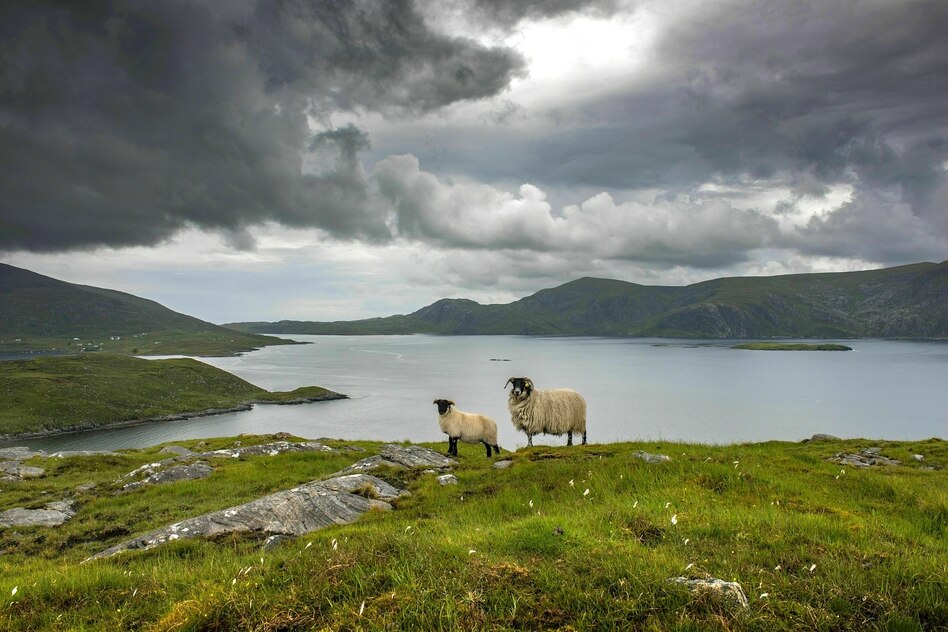
“John of John” is set off the coast of Scotland, in the Outer Hebrides. 22-year-old Cal Macleod returns to his home island of Harris. He moved to mainland Scotland to study but was unable to find a job after graduating.
His father's call for support in caring for his grandmother is not inconvenient. Cal moves back to the Macleods' farm in the fictional village of Falabay, where his father raised him alone. They make a living from raising sheep and making tweed.
Douglas Stuart changes the social class of his literature for the first time. In his debut “Shuggie Bain” he portrayed the lowlands of the Glasgow working class under Margaret Thatcher and rightly won the Booker Prize, the most important English literary prize.
The follow-up, “Young Mungo,” also took place in the working class. In “John of John,” Stuart remains true to his exploration of the experience of gay young men. Cal has been able to live out his homosexuality far from home, but now he has to subordinate himself to the ultra-conservative views of the Presbyterian village and his homophobic father.
This sets the two central lines of conflict: father and religion. Without giving too much away, it's fair to say that Cal's chances are slim. This is also due to the phase of life Cal is in.
In your early twenties you have "daddy issues" - emancipation from your father is still pending: "John viewed Cal as his property, an extension of his body, and he was not inclined to listen to his opinion, simply because Cal would always be the child for him."
The first conflict isn't long in coming: Cal's hair, shoulder-length and dyed blonde. The son initially resists, dyes it hydrogen blonde out of defiance, before finally giving in and having his hair shorn with fabric scissors.
Stuart finds appropriate words for being lost in adolescence, for the desire for independence and the inability to achieve it. When it turns out that Grandmother Ella isn't as rickety as expected and doesn't need any care at all, Cal resigns himself to his fate. He is so disoriented that he wouldn't know where to go anyway.
Because even on the mainland he had been on the sidelines and was ridiculed as a hillbilly at the university. He tries in vain to contact other gay men through newspaper advertisements, but Stuart successfully documents the challenges of homosexual life in the periphery.
The use of analog media such as the newspaper here as well as Walkman and VHS cassettes are reminiscent of the 1990s. Apart from that, this novel is timeless. He could also be playing at the beginning of the 20th century, the life of the islanders is so simple and their beliefs are so conservative.
Homosexuality, extramarital sex and fun on Sundays are forbidden: the playground swings are secured with chains on the “Sabbath”. Theologically, this variety of Protestantism is shaped by the doctrine of predestination: “Whoever is destined to drown will drown,” says Cal's father on the occasion of the death of a villager.
It's a little too coherent, this wet dream of reactionary longings. It's hardly surprising that Cal's childhood friend Isla is expelled from the community after an unwanted pregnancy. The odds have been read from the start: It's constantly raining on Harris, Cal is exposed as a homosexual, and there's no progress in sight.
The point here is not to question the fact that people actually suffered from such patriarchal conditions in the Outer Hebrides in the 1990s. It's about the way the author deals with these topics. He uses ideas that are already there and is not really interested in the lives of his characters.
John and Cal occasionally sit at the loom, but the author only gives superficial appreciation of their craft. It merely serves as a backdrop to create the impression of a torturous life. At the same time, Stuart leaves unused the metaphorical potential of this activity, which, like a novel, combines individual threads into a whole.
Instead, he uses hackneyed language, such as: “Innes was a quiet man.” It may be that men on islands actually say little, but a writer would be expected to find other words for it.
The author allows himself linguistic extravagance by sprinkling Gaelic snippets in the dialogue between father and son. Most of the time, however, he contents himself with sentences in italics that are intended to indicate that Gaelic is being spoken.
Tension is created in this sparse book by just one piquant detail: Cal's father himself is homosexual and has been having an affair with the quiet Innes for years. That's why Cal's mother once left him.
Instead of professing his love, John sinks into self-hatred, which he redirects onto his son. When Cal also shows interest in his father's lover, a love triangle arises, the postponed resolution of which is intended to encourage further reading.
This sparse novel is held together by the pleasant, eerie idea of an island tribe tormented by wind and religion. Apart from the successful portrayal of the father-son relationship, “John of John” disappoints.
He cannot convey what is special about the experience of living on an island, being poor and weaving tweed because he cannot find a form for it. Stuart, who in his own life has managed to rise socially from the working class, fails in his attempt at literary class change.
Douglas Stuart: “John of John”. Translated from English by Sophie Zeitz. Hanser Berlin, Berlin 2026, 560 pages, 26 euros
Read the full story at the source
Source: taz