
World taz
New novel by Colson Whitehead: Harlem, you ghetto, you Mecca of Black America
Colson Whitehead ends his New York trilogy with “Cool Machine”. The series is also a literary cultural history of Harlem from 1960 to the 80s. more...
Deutsch (original) ·Auto-translated to English
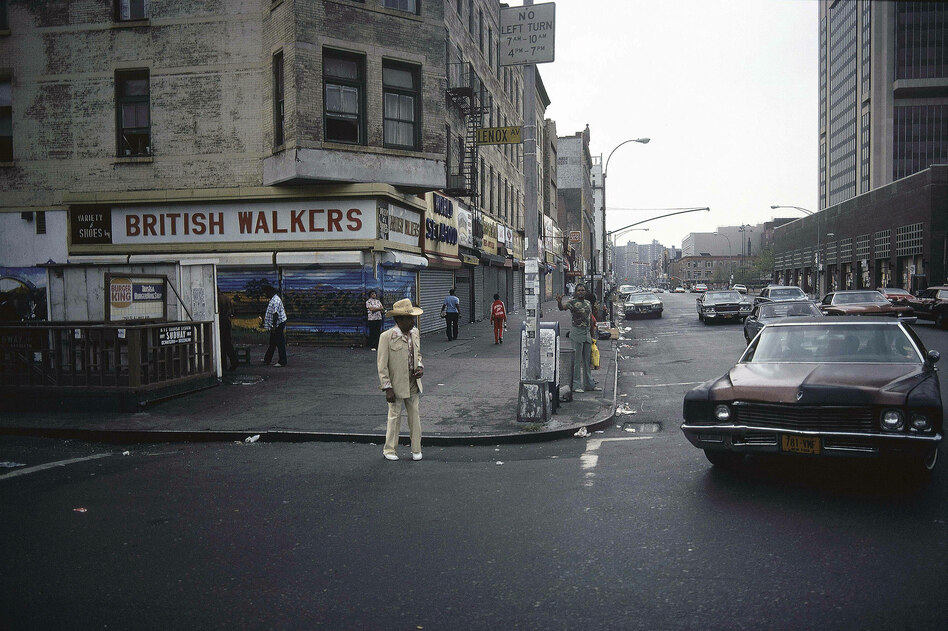
Condensing the lifestyle of a city into a few words is an ambitious undertaking. But Colson Whitehead is not a writer who hides from challenges, and so with the second sentence of his new novel "Cool Machine" he succeeds in suddenly drawing the reader into his world: "The city remained true to its personality that year... a monstrous structure, driven by innate misery, controlled by sheer will and held together by grit, anger and rebar."
The year is 1981, the city of New York; the universe in which Colson Whitehead and his main character Ray Carney move throughout their lives. So begins the third part of Whitehead's trilogy about Carney, which, like the previous two, depicts a decade of his life and that of the city. More specifically, Whitehead and Carney's hometown part of Harlem, but in many ways it represents the entire city and to some extent the entire country. Every one of Whitehead's words about New York could also apply to America.
In "Cool Machine" he writes of the "slimy dreams of greedy men" who populate the center of New York with ever higher, glittering skyscrapers in order to be as far away as possible from the miserable masses on and below the streets. The 80s have dawned in America, the Reagan era and with it the era of merciless neoliberalism and ever more extreme inequality between rich and poor. It is a dark premonition of the USA in which we live today, and marks the conclusion of his three-volume work, which can also be read as a cultural history of Harlem, New York and the USA in the period between 1960 and the mid-80s.
Colson Whitehead: “Cool Machine.” Translated from English by Nikolaus Stingl. Hanser Verlag, Munich 2026, 448 pages, 27 euros
Since winning his second Pulitzer Prize in 2020 with “The Nickel Boys,” Whitehead has been working on the trilogy, which, he freely admits, aims to follow on from the great works of African-American culture such as Ralph Ellison’s “The Invisible Man.” Harlem, the setting for both works, occupies a prominent place in the Black imagination. It is called the Mecca of Black America, the place to which African Americans from all over the country made pilgrimages because for a long time this was the only place where a somewhat free and dignified existence was possible and therefore African American culture flourished like never and nowhere before. At the same time, as Ellison and James Baldwin described, Harlem remained the eternal ghetto. Misery and splendor, poverty and cultural wealth lived side by side in Harlem.
Both the “invisible man” and Ray Carney personify this dual status that Harlem and its residents occupy representative of all African Americans in American society. The “invisible man” remains nameless and faceless; the mainstream of American society in the 1950s looks through him. Ray Carney, on the other hand, strives for bourgeois respectability, but never manages to shake off his secret double life as a demimonde figure.
Carney grew up with a single mother – a cliché of black social dysfunction. The father is a crook, is in prison more than he is out, and when he's on the streets of Harlem he's up to no good. Ray, on the other hand, is a good student, studies, marries Elizabeth, a woman from a good family, and opens a furniture store on 125th Street, Harlem's boulevard.
But respectability may never quite succeed. Ray repeatedly realizes that he is nothing outside of Harlem. And even among Harlem's more elite circles, the black lawyers, bankers, and doctors, he is cut, no matter how well his business is doing.
Instead, the underworld and demimonde stick to him like bad luck. Characters like his cousin Freddie and his Uncle Rich, who make a living from robberies, the corrupt cop Buzz or Zippo, a manic arsonist who burned down their worthless properties on behalf of property owners in the 1970s, repeatedly drag him down into the demimonde. Through them, after dark, Carney remains part of a fascinating, strange, eccentric demimonde universe that Whitehead populates with characters that could come straight from a Pynchon novel.
Carney is what people in Harlem call a “fence,” a fence between “day and night, the bad guys and the upstarts,” as Whitehead describes the two worlds. His protagonist lives in the zone that Whitehead calls “Dorvay,” a mixture of “dormir and éveillé,” sleep and wakefulness. His job is to turn hot goods into money and thus flush them into the legal circuit of capitalism.
Known for his ability to switch genres with ease, Whitehead masterfully chooses the crime genre for the Harlem trilogy. Each volume is divided into three episodes, each depicting a heist in which Carney takes part - from raiding a safe in Harlem's most elegant hotel, the legendary Teresa, to the bloody heist of a high-stakes poker game, to the theft of Jesse Owens' gold medal before an auction at New York's fanciest hotel, the Waldorf Astoria.
But the trilogy is not just a fast-paced robber's pistol and a humorous depiction of the environment with historical detail. Above all, it is a living cultural and customs history of Harlem. In the first volume there is the 1960s, which still retains some of the residual splendor of the Harlem Renaissance, but with the race riots of 1964, the descent of the district into the crime and drug-plagued ghetto of the 1970s is already becoming apparent. This is followed by the 70s, in which the middle class flees and Harlem burns - the dirty business of so-called "hot demolition" and the flourishing drug trade play a central role. And now in the third and final part, the 80s.
In the final part of the trilogy, Ray Carney has managed to make his business, rebuilt after a fire, flourish. His wife Elizabeth has expanded her travel agency, which originally organized only black trips through the dangerous South of the 1960s, to a general audience. But she still can't get loans from white banks.
So Ray lets his Uncle Rich persuade him to do a big coup again. They leave Harlem and advance into the white, rich Midtown, where New York and the America of our day emerge. After near-bankruptcy, control of the dilapidated city has been taken over by a consortium of businessmen and financiers. From now on, the growth formula is to save on government spending and invest in big business – in keeping with the neoliberal “trickle down” theory that still determines American life today. The skyscrapers become prettier and taller, while a shadowy empire of homeless people grows on the streets and in the subway tunnels, a pandemonium of the feral that reminds Carney of the box-office hit of the day, John Carpenter's "Escape from New York." In “Cool Machine,” in a climactic scene, they rise up like a zombie army and join forces with the crooks from Harlem.
Colson Whitehead once described his breakthrough novel, Underground Railroad, as something of a chore. “Everyone does a slave story at some point,” he says, meaning every African-American writer. The book became one of the most important literary voices of the Black Lives Matter era. Taken together, however, the Harlem trilogy demonstrates far greater ambitions. It is one of the great American stories on the level of Don DeLillo's "Underworld", Philip Roth's "American Idyll" or David Foster Wallace's "Infinite Jest". She describes the African-American experience of the past 50 years and reveals profound things about the course that American society has taken. Whitehead remains light, fast-paced and entertaining and therefore firmly anchored in the African-American tradition. Holding up a mirror to American society as an entertainer has always been a hallmark and art of African-American culture. Colson Whitehead does this masterfully.