
Germany · taz · · 2h
New Cologne “crime scene”: nightmare after the flood
Deutsch (original) · Auto-translated to English
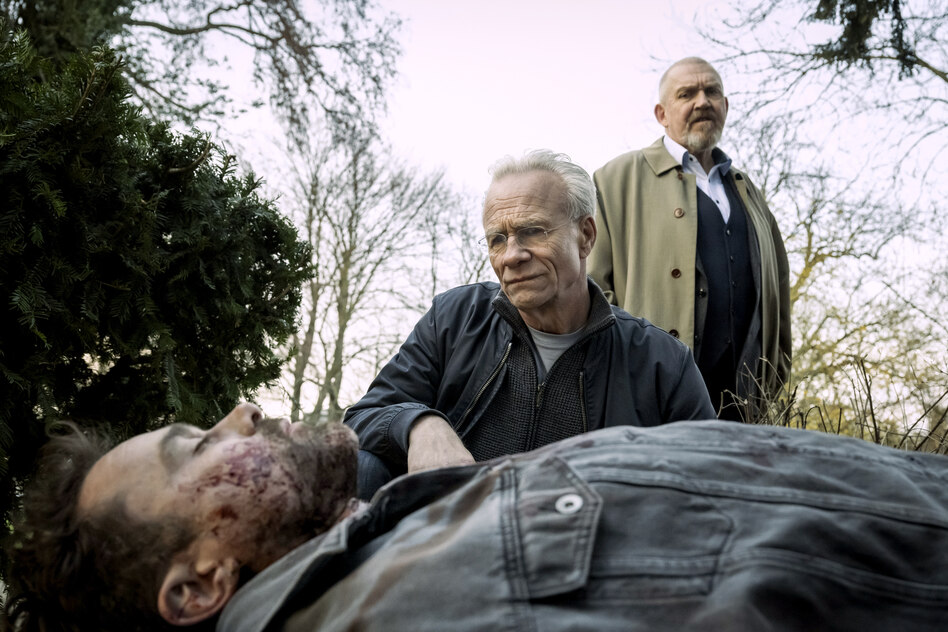
You have to give this “crime scene” from Cologne a little time, let’s say fifteen minutes. Then the explanatory bear dramaturgy typical of a crime scene has run its course - it comes back up at moments when we get snacks or go to the toilet - and we can get started.
The commissioners Max Ballauf (Klaus J. Behrendt) and Freddy Schenk (Dietmar Bär) represent the good old Federal Republic, in which room fragrance dealers, who are supposed to cover up the smell of decay of the clientele they represent, did not yet play a defining role in public life.
With Ballauf and Schenk, individual, moral stories are negotiated, of personal guilt, sadness, envy, greed, fear and panic.
now from Friday in the ARD media library and Sunday, September 19th, 8:15 p.m. on Erste
Two extraordinary actresses stand for this with their roles. Ann-Kathrin Kramer as a brilliant horse manager who eventually gets tired of always being at the back of the queue; and now really with a perfect performance Katrin Wichmann as the prepper's wife and overwhelmed mother, whose only friend is Limoncello. You rarely see something like this, not just on German television, and you shouldn't miss it.
The obsession of the “Tatort” series with youth, which always somehow has a schizophrenic shadow, threatening like an iceberg whose full destructive volume cannot be seen, also comes to full bloom in this episode. What is all the more absurd is that there are actually fewer and fewer young people, but boomers and subsequent generations have skillfully ensured this and thus secured their hold on power.
Having said this, one cannot blame Paul Ahrens as the 16-year-old prepper son Mats Zechmann at all. But he just has to act within very narrow limits.
In complete contrast to what triggers the entire meandering mess of this “crime scene,” namely a flood that sweeps people and animals away and requires individuals to position themselves as saviors for others or just for themselves. Whether all of this makes sense in detail remains, as with any crime thriller that gains momentum, secondary.
There are people here who are of interest and whose fates we want to follow until they are resolved. And this in a film that is moral, but only very rarely moralistic.
Read the full story at the source
Source: taz