
Germany · taz · · 2h
New “Infraplan”: How the railway should become better
Deutsch (original) · Auto-translated to English
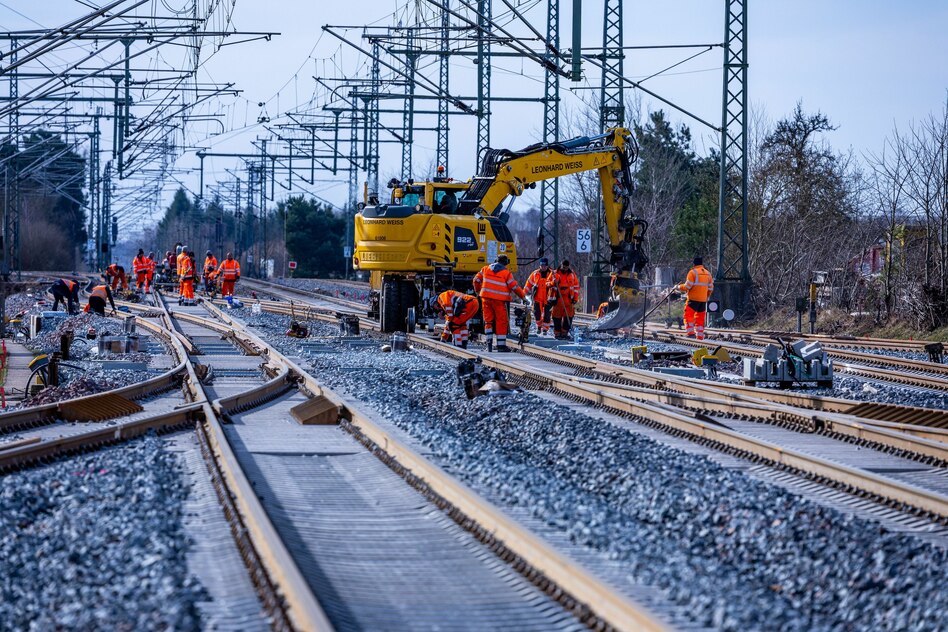
dpa | The rail network in Germany is partly dilapidated, resulting in many unpunctual trains. A new “infraplan” is intended to make it more transparent how the rail infrastructure should become better and more reliable step by step. Behind this is also better control of the railways by the Federal Ministry of Transport. There are concrete targets for the next five years. The infrastructure plan that the Ministry of Transport is presenting today is just one step on the way to improving the railways. Further central measures are to follow. There are many unanswered questions.
The Infraplan is intended to “bring transparency, trust and reliability back to the rail system,” says the 160-page paper available to the German Press Agency. Legal anchoring is planned in the future. The infraplan is intended to make it clear which measures are to be implemented by the rail infrastructure division InfraGO in the next five years, which are in preparation and could be implemented in the future.
The first plan covers the years 2026 to 2030. It involves the renovation, digitalization and electrification of routes, renovation work at train stations, noise protection as well as the expansion and new construction of railway lines - each shown on maps. If goals are missed, there should be readjustment. In the future, the annual preparation of the Infraplan should be timed so that it is closely linked to the federal government's budget planning and InfraGO's corporate planning, it is said.
The development of the railway infrastructure should be transparently evaluated using a key performance indicator system. There are eight federal management indicators with binding target values. This includes, for example, newly built track kilometers per year, electrified route kilometers, noise-reduced route kilometers and system-related delay minutes. Another key figure: “kilometers of corridor renovations”. However, there are still no target values for the years 2027 to 2030.
The concept of “corridor renovation” is currently being reviewed. It stipulates that a heavily used route will be closed and comprehensively renovated over a period of months, instead of during ongoing operations. These renovations are expected to last well into the 1930s. In this way, the network should gradually become more stable again and travelers should travel more punctually - in September, almost every second Deutsche Bahn long-distance train was delayed. According to the railway, a high number of system malfunctions again led to numerous delays.
The new Federal Transport Minister Steffen Bilger (CDU) was dissatisfied because there were many disruptions even when routes that had already been renovated were reopened. It is becoming apparent that fewer routes will be renovated each year in the future than previously planned.
Other points are also open. Central instruments for better control of the railway are still missing. This is about a “Target Network 2035”. The federal government's general goal is a stable cycle between local and long-distance transport, including rail freight transport. The desired “Germany clock” stipulates that a train runs every half hour on all important main traffic axes. Transfer times should be significantly reduced.
There is also a new “InfraGO service agreement”. This is intended to sustainably improve the financing structure of the infrastructure, as stated in the Ministry of Transport's rail strategy presented in September 2025. The agreement is scheduled to come into force on January 1, 2027 at the latest. Financing systems should be simplified and financing secured over the year in order to increase planning security.
To date, the financing of expansion and new construction projects has depended on the annual federal budget, which has repeatedly led to difficult negotiations given budget bottlenecks. In the debt-financed special fund worth billions to modernize the infrastructure, the focus is on maintaining the rail network.
In the future, a railway infrastructure fund is to be set up. This is intended to back the measures contained in the Infraplan and prioritized by the federal government with a reliable, multi-year financing commitment, as stated in the plan.
The model could be the railway infrastructure fund in Switzerland, through which all costs of the railway infrastructure are financed - both operation, maintenance and expansion. The fund is fed by contributions from the federal budget, taxes, duties and contributions from the cantons.
The establishment of a railway infrastructure fund is of “crucial importance” in order to enable planning security for rail financing, according to a study presented last year by Agora Verkehrswende and the Future Department. The fund should be sourced from budget resources, toll revenues and government loans, which could initially be serviced from the special fund. The special fund could be further developed into an infrastructure fund. Investments approved by December 31, 2036 may be financed from the special fund.
Given limited financial resources and significant investment needs in the rail infrastructure, the infraplan is an important step, said Gabriel Kapfinger, rail expert at the environmental association BUND: “Now, in addition to clear prioritization, binding implementation is also needed.”
Dirk Flege, Managing Director of the Pro-Rail Alliance, said: “The Infraplan is not yet a complete work of art, but it is the start of a system change.” This is a big step forward. “For the first time, the federal government is showing its colors about what new rail infrastructure will realistically be implemented in the next five years.” What is still missing is financial commitment.
The Green railway politician Matthias Gastel called the Infraplan a correct first step. Without the “Target Network 2035” it would lack the foundation. Decreasing target values for new track construction and small punctuality measures are worrying.
Read the full story at the source
Source: taz