
Germany · taz · 5h
New data centers in Germany: “In the end it has to be a fair exchange”
Deutsch (original) · Auto-translated to English
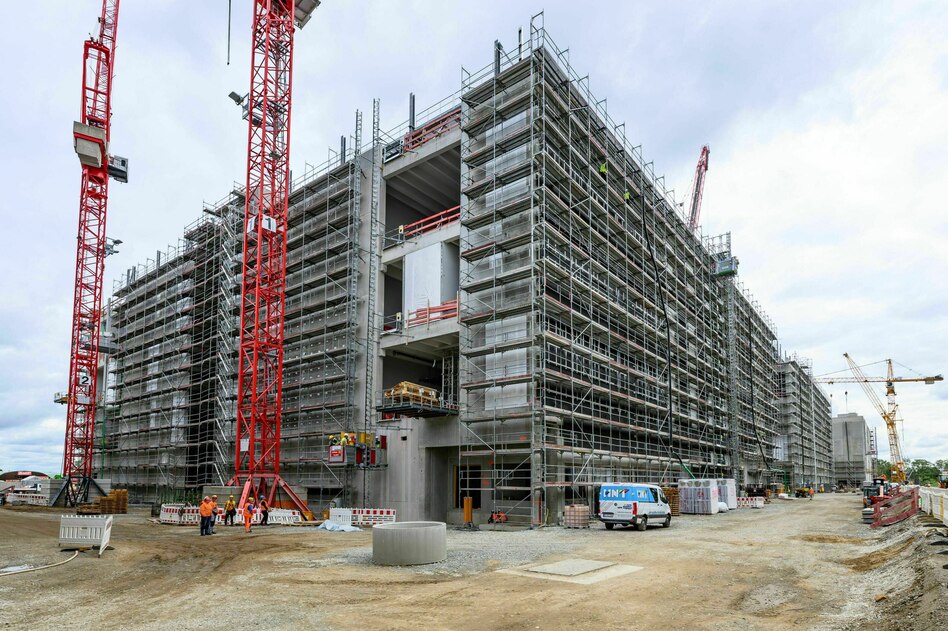
taz: Data centers are usually quite harmful to the climate. At the same time, we need them if we don't want to become dependent on providers from the USA. How do we get out of this dilemma?
Max Schulze: Sure, digital sovereignty makes sense. But it is not enough for data centers to be located in Germany. They must also be operated by local companies and ensure that we can capture some of the added value. But this is by no means the case with all data centers in this country - because US companies and investors also build here.
Julian Bothe: Of course, data centers are needed for many digital applications. But the current boom in the construction of data centers is largely driven by applications with artificial intelligence. The federal government is trying to bring as many data centers to Germany as possible without even having a plan or idea as to how this could be good for digital independence. The current deregulation of the industry, which the federal government is pushing forward and which, among other things, is lowering the requirements for transparency and sustainability, is primarily due to the demands of large US companies. By the way, we see that German and European providers in particular often build and operate much more sustainably than US providers.
Max Schulze, 36, is co-founder of the think tank Leitmotiv, which advocates for an alternative digital economy. Schulze is a software developer and cloud infrastructure expert who advises national and regional governments across Europe.
Julian Bothe, 40, is an expert in AI, climate protection and sustainability at the NGO Algorithmwatch. He did his doctorate on the acceptance of the energy transition and studied geography, social sciences and systems science in Osnabrück.
taz: Together with other initiatives, you have published the locations of data centers under construction and planned in Germany. What effect do you hope for?
Schulze: First and foremost, we hope to start a reflection in society. Do we want large data centers? Or small ones? How do we integrate them into the energy system? Do we want to use the waste heat? What does it really take to avoid being left behind? Do we want to get into a race with AI? Or find our own way in the global race? We are building the infrastructure for our digital economy here. The digital economy is part of our future. Then the question of what the infrastructure for this looks like should not be a question that is simply decided from above.
Where in my region is a data center planned or being built? Who is the operator? What performance should it have and is there a risk of water shortages in this region? In a collaboration, experts from Algorithmwatch, FragDenStaat, Leitmotiv and the Heiße Luft collective have compiled this information from numerous sources, bundled it into a map and published it. There is currently no corresponding overview from the federal government or the federal states.
taz: If there are good and bad data centers - what makes a good one?
Bothe: A good data center is one that runs on additionally generated renewable energy. And not just on paper, as is the legal requirement. A good data center is one that is well integrated into the neighborhood and makes its waste heat available. And that is integrated into the local economy and creates an advantage for local people.
taz: If you look at your map, what proportion of good data centers is?
Schulze: In any case, the majority does not meet the requirement to create a sustainable digital infrastructure.
Bothe: Digital Minister Karsten Wildberger says every data center is good for Germany. That's wrong. Data centers can even be bad, for example if they block grid connection capacity that is urgently needed for the expansion of renewables or batteries. Even data center projects that are not implemented in the end prevent the capacities from being used differently during the planning phase. Added to this is the need for water and electricity. We see that new data centers in Germany are increasingly being operated with new gas power plants - which is causing emissions to rise.
taz: What proportion of data centers do you think is justified, based on what is currently being planned?
Bothe: I think that's exactly the discussion we need to have as a society. What type of data centers do we need and want and for what purpose? Which AI applications are important to us? And what disadvantages do we as a society accept for this - both on a global level, keyword climate protection, and very locally? We have to keep in mind that the basic applications – servers for providing the Internet, for most cloud services – are not the applications that generate these huge demands. The problem is: There is virtually no transparency about which applications are actually running or should be running in a data center.
Schulze: It's as if we were trying to evaluate whether and which factories make sense. And that without knowing what the factories produce, let alone the carbon footprint.
taz: Hardly anyone wants to have a data center in their immediate vicinity. But still, most people want to use AI chatbots and store their photos in the cloud. How do you prevent a movement against a data center from becoming a not-in-my-backyard movement?
Bothe: I don't think anyone wants a data center in their neighborhood. People only don't want it if it doesn't bring them any added value. And as in other areas, the accusation that protests merely want to prevent the project on their own doorstep - out of selfishness - falls short. With their protests, initiatives are usually concerned with the overarching question of what development is good for society as a whole.
Schulze: Let's look back a few decades: everyone wanted to drive a car. So it needed factories to make cars. Jobs were created in these factories, and some are still cultural anchors of a place today. If it is not clear to residents what advantages a data center brings - it creates jobs, the income can be used to finance a new school - then the disadvantages outweigh the disadvantages. Because they are obvious: noise, environmental pollution, water consumption. The industry must also do a much better job of entering into dialogue with the regions.
Bothe: In addition, in many cases it is unfortunately not my own decision at all whether I use AI and thus help to increase the necessary computing capacity. If, for example, the employer specifies this or I call a customer hotline and there is an AI bot on it, I cannot influence that. The federal government wants AI to be used everywhere. The political decisions drive the construction. That's why political regulation is needed - both for the use of AI applications and for the construction and operation of the necessary data centers.
taz: What added value can a data center create locally?
Schulze: First of all, the costs for a municipality must be minimized, so it shouldn't do any harm. It must have the background noise under control, use renewable energy and must not produce any air pollution. The waste heat can then be fed into the local heating network, and in the best case scenario, jobs or educational opportunities will be created. And then it's about the money, or more precisely, what really sticks with the municipality? In the end, it has to be a fair exchange; the municipality gives up space and resources, and in return there is added value, which in turn can be invested in the region's infrastructure. At the moment, however, this exchange isn't working - you just have to look at where the big tech companies and international real estate funds pay their taxes. After all, the federal government now wants to ensure that trade tax ends up in the region. It is important that this income is then spent in a way that benefits people.
taz: What does it take for the debate you are calling for to take place?
Bothe: It would be a lot of help if the federal government implemented the existing legal obligations for data centers. This means that companies have to disclose consumption data for energy and water. At the moment the federal government is turning a blind eye to this. Of course, you also need an overview of the projects planned and under construction. It is a scandal that this map now had to be compiled by volunteers.
Read the full story at the source →
Source: taz