
Germany taz
New Country Music: The Heiresses of Dolly Parton
Wynonna Judd and Miranda Lambert's long-suffering country songs show how vibrant contemporary country is. The two are still unknown only in Germany. more...
Deutsch (original) ·Auto-translated to English
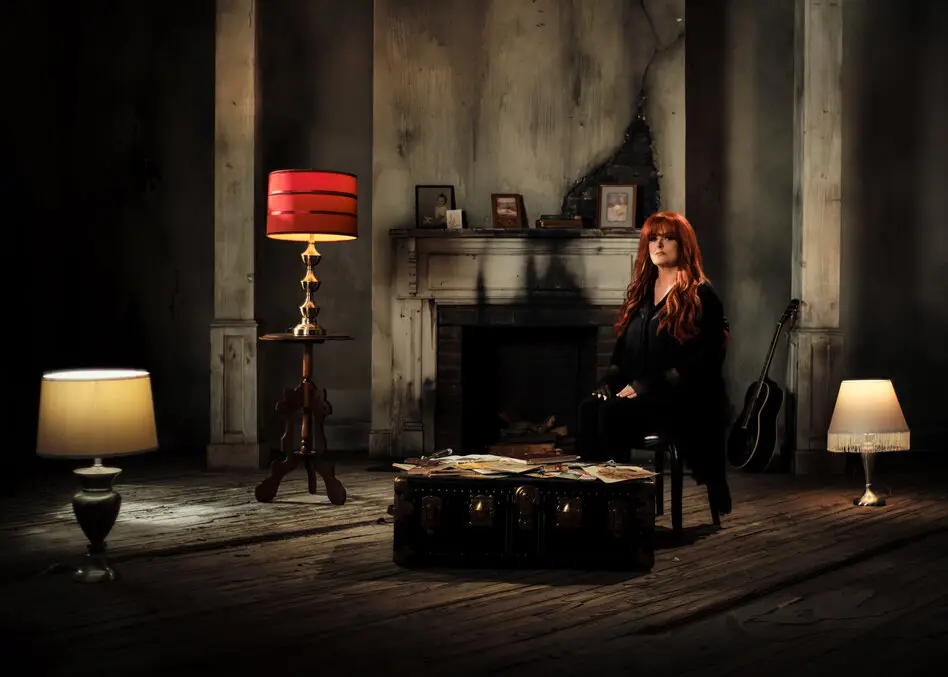
Dolly Parton will probably remain the only country singer from the USA who still plays a role in the collective German pop perception in this millennium. At home in the USA, the superstar was seen as a larger-than-life legend and role model. There was also a projection in her person: a final reminder of the great times of country music. But what remains after her death? Two artists show that country is in great shape.
Diana Judd was born in 1946, the same year as Dolly Parton. After her divorce, she gave herself the biblical name Naomi. She became a mother for the first time at 18, then raised two daughters while working as a nurse. When their eldest daughter Wynonna turned 18, the mother-daughter duo broke through into one of the biggest country careers of the 1980s under the family name The Judds.
Along with other so-called “neo-traditionalists,” the Judds brought postmodernism to country music beginning in 1984. A little later, Dolly Parton also made a new-traditional statement: the enchanting album “Trio,” recorded in 1987 with her colleagues Linda Ronstadt and Emmylou Harris.
Wynonna Judd: “The Hard Truth” (Anti/Indigo)
Miranda Lambert: “Crisco” (Vanner Records/Universal)
Stephen Wilson Jr feat. Miranda Lambert: “Hardwired” (Big Loud/Universal)
After her mother became ill with hepatitis C, Wynonna Judd was forced to continue the career of The Judds as a soloist. Albums under her first name were released regularly until 2016, then nothing came. Now suddenly a comeback album, called “The Hard Truth”, the naked truth. The existentialist album title is quietly led into a dark spiritual by a lonely fiddle in the prelude. Wynonna writes a letter to her mother, who committed suicide in 2022, on the eve of the Judds' induction into the Country Music Hall of Fame in Nashville. Of course, Dolly Parton sang at Diana Judd's memorial service.
The sun only shines sporadically in the ten songs on her daughter Wynonna's album. But in every song an amazing power, a will, shines. You could attribute this to Wynonna Judd's happy marriage to Cactus Moser and then admire how he stands by his wife. When she asks “All I wanna know / Is there life out there that I’m missin’?” Around this potential questioning of himself, the artist Moser, who also produced his wife's album, composes perfectly formed, courageous songs in which a penchant for British melodies and vocal harmonies parallels the moods of the US South, the gospel-familiar soul.
Country is not reinvented in this music. You almost think Wynonna could mean this when she sings the lines in the song “Broken and blessed”: “I’m just trying to live my life somewhere between survival and revival”. But the poignant pedal steel guitar solo that follows points to something far more profound. It's about the question of how do you make it through life without falling apart?
In “Hear me now,” Wynonna takes us close to the atmosphere of Joni Mitchell’s album “Hejira,” only here it’s not a 32-year-old, but a 62-year-old looking at her life. You can feel the achievements, the dreams, but also the pain that Judd's powerful voice, which has now become rougher, articulates. In “Girl Who Could Sing” she asks herself whether she got her voice from her father. A song that's about a man she never knew personally, but after his death, stacks of collected newspaper articles about his singing daughter were found.
The stirring lyrics leave the listener speechless. It therefore seems almost mundane to ask when was the last time ten such poignant songs were collected on a new country album.
Judd's colleague Miranda Lambert - a stereotypical blonde and rebel - also seems to be continuing much of what Dolly Parton once started. Parton once said of Lambert: “I feel everything she writes, I feel every word.” It is doubly surprising that hardly anyone in Germany has taken any notice of Miranda Lambert. The 42-year-old just doesn't fit in anywhere. Despite shoegaze and lo-fi experiments, despite her feminist band Pistol Annies, Lambert's educated pop journalism shrugs its shoulders in perplexity.
Not that country doesn't have an audience here, just a few days ago Stephen Wilson Jr. played a sold-out concert in Cologne. In the summer, the shirt-sleeved country and alt-rock couple had a hit in the USA with “Hard Wired” in a duet with Miranda Lambert.
Far more obvious than the musical borrowings from the evergreen “Where's my Mind” by the US indie band Pixies is the anthemic working class pride. A German equivalent would be completely unthinkable, nothing more than a studied, agitating simulation, as was still heard in the days of political songwriters like Franz Josef Degenhardt. Lambert's music remains invisible.
“Crisco” is already Miranda Lambert’s tenth solo album, and the title reveals that the music takes us down the narrow path on which Tanya Tucker, Tompall Glaser and, last but not least, Parton once left their mark with the signature song “Nine to Five”: country meets disco. The title track, which sounds as if overzealous Swedish pop opportunists had composed the music, pays the price for all the obvious clichés. But it remains a really catchy hit!
What is so impressive about Miranda Lambert's new album is its immensely unique sophistry, here too with references to soul and British pop, similar to Wynonna Judd. The glittering country of the 1970s is revived in the bittersweet, languid “Two Things Can Be True.” The text renounces the Puritan insistence on moral clarity in all situations, even if you yourself are the one who suffers.
“To Everything” describes this existence in an unclear reality again: “Don't know if it's right or if it's wrong / Ooh, I'm lettin' go and holdin' on / To everything.” Its delicate Philly soul string arrangement sounds like it's the most beautiful Aztec Camera piece since 1984.
Even the duet, in which Chris Stapleton takes on the role of Bee Gees singer Robin Gibb, was not inspired by “Too Slow to Disco” yacht rock hipsterism; the music feels its way far too independently into the past and from there back to a present in which this album also sets standards of coherence.
The liveliness of both country works is deeply moving. That says a lot about our time, in which lessons from the well-born and moralistic superegos are looking for powerful admiration. Wynonna Judd and Miranda Lambert never sound complacent. In their songs they try to somehow get through life. What they portray in their modified country sound is sonorous beauty that thrives on its clarity.
Whether in the dancing melancholy of “Crisco” or in the soul journey that Wynonna Judd takes a new look at a depressing line from Kris Kristofferson at the end of “The Hard Truth”: “And if freedom means I got nothing left to lose”. This is how Wynonna comments on the words that Janis Joplin once made world famous: “Then I guess I got a lot more to get / 'Cause love ain't got the best of me yet”. Yes, that's how you should live.