
Politics taz
New AfD faction in Berlin: ethnic image cultivation
The new AfD faction in the House of Representatives is significantly larger than before. Up-and-coming, right-wing young politicians will occupy key positions in the future. more...
Deutsch (original) ·Auto-translated to English
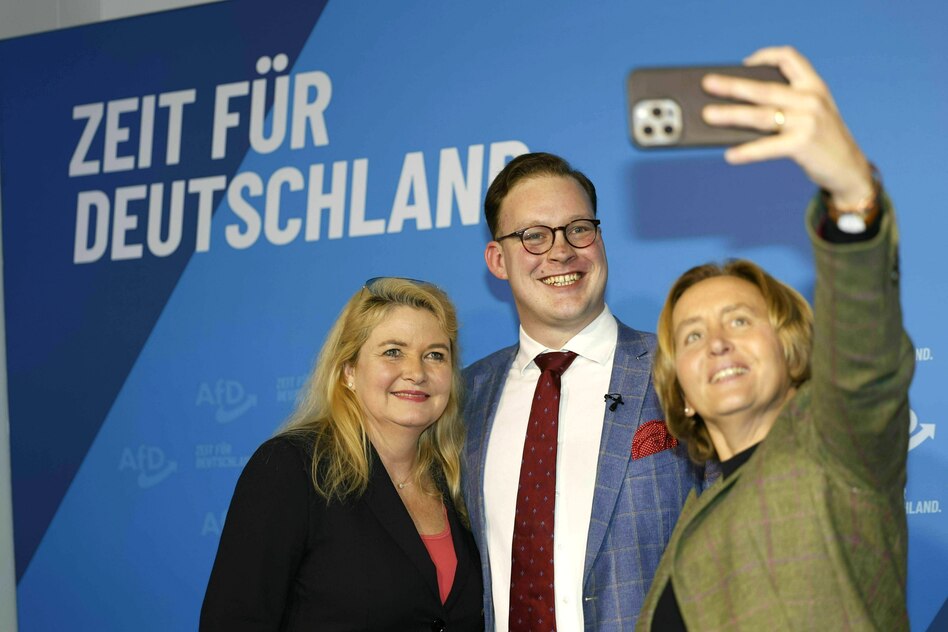
When the Berlin House of Representatives meets for its first meeting on Thursday, the AfD parliamentary group will take up significantly more space in the plenary hall than before. 29 of the total 153 MPs belong to the right-wing extremist party. That is 13 seats more than in the previous legislative period.
The AfD won around 16 percent of the vote in the election on September 20th, achieving its highest result to date in Berlin. At the same time, however, the party fell short of its own expectations and poll numbers.
Nevertheless, the fact that the Berlin AfD will in future be the third strongest faction in the state parliament represents a serious gain for the right. For example, the parliamentary group is allowed to nominate a candidate for the office of Vice President of Parliament for the first time. And the election success also pays off financially. Each of the 29 MPs receives up to 8,000 euros per month for a constituency office and can use this to employ personal staff. In this way, jobs are created for people from the right-wing extremist front of the party, which can thus consolidate its own structures.
The new AfD faction resembles a men's club: 25 men and only four women belong to it. One of them is the old and new parliamentary group leader Kristin Brinker. The party leader is firmly in the saddle despite the rather disappointing election results. So far, even scandals have not been able to affect her. For example, the day before the Berlin election, the police searched an employee's apartment and found, among other things, Nazi memorabilia. Not an issue for Brinker: “He’s just a collector,” she said.
Probably reason enough that the AfD in Berlin remains isolated at the state level. This is also shown by the election for the parliamentary presidency, which is on the agenda on Thursday. All other factions reject - more or less vehemently - electing the AfD candidate Martin Trefzer as vice president, as they reiterated at the weekend.
Meanwhile, the new faction is setting the course for the continuation of its staunchly right-wing course. At the same time, there is an attempt to make one's own appearance appear more professional and to prominently involve the party's young talent. To this end, the parliamentary group has filled key positions with young, aspiring politicians who are close to the ethnic-nationalist current within the AfD and at the same time try to cultivate a serious image.
There is the party and parliamentary group vice-president Alexander Bertram. The 38-year-old is considered Brinker's crown prince and is close to the formally dissolved right-wing extremist "wing" around Thuringia's state leader Björn Höcke. In the new parliamentary group, Bertram should represent the issue of migration, which is so central to the AfD, and use it with a typical remigration sound.
In this role, Bertram succeeds Marzahn-Hellersdorf MP Gunnar Lindemann. The Putin supporter, who mainly makes a name for himself with confusing cooking shows on YouTube and verbal gaffes, was probably no longer considered an ideal representative in the group given the efforts to professionalize. This is also supported by the fact that Lindemann's name no longer appears in the group's list of “specialist political spokespeople”.
In addition to Bertram, there are two newly elected representatives who represent the future course of the Berlin AfD parliamentary group: Martin Kohler and Jan Streeck. Both are in their late 20s, are close to the right-wing fraternity “Gothia” and were on the board of the dissolved youth organization “Junge Alternative” (JA). Kohler is now head of the new party youth “Generation Germany”.
The fact that the two parliamentary newcomers were directly elected to the parliamentary group executive committee and given speaker positions speaks for the prominent role that is intended for them. Martin Kohler will be the spokesman for domestic policy for the AfD parliamentary group in the future - a key position in the law-and-order party. Here he follows the previous agitator Thorsten Weiß, who joined Höcke in Thuringia.
But Kohler is in no way inferior to White. He campaigned with the slogan “Remigration is not everything, but without remigration everything is nothing”. From his JA days, he is also closely linked to the Brandenburg AfD politicians Jean-Pascal Hohm and Dennis Hohloch, both of whom are considered right-wing extremists.
Jan Streeck, in turn, is a “specialist political spokesman” for construction and housing. The AfD has been trying to hijack the issue more and more since the spring, especially through the racist campaign “Apartments are not asylum homes”. Streeck is also the AfD chairman in Pankow, where he runs a party location in the Blankenburg district that is considered a trendy meeting point. The Bundestag member Mathias Helferich (“the friendly face of the Nazis”) was a guest there. And recently an “Oktoberfest” took place there with a performance by the right-wing streamer and musician “Björn Banane”.
Among the 15 AfD MPs who have moved into the House of Representatives for the first time, there are also some relatively unknown figures with impressive résumés. One of them is the artist and podcaster Julian Adrat. The self-confessed Trump fan has a criminal record, including for assault and insult. He has also been investigated several times, for example for incitement to hatred. The background was hate posts about trans people and migrants.
Also new is Anneliese Dummer, directly elected in Marzahn-Hellersdorf. The pensioner has already worked for two Senate administrations and also the AfD member of the Bundestag Birgit Malsack-Winkemann, who is now in custody on suspicion of terrorism. Also new are the teacher Hendrik Pauli, who was fired in the past because of his Bärgida support but is now working at a school again, and the police officer Marc Bernicke, who was dismissed from the police force because of his role in the JA.
Meanwhile, the Berlin Office for the Protection of the Constitution could soon reveal whether it classifies the Berlin AfD as a suspected right-wing extremist case and is monitoring it accordingly. This is made possible by a change in the law by the black-red coalition, which came into force at the beginning of September. Previously, the Office for the Protection of the Constitution was only allowed to provide information about confirmed right-wing extremist efforts, but not about investigated or suspected cases.
According to its own information, the internal administration can only apply the new rules once the government has been formed in Berlin. According to the assessment, the announcement would violate the neutrality requirement around the election and during the coalition negotiations. The aim, however, is to create clarity at the “earliest possible point in time” as to whether the AfD is being monitored or not.