
Germany · taz · · 4h
New translation by Karel Čapek: After us the newts!
Deutsch (original) · Auto-translated to English
How can you recognize a classic? Among other things, it can be read anew by every generation and related to the questions of the respective time. In the best case scenario, such a classic has something ambiguous, mysterious, and disturbing right from the start that cannot be resolved into a generally digestible reading even 50 or 100 years after its publication.
“The War with the Newts” is one such book. Its author, Karel Čapek, wrote it because he was told to do so by his presence: It is the mid-1930s. Europe is dealing with fascism in the West, and Stalinist-style communism is threatening from the other direction. And in the middle of it all, in Prague, sits Karel Čapek, trying to make sense of his time.
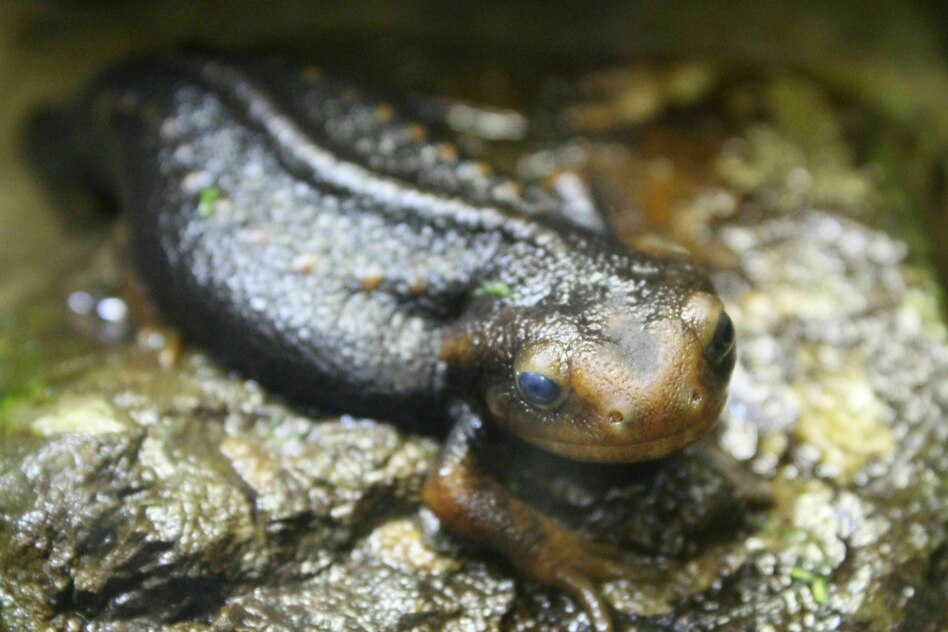
He does this in the form of a dystopia - a playful, formally almost wild negative utopia. It all starts with Captain van Toch, who discovers a species of giant salamander in the South Seas that is extremely unsightly and at the same time turns out to be quite capable of learning: "'There you go, min Jung,' said the captain happily. During the day I made a plan. I wanted to tame the lizards - tame, yep? - and train them so that they would fetch me the pearl shells. There had to be lots of pearl shells down there, down there to Devil Bay.”
Karel Čapek: “The War with the Newts”. Translated from Czech by Doris Kouba. S. Fischer Verlag. Frankfurt am Main 2026. 368 pages, 26 euros; E-book 22.99 euros
So he's after the pearls, after profit. He arms the lizards with knives so they can defend themselves against sharks. They even manage to use them as a tool to open mussels. They also learn to speak. They will soon be doing many other jobs underwater that would hardly be possible for humans. A wonderful business model is developing. Newts are bred on all coasts and used as working armies. They expand coastlines, using dynamite and equipment that is made available to them. Millions, soon billions, of lizards are digging and blasting, heaping up - and they are gradually shaking off their animal nature.
Various scientific disciplines deal with newts, leagues are founded to protect them, the labor movement takes care of modern slaves, and the artistic avant-garde sees them as a new era. The motto: After us, the newts! “And so the poetry movement of the Young Salamandrians was born, tritone or tripletone music was composed and – based on the formal language of coelenterates, jellyfish and corals – pelagic paintings were created.”
A revolution. Things just get out of hand at some point. The newts become stubborn and rebel. With the help of human lawyers and a leader dubbed “Chief Salamander” who served as a private in the First World War – of course Hitler comes to mind – they reverse the omens and mobilize against humans to gain their own living space. The war begins. Environmental disasters are caused by reptiles. Land is transformed into sea and people have to retreat to the mountains.
At the time, Čapek's novel could be read as a fantastic criticism of capitalism, as a warning against the rise of fascism, as an objection to the subjugation of nature. If you read the novel, now newly translated by Doris Kouba, 90 years after its publication, completely different things come to mind. Climate change and its consequences: Huge waves sweep away houses, people are washed away, the sea expands, water engulfs entire areas of land.
But one inevitably also thinks of the technological revolution of our era, of AI and machines that can no longer be controlled, which are being created by a tech elite that has succumbed to hubris. The invincible masses of salamanders are reminiscent of self-piloting drones and robot armies that have long been put into action, born of authoritarian fantasies. What man can create, he also creates. There are no moral boundaries. And like Goethe's sorcerer's apprentice, the spirits he calls eventually turn against him.
Karel Čapek's dystopia is different from the real one, but it is a great pleasure to read. The man must have been a polymath. He has great fun bringing together different types of text in the novel, from zoological studies to feature articles to philosophical treatises (a parody of Oswald Spengler's “Downfall of the West,” for example), from satires to parodies. A magnificent collage. He almost anticipates postmodernism.
Alongside Jaroslav Hašek, Karel Čapek, born in Malé Svatoňovice in what was then Austria-Hungary in 1890, is considered the most important Czech author of the 20th century. If Hašek delivered his masterpiece with “The Adventures of the Good Soldier Schwejk”, Čapek did so with “The War with the Newts”. This novel, which caused a stir both in terms of content and form, was first published in 1936 - two years before the early death of the prolific journalist, storyteller, playwright, essayist and children's book author.
Julius Mader brought the book into German in 1937 - this translation was also the basis for the edition published by Aufbau-Verlag in 1954. A translation by Eliška Glaserová was published in West Germany in 1964 and was later published in revised versions. Now the award-winning Doris Kouba, who lives in Prague and Hamburg, has dared to create a new translation, which has turned out brilliantly. Thanks to outstanding translations, “The War with the Newts” is truly a classic not only of Czech but of European literature.
Read the full story at the source
Source: taz