
World taz
Middle East expert on elections in Israel: “The Arab population could prevent Netanyahu”
Israel will elect its new parliament on October 27th. The country is divided and the population is heterogeneous. Middle East expert Peter Lintl explains who votes for whom. more...
Deutsch (original) ·Auto-translated to English
taz: Mr. Lintl, in the polls the opposition bloc under Gadi Eisenkot and the government bloc led by Benjamin Netanyahu are on equal terms. There will be an election in less than a week. Are there issues that have the potential to influence voters' behavior?
Peter Lintl: I think most people have already formed an opinion. Now it's up to the undecided: they make up up to 12 percent, in some surveys even more. Several things play a role: what else happens, who looks better. It's all about the details, the big ideological battles are over.
taz: Can October 7, 2023 or the recently announced support of US President Donald Trump make a difference for Netanyahu?
Peter Lintl: October 7th has already moved a lot. The numbers we are now seeing in the surveys are partly a product of October 7th. And about the fact that the government didn't take responsibility and instead deported them. Netanyahu certainly hopes that Trump's current support will benefit him - although I don't think so.
Peter Lintl is deputy research group leader for Africa and the Middle East at the Science and Politics Foundation. Between 2016 and 2022, he led the project “Israel in a conflict-ridden regional and global environment: internal developments, security policy and foreign relations”. His research interests include Israeli domestic politics, Jewish religious movements and German-Israeli relations.
taz: Nevertheless, there is still movement in the party landscape.
Peter Lintl: Yes, the moderate-conservative Benny Gantz recently resigned. That means: There will certainly be a fight for the votes of Gantz's voters. And there are still a few candidates who have to think about whether their party will actually get into the Knesset - that is, whether they can pass the 3.25 percent hurdle. This applies, for example, to the right-wing Amcha Yisrael and the Reservist Party.
taz: There are many small parties in Israel, and the population is also diverse. For example, there are ultra-Orthodox Jews who have their religious parties.
Peter Lintl: According to current surveys, 80 percent of the ultra-Orthodox will give their votes to the ultra-Orthodox parties such as Shas and Torah Judaism. The ultra-Orthodox parties are clearly milieu parties that are relatively stable. But some also want to vote for Itamar Ben-Gvir's ultra-right party Otzma-Yehudit or for Netanyahu's Likud. The religious left plays almost no role for them.
taz: The dispute over the draft law for the ultra-Orthodox also shaped the election campaign. Will more ultra-Orthodox people vote because of this?
Peter Lintl: The threat of compulsory military service offers great mobilization potential. However, I also hear other voices: that some ultra-Orthodox are disappointed that the problem has not yet been solved. Some people therefore expect that parts of the community will not vote. There are also modern ultra-Orthodox who don't have a big problem with conscription. In any case, the issue is a problem for future government formation – including for the Likud.
taz: Ultra-Orthodox make up around 14 percent of the population. Secular Jews, on the other hand, make up up to 35 percent. Which parties are they most likely to represent?
Peter Lintl: The Jewish-secular group is not a unified group; it is divided into four to five different parties. Some will vote for Yisra’el Beitenu, the secular center-right party. One part will vote for Jashar from Gadi Eisenkot, another for the liberal Zionist Yair Lapid. And some will vote for Likud. Or the Democrats. But they certainly don't vote for the religious parties.
taz: More than 17 percent of Israelis are of Arab origin, and most describe themselves as Palestinians. What role do they play?
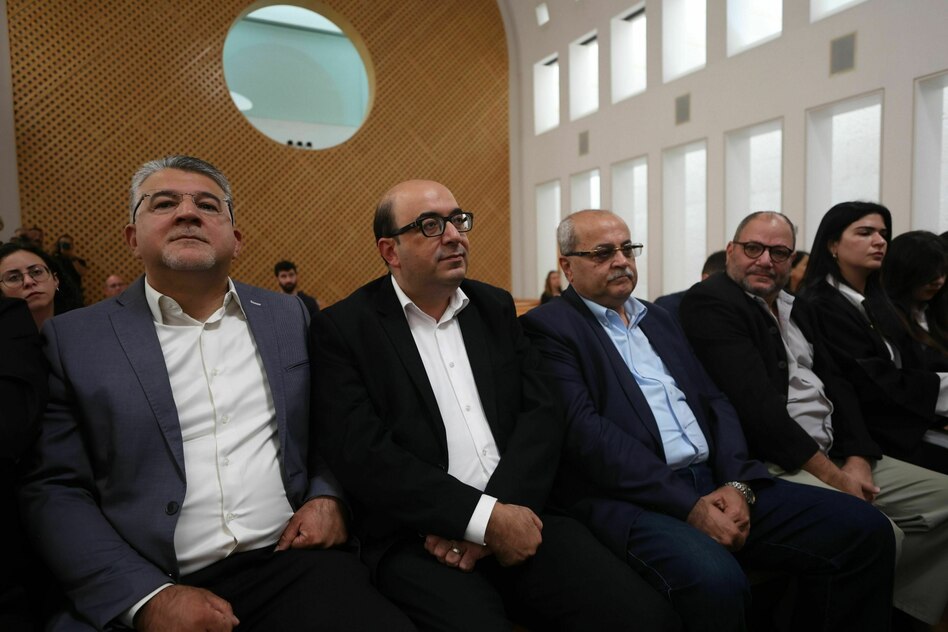
Peter Lintl: There are many indications that there will be a relatively high voter turnout among the Arab population. Also in view of the fact that they have it in their hands to prevent Netanyahu from being re-elected. Because the more successful the Arab parties are, the more difficult it will be for Netanyahu to get the majority of seats. But that depends very much on Arab voter turnout.
The opposition bloc is stronger in almost all polls. This would, at least in theory, allow them to impose a minority government supported by the Arab parties.
taz: And what about the Druze? Although they make up less than two percent of the population, they serve in the Israeli military and therefore play a special role among the Arabic-speaking population.
Peter Lintl: Very different. There are Druze who are very far to the right. And there are Druze who are center-left. And those who don't vote at all. The Druze do not have a clearly defined electoral profile.
taz: All previous assessments are based on surveys. How reliable are these? Should we expect surprises on election day?
Peter Lintl: Experience shows: the closer we are to the election, the more reliable the surveys become. But there were also surprises. For example, the 2015 election, when everyone thought there would be a left-wing government. And Netanyahu then ran a brilliant campaign and won the election.
But I don't think this is possible under the current conditions. Back then, Netanyahu relied on extreme polarization, which mobilized people. But that has now worn off. The country is already very polarized. Populism is everywhere, so this would be nothing new. I don't see that even more emotionalization would do much good.