
Germany taz
Obituary for techno pioneer Juan Atkins: producer with a clear vision
Juan Atkins made techno the sound of the future from Detroit. Now he has died. Obituary for an electronic pioneer. more...
Deutsch (original) ·Auto-translated to English
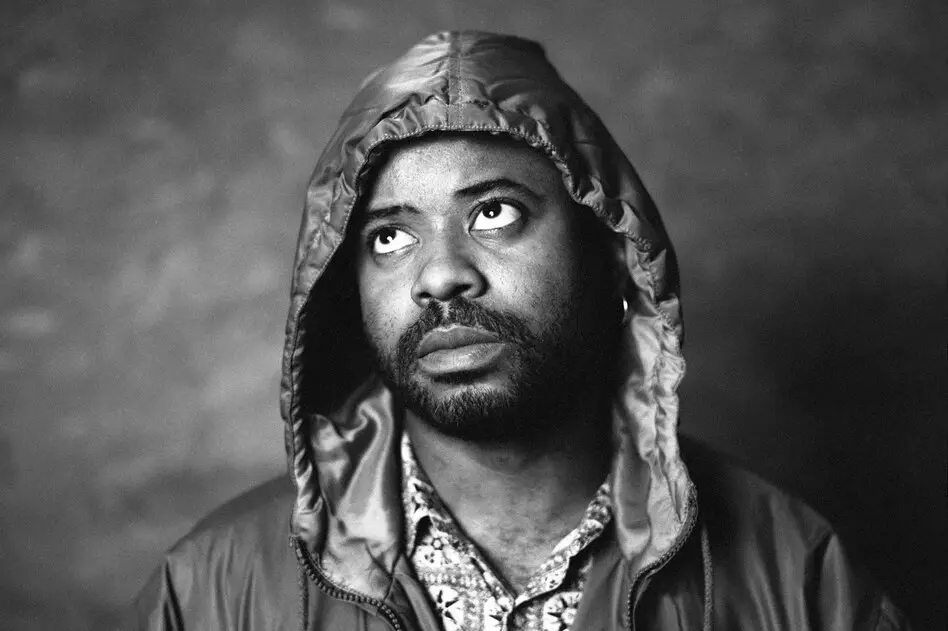
What is music? Juan Atkins' questionnaire answer for the liner notes to the Detroit techno compilation "Emotionselectric" (1991) was appropriately succinct at the time: "sound painting". Atkins accurately described himself as a “man with a vision.”
Atkins founded electronic dance music in the computer age. He is considered one of the most important US techno pioneers. His inventiveness also owes itself to chance. He used the “Roland TR 808” drum computer for his minimalist sound paintings. The fact that a rhythm machine can also be used to create chirping bass melodies was not stated in the operating instructions.
Atkins had been fond of keyboard instruments since childhood. The grandmother owned a Hammond organ. When she played it, “Magic” Juan would put on his father’s motorcycle helmet and run around the house with it. “A radio astronaut who wanted to be a Starchild,” as Atkins’ biographer Dave Tompkins put it.
As a teenager, Atkins played bass, guitar and drums in a funk band. In 1980 he met Vietnam veteran Rik Davis and founded Cybotron with him. Their dystopian electro album “Enter” (1983) is the link between funk, video game soundtracks and the electronic pop of Kraftwerk. For example, in the song “Techno City” from 1984: the snare whips at wind force twelve, a voice repeats numbers mechanically, as if it were counting icicles raining from the roof. Since Atkins often distorted Davis' singing, Cybotron was initially thought to be white.
Even as a teenager, Juan Atkins was drawn to the synthesizer cool of the white European New Wave. This was also a reaction to the racism and segregation of the US majority society. Atkins attributed his enthusiasm for white Europop to something else: "It has to do with the auto industry in Detroit. The UAW union already fought for equal rights for blacks and whites in the factories."
In the 1980s, the US auto industry was in crisis; its horsepower looked old compared to the slim competition from the Far East. Prosperity in Detroit melted away and the city rapidly fell into disrepair. Techno is a response to this decline. The drastic futuristic dance music, staged using the simplest means, dreams of getting out of the economic misery.
Atkins grew up in Belleville, a middle-class bedroom community in the Detroit metropolitan area. There he met two classmates: Derrick May and Kevin Saunderson. The three producers were later known as “Belleville 3”, and Atkins was initially a musical mentor for the two younger ones. Together with Derrick May, Atkins founded the DJ team “Deep Space Networks” in 1985. At the same time, he was now single-handedly producing electronic music under the alias Model 500.
Straight, ice cold and a little scary. Is there life in space? Anyone who hears Atkins' signature track "No UFOs" knows: "They say there's no hope / They say no UFOs / Why is no head held high / Maybe you'll see them fly." Atkins also founded his own label Metroplex, on which, in addition to “No UFOs,” he released many other groundbreaking records by himself and other producers from Detroit.
While techno remained a commercial fringe phenomenon in the United States, the sound exploded in Europe in the late 1980s, where a rave culture emerged in full bloom. Atkins was often booked as a DJ, especially in England and post-reunification Berlin, for example in the “Tresor” club. Berlin techno took Atkins’ improvisation-driven drive as a model. Atkins also teamed up with the Berliners Thomas Fehlmann and Moritz von Oswald as 3 MB and thus started the cultural bridge between Detroit and Berlin that still exists today.
Despite all his successes, Juan Atkins remained humble. A photo with his hero Florian Schneider from Kraftwerk shows him in a kiosk in Düsseldorf in 2019 with a hoodie, laughing shyly. On Saturday, “Magic” Juan Atkins died unexpectedly at the age of 64 while DJing in Mexico City.